Introduction
This series takes inspiration from Indic scholars, such as R.C. Majumdar (1918), Bhimrao Ambedkar (1957), and Shrikant Talageri (2008), who see the various old Saṃskṛta terms described in the Ṛgveda as functional categories rather than ethno-linguistic or racial categories.
Further, taking inspiration from the works of comparative historians, this series views the essence of Ārya life as one built around the ideas of political hospitality. The Indic “śarana” and the Latin “Surrender” are related to the root “sar”, “to give”. The essence of the Ṛgveda is seen as lying in mutual aid. Not only do Indra and Agni, the main gods of the Ṛgveda, help human kings like Divodāsa or Trasadasyu, but the human hero Trita aids Indra and Agni in the slaying of drought demons Ahi (Vṛtra) and Vala.
Apart from mutual aid between gods and humans, ṛṣi-kavis of the Ṛgveda also composed hymns as contracts between gods, like the ṛṣi Vasiṣṭha, who composed the Indra-Varuṇau hymns to build a relationship between the god of thunder and the god of waters. Together, the gods send a flood that washes away enemies of the Bharatā tribe, ensuring the creation of a united Bhārata.
These memories are social contracts between gods and humans, which the ṛṣi-kavis of the Ṛgveda recite to remind their gods to give them timely rewards for their sacrifices. Therefore, in a sense, the recitation of these stories (in the right intonation and meter) equates humans and gods because while gods typically bind humans to the laws of the cosmos, these contracts allow ṛṣis to bind gods to human will and give us our just rewards for just actions.
So we may consider Ārya life as one concerned with contracts, where nobility is seen as the ability to stand as guarantors to contracts and/or guardians to those who seek refuge. The Ārya can be of any race, ethnicity, or linguistic background, but the religious mission they take on is what makes them Ārya.
Thus, we can see the Ārya mission as one that is deeply concerned about the language of hospitality, so much so that Saṃskṛta (and many other classical tongues) emerges as a cultural system that encodes these norms of hospitality in the form of stories which themselves embed social contracts between gods and humans.
Finally, this series also recognises the limits set by the Ṛgveda. As the nāsadīya sūkta informs us, all these contracts between gods and humans only allow ṛṣis to understand what the gods themselves know. However, there is the “Na-a-sat” or the “not-non-existent” which the Ṛgveda humbly informs us that even the gods do not know. So while this series treats the Ṛgveda as an authoritative source for the Indic way of life, there is an internal critique of the very idea of authority.
Gods and humans can only know so much. So even while we celebrate the intellectual glory of vaidika culture, this series hopes to remind all of us that the Ṛgveda asks us to always place hospitality above knowledge. It reminds us that mutual aid, not just between political strangers but between all natural life, is the highest truth and noblest wisdom that humans can seek.
Āryāvarta

One of the most interesting ways in which the ṛṣi-kavis of Ṛgveda describe early Indians is by referring to the Ārya as pañca kṛṣtya or the five-fold enterprise. Indian religion, from its inception, was always an intermingling of identities and cultures, where āryāvartā is not just a homeland but also a workshop. In the intricate and measured poetry of the Ṛgveda, we can see the Ārya enterprise becoming socially and politically recreated when five peoples worked towards shared goals.
The five-fold enterprise had a common shared goal, and that was celebrating the climate. In the Ṛgveda, the Universe is sustained by the flow of waters in three realms. This flow of cosmic waters is called ṛta, or a word that is closely related to ṛtu or climate. Ṛta means cosmic order, which is tied to how cosmic waters flow from the heavenly skies (ākāśa) to the earth. Thus, in the vaidika Āryan imagination, as it continues to be today, cosmic order is tied to climate and the flow of waters. People’s work towards safeguarding climes is called dharma or the Ārya way of life. The parching of these waters, or drought, is anti-climate or adharma, the anti-Ārya way of life. In this way, an Ārya comes to be seen as someone working (kṛṣi) to protect the Ārya way of life and the Aryan climes.

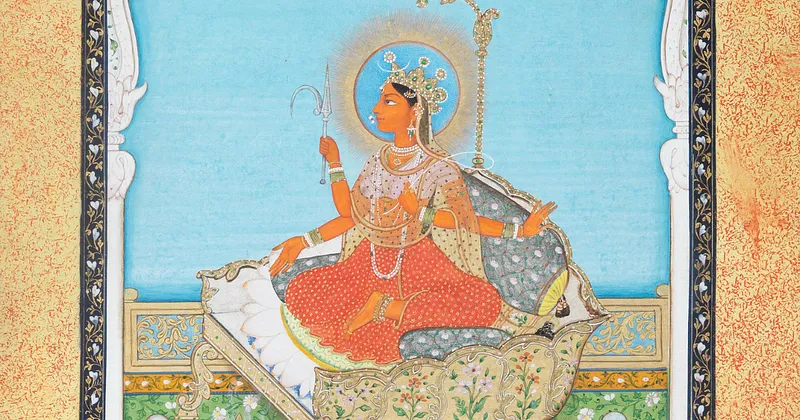
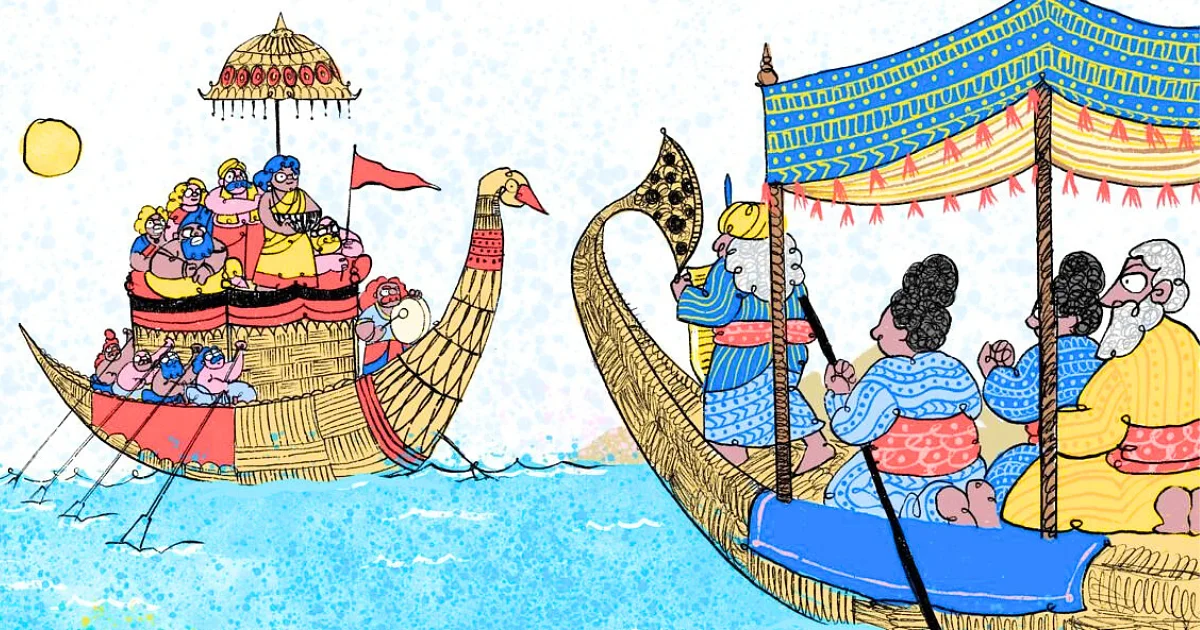
Ṛta is the domain of Aditi, the cosmic mother, and her children, the Ādityas. Some poets imagined Aditi as a cosmic cow, married to the divine bull of the sky. Others imagined Aditi as an immaculate mother whose sons were born from her mind. All poets agreed, though, that Aditi’s two oldest children, the cosmic twins, were the guardians of the climate. And so, they were kings to all the Āryan gods.
The twin-kings were called Varuṇa and Mitra. Varuṇa was the more impetuous and free-willed king, easily angered and easily compassionate. Mitra, on the other hand, was the more measured god, overseer of divine contracts, who ensured that boons and banes administered to humans and celestial beings were in the right proportions. The ṛṣi-kavis of the Ṛgveda saw in these two kings the two functions of an Āryan leader:
- The ability to enforce the law without fear or favor, as a king would
- The ability to plead, bargain, cajole, and take people along, as a chieftain would.
Interestingly, Ādityas were also the overseers of the more colorful forms of social life, like drinking surā and gambling. A beautiful set of hymns (Akṣasūkta, hymn of the dice) from the tenth mandala of the Ṛgveda describes how people get ruined by gambling and surā.
“The dice and Varuṇa’s surā, ruined me!” A gambler laments.


The mindless consumption of both vices invites Varuṇa’s wrath and punishment. The gambler loses his wealth, wife, and family; a theme that repeats again and again across Indic legends, especially the epic Mahābhārata.
The Ṛgvedic ṛṣi then tells the gambler about how the Ādityas show human beings a way out of the Gambler’s Lament. An Āditya advises human beings to plough the land.
“The ploughed land is your wealth, your cattle, your wife, and family.”
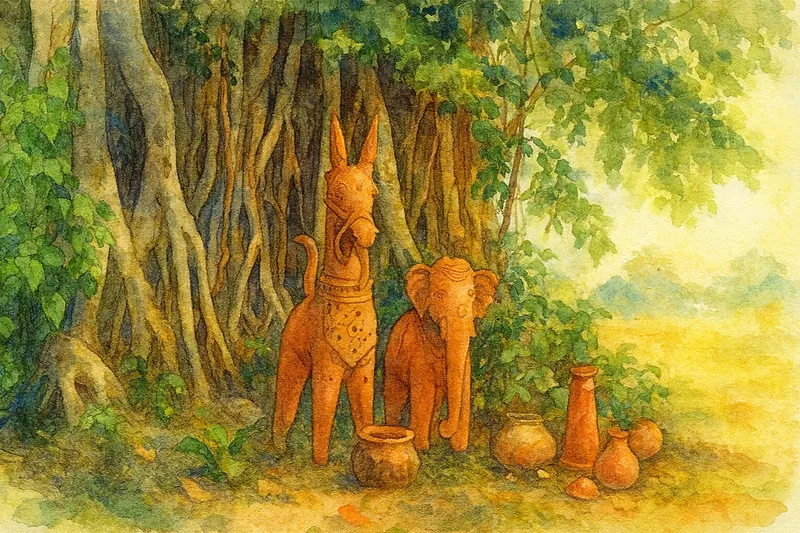
This extract from the Veda helps us understand the meaning of the word Āryāvartā. “Ārya” means to plough or to yoke cattle to the plough. The word “āvartana” comes from the word vṛtti, which is work or profession. Āvartana is a word related to completing a circle of kriyās or ritual tasks. (For example, in Karnāṭaka saṅgīta, Āvartana means to complete a circle of tālas.) Āryans were mainly pastoralists or cattle rearers who completed agricultural tasks as divine labour or kṛṣi: a way of restoring wealth without resorting to risks and adventures of the anti-climactic variety.
So, in the Ṛgveda, Āryāvarta is seen as a magical land where the vagaries of personal, social, and political life are tempered by a divine fail-safe: flood-irrigated agriculture. But agriculture is a kṛṣi. It is not dreamy and reflective, or wild and adventurous, as pastoralism tends to be while herding families stroll across vast mountains and valleys, and jungles, along with their cattle.
Agriculture, on the other hand, requires people to be fixed to a place and work hard with determination towards simple goals: it requires them to become a kṛṣtya or an enterprise where a diverse set of people, carrying out diverse functions, work towards a common vision.
In this way, Āryāvarta is a haven that straddles the two extremes of value creation:
1. Heavenly visions and dreams with wild adventures.
2. Restorative human goals with predictable outcomes.
And Varuṇa and Mitra, sons of the cosmic mother, Aditi, are the guardians of this dialectical materiality of human life.
Trivia
- The two great ṛṣis of North and South India, Vasiṣṭha and Agastya, are said to be the sons of Varuṇa and Mitra.
- In the popular culture of present-day Hinduism, the boundless energy of the cosmos is represented by Śakti or Mahākālī, while the great gods Viṣnu and Śiva oversee the preservation and destruction of social contracts. However, the words Aditi and Āditya continue to be in use as popular given names for children.
- In India, kṛṣi, then and now, refers to enterprise, mainly of the agricultural variety.
Read Part Two: Relationships.