Gaṇeśa is one of the most recognizable figures of the Hindu pantheon, yet presents a striking paradox. He is both subordinate and indispensable: a pārśvadevatā, a minor or ancillary deity in ontology, yet ritually unavoidable at the threshold of every undertaking. He is vighneśvara, the Lord of obstacles, being both a vighnakartā, 'creator of obstacles' and vighnahartā, 'remover of obstacles'. His name is invoked before essentially every ceremony: before the recitation of mantras, before the start of journeys, before domestic rites of passage, and before royal or communal ceremonies. He is worshipped across sectarian divides—by Śaivas, Vaiṣṇavas, Śāktas, Buddhists, and Jains—making him not only the most popular but also the most ecumenical of the Hindu gods.
Emergence of Gaṇapati
The earliest text that foreshadows the emergence of Gaṇeśa is the Atharvaveda. Here, misfortunes, illnesses, and obstacles are caused by malevolent entities: grahas, piśācas, rakṣasas, and bhūtas. The Mānava-gṛhyasūtra (7th–5th centuries BCE) names four Vināyakas—Kūṣmāṇḍarājaputra, Śālakaṭaṅkaṭa, Usmita, and Devayajana—who obstruct prosperity, prevent childbirth, and cause mental affliction. They were propitiated with offerings of meat, wine, and other substances. By the first century CE, however, these Vināyakas had been consolidated into a single figure. In the Yājñavalkyasmṛti, the four Vināyakas become a single source of evil, of obstacles. Vināyaka also acquires the capacity to render ineffective the performance of religious rites. He acquires a new designation of gaṇādhipati, later also called gaṇapati or mahāgaṇapati, the lord or leader of gaṇas (gaṇa meaning a multitude, or hosts). Vināyaka also becomes known as the son of Ambikā (Pārvatī), appointed to his position by Brahmā, Viṣṇu, and Rudra. In the Bhāgavatapurāṇa (6th century), Vināyaka is described as vighnarāja (lord of obstacles), gaṇādhipa (lord of gaṇas). His evil nature is established by their association with rākṣasas, piśacas, bhūtas, and pretas.
Skanda as a Vignakartā
This process of assimilation was intertwined with the fate of another god, Skanda. In the Mahābhārata, Skanda is born amid dreadful portents and is the source of grahas that afflict children. He is described as blood-drinking and cruel, commanding troops of ghastly beings. In this capacity, he functioned as a vighnakartā, an obstructor of ritual and prosperity. Yet as Skanda was elevated to the exalted role of Devasenāpati, commander of the Gods’ armies, he ceased to be a piśāca. The sole responsibility for vighnas passed to Vināyaka.
Association with the Saptamātṛkā
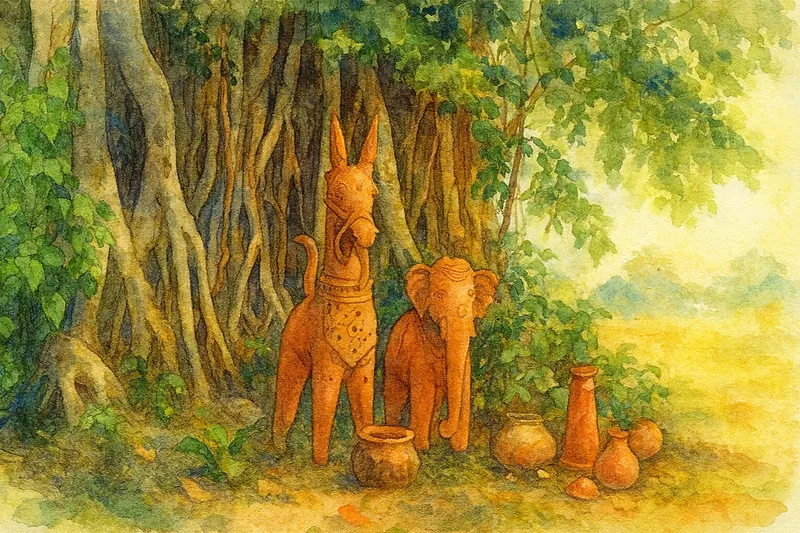
The Mātṛkās were originally grāmadevatās who embodied epidemic scourges such as smallpox, cholera, and snake-borne disease. In the Mahābhārata, they are described as both śivāḥ (benign) and aśivāḥ (malefic), beings whose ambivalence reflected the unpredictability of disease. Early iconography, from Kuṣāṇa and Gupta sites such as Mathurā and Amarāvatī, shows elephant-headed goddesses—Hastimukhī, Gajamukhī, Jyesthā-Alakṣmī—suggesting that the distinctive physiognomy of Gaṇeśa may originally have belonged to female, epidemic-deities. By the Purāṇic period, these frightening Mothers were reimagined as the Saptamātṛkās—Brahmī, Māheśvarī, Kaumārī, Vaiṣṇavī, Vārāhī, Indrāṇī, and Cāmuṇḍā—the emanations or śaktis of the corresponding Gods. Yet Gaṇeśa remained iconographically tethered to them: sculptural panels regularly depict him alongside the saptamātṛkā, often accompanied by Śiva as Vīrabhadra, marking his identity as a liminal figure between the benign and the malignant.
The Elephant Head
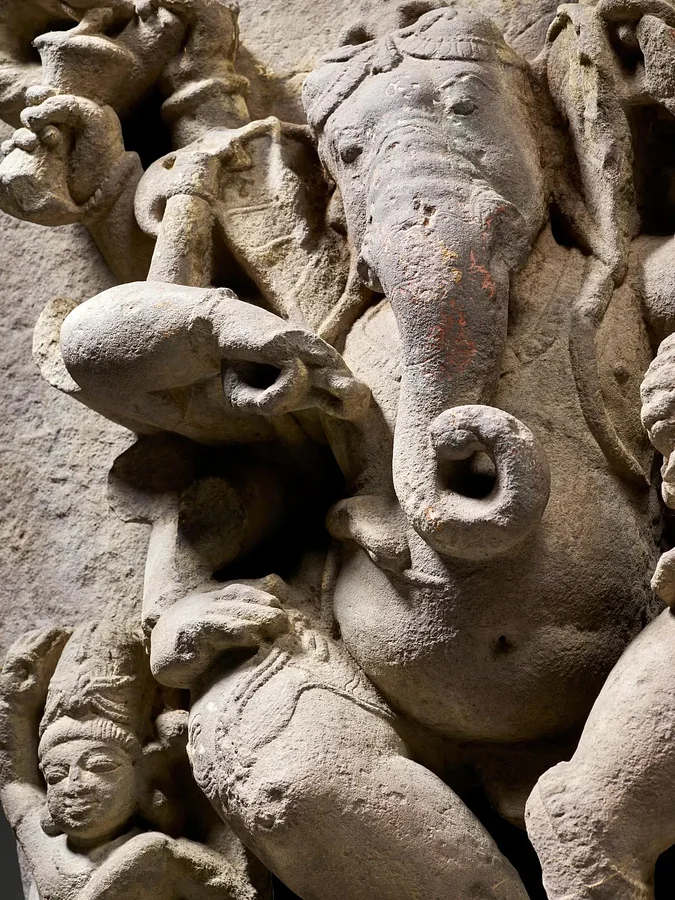
The adoption of the elephant head for Vigneśvara was a defining moment. Later texts verify it in diverse ways: the Yājñavalkyasmṛti calls him vakratuṇḍa (“curved-trunked”) and danti (“tusked one”); in the Baudhāyanadharmasūtra, he is described, inter alia, as hastimukha (“elephant-faced”) and lambodara (pot-bellied); the Vāyupurāṇa calls him gajarūpi; the Viṣṇudharmottarapurāṇa names him gajavaktra; and the Bhāgavata hails him as ekadanta, the one-tusked. The elephant was once again, a liminal creature: both auspicious — as a sign of royal power and fertility — and menacing — capable of devastating destruction. It was therefore an apt physiognomy for a deity who embodied the paradox of obstruction and beneficence.
Iconographic Consolidation
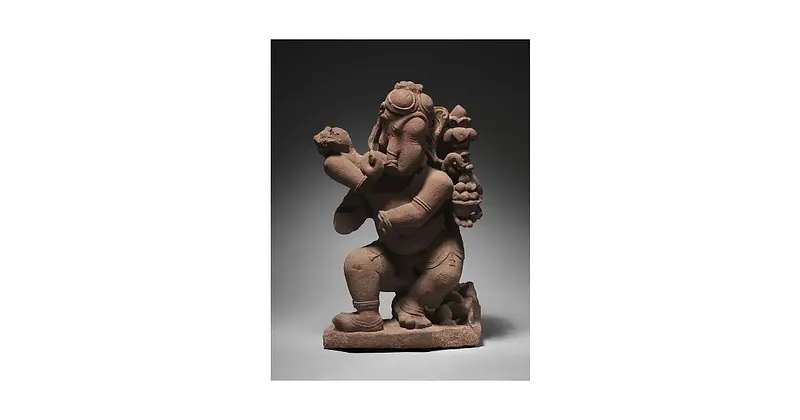
By the Gupta period, Gaṇeśa’s figure had become widespread in art and architecture. Early images from Mathurā, Rajgir, and Udayagiri show him with two or four arms, holding sweets, tusks, or axes. By the fifth and sixth centuries, he appears in the great cave temples of Elipheṇṭā and Ellorā, in the shrines of Bhumarā and Aihole, and in reliefs across Gujarāt and Āndhra. He consistently occupies liminal spaces, marking thresholds, entrances, and transitional points. In these contexts, he is frequently paired with the mātṛkās, reinforcing his role as guardian and mediator between danger and safety. His iconography crystallized in the medieval period: pot-bellied, with four arms bearing an axe, a broken tusk, sweets, and a noose, encircled by a serpent, and mounted on a rat. The rat, absent in earlier depictions, appears only from the tenth century onward, when he was firmly established as Vighneśvara, remover of obstacles, and siddhidātā, bestower of prosperity.
Tantric and Sectarian Transformations
Later tantric traditions reconfigured Gaṇeśa yet again. In Śaiva-Śākta Tantras, he is invoked as dvārapāla and vighnavināśaka, guardian of the threshold and destroyer of obstacles. In sectarian Gaṇapatya traditions, which flourished in the medieval period, he was exalted to Parameśvara, the supreme lord. Yet even here, the traces of his chthonic origins were never fully effaced. He remained a deity of dual power, capable of both obstructing and aiding, both cursing and blessing. His ambivalence was not erased but sublimated into a dialectic of removal and bestowal.
Consolidation of Gaṇeśa as Vighneśvara
Gaṇapati is both a leader of the gaṇas causing evil, and also is capable of removing evil if propitiated, appeased and pleased. In fact, this is inherent in Vighneśvara, lord of evils. Hence, he could also play the role of Vighnakartā. As Pūrṇasarasvati, a 15th-century commentator, explains that Vināyaka is Gaṇapati, so-called because He eliminates obstacles.
A popular saying attributed to Manu, though not found in Manusmṛti, brings out vividly the comparative position of Vināyaka in the pantheon:
The god of Brāhmaṇas is Śambhu (Śiva), of the Kṣatriyas is Mādhava (Viṣṇu), of the Vaiśyas is Brahmā, and of the Śūdras is Gaṇanāyaka.
Gaṇeśa’s trajectory illustrates the dynamic processes by which the Hindu religion assimilates and transforms. Beyond Vedic hymns under the title Gaṇapati, he is the outcome of centuries of cultural negotiation: a palimpsest where Atharvanic demonology, mother-goddess cults, Brahmanical myth, and tantric ritualism overlap and contend. From Vināyaka, the malignant graha who sowed impediments, he became Gaṇeśa, the benevolent remover of obstacles. He is the god of beginnings precisely because he embodies danger as well as safety, obstruction as well as success. His presence at the threshold is not only to grant passage but to remind devotees of what stands against them.
References
- Krishan, Y. (1994). Evolution of Gaṇeśa. East and West, 44(2/4), 293–314. http://www.jstor.org/stable/29757155
- Krishan, Y. (1981). The Origins of Gaṇeśa. Artibus Asiae, 43(4), 285–301. https://doi.org/10.2307/3249845