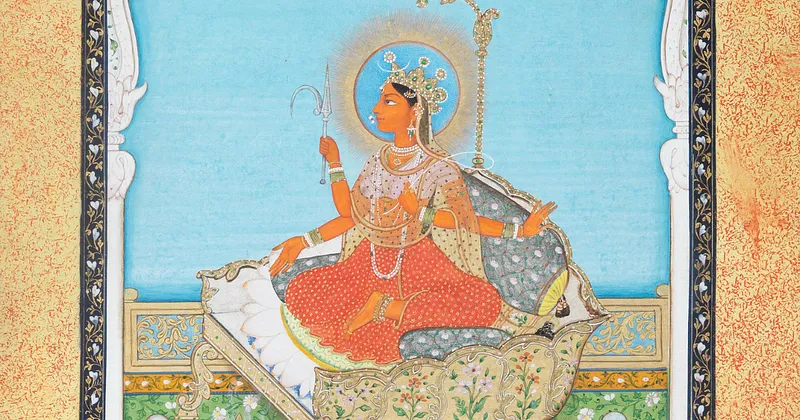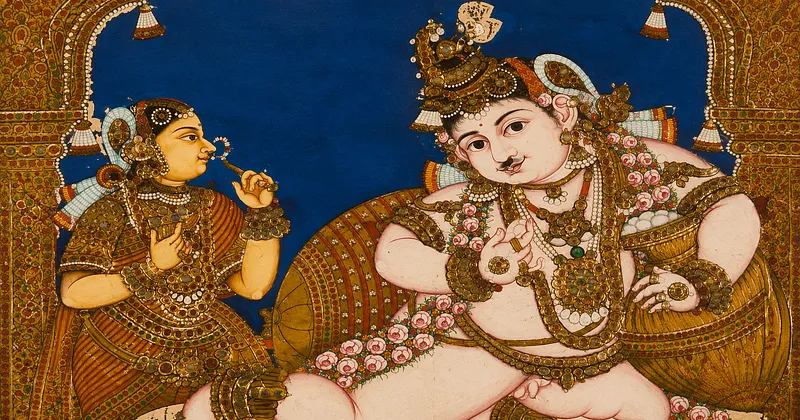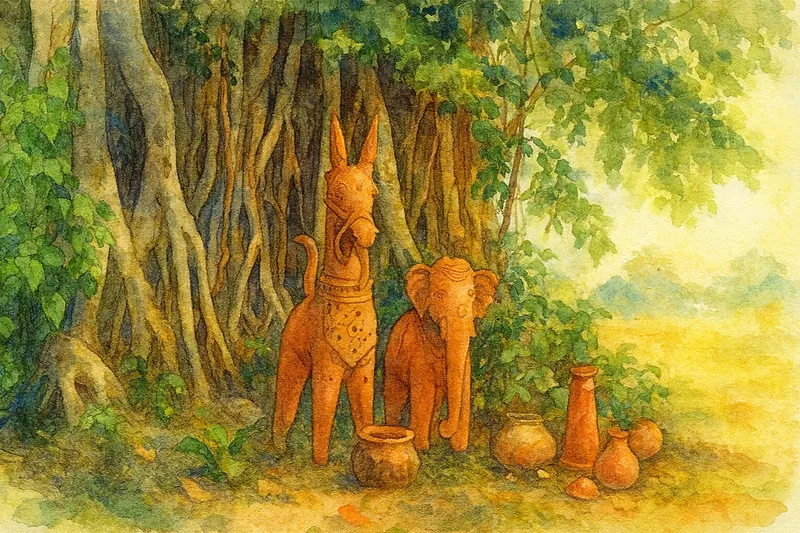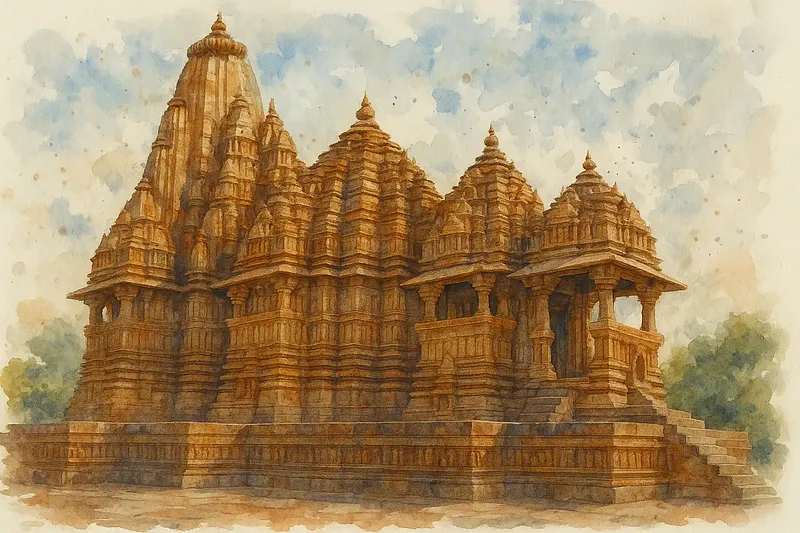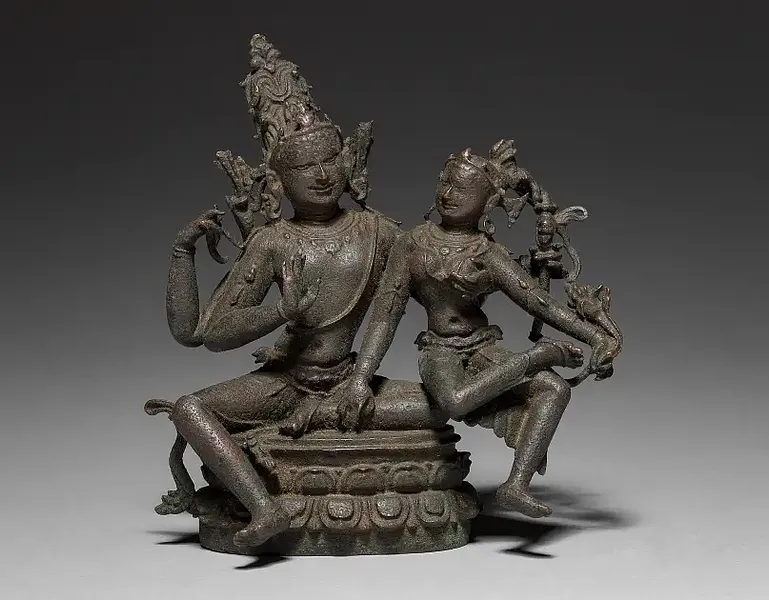
The pursuit of art in the Hindu tradition — whether the creation of art by a śilpi or a citrakāra or the experience of art by a bhakta or rasikā — has never been a mere superficial indulgence in aesthetics. Rather, it has always been an endeavor to realise the ineffable, striving towards the comprehension of not only the artist's vision but also the eternal, art being a legitimate path towards self-realization. Aesthetics, in the mārgīya or classical Hindu tradition is the domain of the supra-rational aesthetic soul, which seeks beauty, since to find the highest beauty is to find God. True art transcends the limitations imposed by the intellect and reason; its beauty and harmony can only be seized through vision, not through a rational analysis. The highest expressions of art and beauty, in this view, surpass rationality and lead the beholder to an intuitive comprehension of the divine. Art, therefore, is an instrument of transcendence, an unbroken Advaitic chain that connects the creator, the creation, and the aesthete in an intricate dance of self-discovery. The very essence of art is not in its visual appeal alone, but in the way it leads the seeker to a profound knowledge of the self, echoing the spirit of Vedanta where true knowledge is but self-knowledge.
Dehejia writes in The Advaita of Art that the “Indian viewpoint generally is very often a holistic one, and to sequestrate one activity or principle and study it in isolation, is to truncate and distort the Indian view of life.” In the mārgīya tradition, art is not seen in isolation but as an integral part of the spiritual pursuit, part of the puruṣārthas, rather than a separate experience isolated from religion. Bharata himself proclaimed that music and singing surpass even the merits of ritual baths and incantations. Sri Aurobindo has written that, *the whole basis of Indian artistic creation...is directly spiritual and intuitive.. and its highest business is to disclose something of the Self, the Infinite, the Divine.*
Abhinavagupta defines a sahṛdaya as one who is “capable of identifying with the subject-matter since the mirror of their heart has been polished, through constant recitation and study of poetry and who sympathetically respond in their own hearts; he is one whose heart melts and whose heart is not hardened by the readings of dry texts on metaphysics."
The notion of pratibhā, the creative intuition of the artist, is central to this discourse. Rooted in the concept of light, pratibhā is not just skill or technique but a flash of enlightenment, an intuitive burst that reveals the unseen. Abhinavagupta describes it as the capacity to produce novel forms that are not mere imitations of the visible world but revelations of deeper truths. It is through pratibhā that the artist communes with the cosmic Puruṣa, and it is through rasa, the aesthetic emotion, that the aesthete experiences a moment of transcendence.
If rasa is the soul of Indian art, rūpa —the aesthetic form—is its very idiom. In the mārgīya tradition, true rūpa is not just an arbitrary shape but a visual embodiment of the cosmic Puruṣa. The idealized forms of Indian sculpture, deeply rooted in the Puruṣa Sūkta of the Ṛg Veda, are not photographic representations of the human figure but transcendental expressions of the macrocosm reflected in the microcosm. The thousand-headed Puruṣa, encompassing the universe, serves as the archetype for all artistic representation, harmonizing proportion (pramāṇa) with divine correspondence (sadṛsya).
This vision of rūpa is not left to the whims of the artist’s imagination but Is grounded in the principles laid down by the śilpaśāstras and emerges in the mind of the śilpi or artist through an intense dhyāna— this meditative discipline that gives that which is formless puruṣa a form or rūpa. Dhyāna is a disciplined activity and one that could be deliberately induced. Dehejia writes that this dhyāna is not a trance, in the sense of a loss of volitional control, or a contentless ecstasy, but a meditative discipline focused on the cosmic Puruṣa, with the express intent of revealing its form. The artist, much like the seers who first heard the cosmic sounds of the Vedas of which the hymns were composed, does not simply create; he reveals. Art and artists in the mārgi tradition enjoyed an exalted status, and the traditional rūpakāra or image-maker had a certain responsibility to society. The artist existed in a dynamic interplay with society—both shaping and being shaped by it. Rooted in tradition, the artist worked within well-defined boundaries, yet remained mindful of his audience. This ensured that the rūpa was always an expression of the collective vision of tradition, rather than a medium for mere personal expression.
Thus, the Indian aesthetic tradition has focused on aesthetic appreciation, which is considered to be explicable, rather than whimsically dependent on the mystery of the artist's inspiration. The artist's dhyāna differs from that of the bhakta, because of his specific purpose of reinterpreting and recreating the rūpa. The form of the deity is first keenly visualised in the mind’s eye, envisaged and memorised with great focus and concentration before it takes a definitive shape in stone or pigment. The essence of creativity or artistic inspiration is termed pratibhā, which signifies a burst of enlightenment. Abhinavagupta describes it as *an intuitive capacity to produce novel objects.* Mulk Raj Anand writes that the artist performs a ritual of purification by engaging in dhyāna, visualizing the complete form before manifesting it in tangible material. This is not an act of mere craftsmanship but one of spiritual invocation. He describes it as follows.
“The artist performs purifactory ablutions and sits down to focus his attention on...a dhyāna-mantra. He then offers flowers, incense and other gifts to the form conceived. The mental picture is thus seen in all its details and the work of art is complete in the mind even before being translated into form. The artist then begins the task of technical elaboration, during which time he must hold fast to the conception evolved through yoga... The kind of mental state designed to be secured through the practice of yoga can also be cultivated by the artisan through tuning up the functions of the body and the mind into perfect obedience to the faculty of intuition and through the deliberate invocation of dreams.”
The mārgīya tradition holds that beauty is not subjective but governed by precise canons. The traditional artist is rigorously trained in śāstrika proportions and aesthetic principles of the śilpaśāstras, which includes an intimate knowledge of the measurements and proportions prescribed for the rūpa, before undertaking an artistic work. The artists’ training transforms him into an aesthete of the highest order, and his aesthetic sensibilities enter into his dhyāna. The six elements of rūpa, detailed in the Kāmasūtra by Vatsyāyana —proportion (pramāṇa), perception (rūpa-bheda), emotion (bhāva), grace (lāvaṇya-yojana), resemblance (sadṛsya), and artistic execution (varṇika-bhanga)—ensure that the aesthetic form aligned with cosmic principles. This rigidity, or “tyranny of tradition”, as some might call it, was not a limitation or fetters imposed on the mind and creativity of the artist but the creation of a symbolic language for communicating a specific vision, a means which aided in sustaining continuity and resisting the disruptions of time.
Despite this, the tradition was never static. The cross-pollination of mārgīya and deśīya influences ensured that Indian art remained dynamic, fluid, and ever-relevant. While pramāṇa sought perfection beyond this world, sadṛsya grounded the form in lived experience. This dialectic between the ideal and the empirical is at the very heart of Indian aesthetics.
The mārgīya tradition is predominantly centered on the human form, the human body serving as a profound symbol of the perfection and harmony between the microcosm and the macrocosm. The human body is not merely a familiar or appealing shape but a reflection of the cosmic puruṣa, imbued with sacrality and significance. On the corollary, aesthetically, the cosmic puruṣa establishes the human form as the foundation of rūpa and the ideal standard of beauty.
For the rūpakāra, the visual form is never an end in itself but a manifestation of the cosmic Puruṣa, the pinnacle of beauty and the embodiment of cosmic oneness. The ultimate source of rūpa is the puruṣa sūkta of the Ṛg Veda, where reality itself is consecrated as a cosmic Puruṣa. The hymn describes the formation of the world from the body of the primordial Man:
The puruṣa (universal being) has thousand heads, thousand eyes and thousand feet. Thousand signifies innumerable which points to the omnipresence of the universal being. He envelops the world from all sides i.e. he pervades each part of the creation, and extends beyond in the ten directions represented by ten fingers. -Ṛg Veda, 10. 90. 1
Metaphysically, this idea reinforces the intrinsic connection between the vast universe and the individual being. These two principles—artistic form and metaphysical truth—are central to the mārgīya art tradition. The image of the cosmic puruṣa therefore, provides a focal point for artists, anchoring their creative energies and preventing their vision from becoming fragmented. It acts as both the still center of artistic creation and the channel through which universal Reality and inner reality merge in perfect reintegration.
In the words of Sri Aurobindo, *for the Indian mind, form does not exist except as a creation of the spirit, drawing all its meaning and value from the spirit.* Art is thus not an escape from reality but an immersion into life’s deepest truths. As Rabindranath Tagore eloquently states, art and literature are not mere surfaces but windows to the eternal reality of man.
The journey of art—from the inspiration of the artist to the realization of the aesthete—is an unbroken chain of advaita, a non-dual continuum where subject and object, creator and creation, form and formlessness dissolve into oneness. Hindu art directs the aesthete and the bhakta — both beholding the image in different ways — towards the ultimate reality and therefore qualifies to be considered advaita. The aesthetics of India have always affirmed this: that in the highest experience of art, the self and the infinite merge, and for a fleeting moment, the beholder experiences the rasa of ultimate reality. Thus, Indian art is not just to be seen or admired; it is to be realized. It is an invitation to awaken, to behold the cosmic puruṣa crafted in stone, and in that recognition, to find the self.
Based on The Advaita of Art by Harsha Dehejia
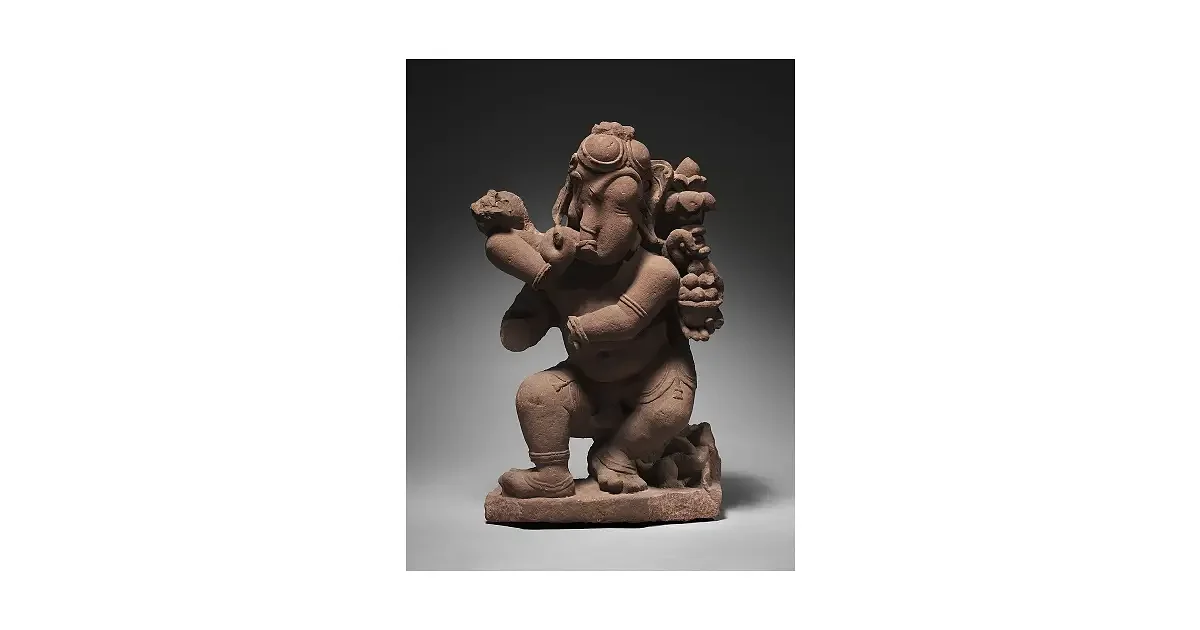
Image: Dancing Gaṇeśa, Madhya Pradesh, Khajuraho, early 11th Century, Cleveland Museum of Art