.png)
In the Indian subcontinent, the extraordinary multiplicity of races, linguistic and ethnic communities, religious affiliations, and social structures has generated an unparalleled wealth of music and dance traditions. Within this vast cultural terrain, certain forms bear the imprint of prehistoric origins, while others emerged in response to shifting historical and social conditions. Despite political upheavals, migrations, religious transformations, and technological change, these traditions have endured with remarkable resilience. Their continuity across centuries, alongside processes of adaptation and reinvention, constitutes one of the most intricate and dynamic artistic phenomena in the world.
Among the arts, dance stands simultaneously as the most archaic and the most refined. Across civilizations, the human body has served as one of the earliest instruments of expression—articulating joy, grief, triumph, fear, and devotion through rhythm and gesture long before the codification of language or the sophistication of pictorial representation. At its most fundamental level, dance embodies a primal universal human impulse toward expression. Yet within the wide multiplicity of themes, vocabularies, and stylistic inflections, folk dance retains a distinct ontological character. It is marked by spontaneity, collective participation, and the absence of rigid demarcations between creator and performer, performer and spectator. The community is not merely the audience but the generative source of the form. Dance emerges organically from lived experience—interwoven with subsistence activities such as hunting, fishing, cultivation, and harvest; with rites of passage; with seasonal cycles; and with ritual acts of propitiation and thanksgiving.
Unlike the classical arts, which often depend upon codified grammar, aesthetic canons, and institutional transmission, folk forms are sustained through embodied continuity rather than formal doctrine. The terms “folk” and “classical” therefore cannot be reduced to simple opposites—rural and urban, old and refined, primitive and advanced. Indian dance traditions thus emerge as a complex, interdependent matrix of lived artistic practice. Communities encapsulate moments of cultural experience and transmit them through repetition, recreation, and sustained participation. Through this cyclical process, antiquity persists as living continuity.
Any effort to categorize what are broadly termed the tribal and folk dances of India immediately is met with methodological complexity. These traditions cannot be confined within the boundaries of physical anthropology, nor can they be exclusively mapped onto racial types, sub-tribes, or linguistic groupings such as the Indo-Aryan, Dravidian, Munda, or Sino-Tibetan. They do not conform neatly to geographical demarcations, ecological zones, or political units. Nor do they follow a linear evolutionary progression from nomadic food-gatherers to settled agriculturalists and urban communities. The features of ritual function, fertility symbolism, propitiatory practices, religious affiliation, or socioeconomic stratification similarly fail to produce demarcation. These traditions are layered, living worlds. They change from within even as they respond to what surrounds them. Every region carries its own character, shaped by land, climate, community, belief, and memory. Within that region, forms grow, adapt, and converse with one another. At the same time, they reach outward—borrowing, responding, influencing, and being influenced. Continuity is born from this double movement: inner renewal and outer exchange. Each tradition turns on its own center while remaining connected to a larger cultural orbit. Together, they form a vast, shared civilizational rhythm—distinct in parts, unified in spirit.
Dance reveals this pattern with unusual clarity. More than many other arts, it shows how deeply intertwined India’s cultural life is. It cannot be understood through anthropology or history alone. It must be experienced as art—embodied, performed, remembered. The interpretive frameworks of myth, cosmology, and shared narrative traditions—whether shaped by local belief systems or by pan-Indian epics such as the Rāmāyaṇa and the Mahābhārata—intersect with, but do not singularly define, these forms. Literary, archaeological, and sculptural evidence contribute to historical understanding, yet remain incomplete without the vitality of oral transmission. Above all, these traditions resist any attempt to be reduced to a monolithic entity called “folk,” separate from so-called classical styles. Regional idioms, ritual contexts, performative vocabularies, and aesthetic principles are deeply interwoven.
To call an art form ancient is to acknowledge that it carries traces of the past; it is not the past itself. To describe a dance as tribal or village-based merely points to the environment in which it evolved, not to its artistic value or complexity. In many regions, so-called tribal dances have absorbed elements of the “great tradition” without altering their essential structure. Conversely, highly stylized classical forms often reveal deep affinities with what is labelled the “little tradition.” This interplay becomes clear when one places forms such as Purulia Chhau alongside Kathakali or Koodiyattam: the boundaries are far more porous than the labels suggest. Indian dance simultaneously embodies all the different realities that populate the country, emerging from this immense and intricate continuum of land, language, livelihood, belief, and time.
The peasants are the creators of the folk dances, ritualistic, agricultural and seasonal, growing out of the rhythms of village life. Alongside the cultivators, however, exists another vital group: hereditary craftsmen, musicians, storytellers, dancers, and performers who have long served the community. They are defined less by economics or anthropology than by cultural function. These artist-communities have preserved oral tradition and sustained a living exchange between village and town, between folk and classical streams. At moments when refined, literate arts weakened in urban centres, it was often these performers who carried continuity forward. The makers and custodians of traditional dance, dance-drama, and theatre—professional naṭas, bhavais, cāraṇas, bhands, kathākārs, and others—embody this lineage. Their performance practice resists neat classification. It dissolves boundaries between dance and drama, music and theatre, folk and classical. What emerges is a form of total theatre—layered, communal, and fluid—rooted in ancient themes yet constantly renewed with contemporary meaning.
Alongside village and performer traditions stands the refined stream often called the “Great” or Saṃskṛtika tradition—the source of what is identified as classical art and dance. This tradition is not simply urban, nor is it identical with modern educated city culture. For nearly two centuries, Western-style education created a divide between the urban literate class and the living artistic traditions of villages and traditional communities. Yet from within this same educated class has emerged, over the past several decades, a committed minority seeking to restore and reinterpret traditional arts—music, dance, painting—even within urban spaces. Folk forms, once overlooked, are now studied, performed, and influencing contemporary creative practice.
India’s cultural landscape cannot be understood through rigid categories. It requires multiple perspectives and a willingness to see how traditions overlap and inform one another. Historical evidence—literary, sculptural, archaeological—has often privileged classical forms, partly because of the authority granted to Vedic and elite sources. But these very sources also reveal a vibrant, participatory rural and tribal culture existing alongside the sophisticated, esoteric one. The two have never stood in opposition; they have evolved together, sustaining and enriching each other across time.
A hymn relating to the birth of Aditi describes the joy of the gods: Thence, as of dancers from your feet, a thickening cloud of dust arises. (X. 72-vii). In hymn X. 94, there is a vivid description of a community dance: With the sisters they have danced, embraced by them, making the earth re-echo with the sounding treads. A reading of the hymn tells us of a circle, and of couples who moved in the circle to a humming sound, a familiar sight even today, echoed in rāsa traditions and in community dances. Such performances took place in the samana, the public assembly where all generations met. Dance also formed part of funerary rites, as the hymns suggest. By the time of the Sāmaveda, distinctions in style and function had likely emerged—what later came to be understood as mārgi (classical) and deśi (regional). The Yajurveda and Atharvaveda reveal an even deeper ritual role for dance, including sacrificial, trance, and propitiatory practices—many of which survive today in folk and tribal traditions. Some of these practices may even predate the Vedic corpus itself.
Later texts—the Brāhmaṇas, Gṛhya Sūtras, and classical lexicons such as Pāṇiṇi’s Aṣtadhyāyi, the Amarakośa, and Vatsyāyana’s Kāmasūtra—refer to various categories of performers: naṭa, nartaka, kauśīlava, śailūṣa, and others. The distinctions show that popular entertainment and refined stage arts coexisted from early times, developing side by side rather than in isolation. In the Saṃskṛta literary corpus—both in kāvya or drama—music and dance appear in two parallel streams shaped by different social settings. Sanskrit theatre was never merely words but a visual and musical expression in which gesture, movement, and rhythm were as vital as dialogue. Its conventions developed not only from theoretical treatises but also from living popular practice. From the Nātyaśāstra onward, aesthetic thought recognised this dual current: Saṃskṛta and Prakrit, temple dancer and community performer: giving rise to the interwoven concepts of nātyadharmi and lokadharmi, mārgi and deśi.
Regional variation was long acknowledged through pravṛttis and vṛttis, concepts which could only have only emerged in a culture where popular and refined traditions constantly interacted. Folk practices often matured into highly stylized forms, yet retained visible ties to their broader base. By the 10th century, Sanskrit drama evolved into saṅgīta nāṭaka, a music-dance theatre that travelled across social levels and seeded many later dance-drama traditions. Jayadeva’s Gīta Govinda in the 12th century spread across regions and classes for centuries, shaping both elite and popular performance. Works like the Rāmāyaṇa, Mahābhārata, and Gīta Govinda became bridges between classical and folk expression, generating countless local forms.
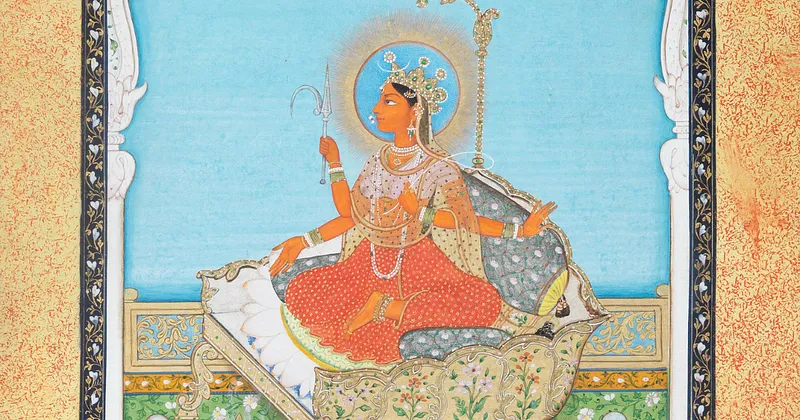
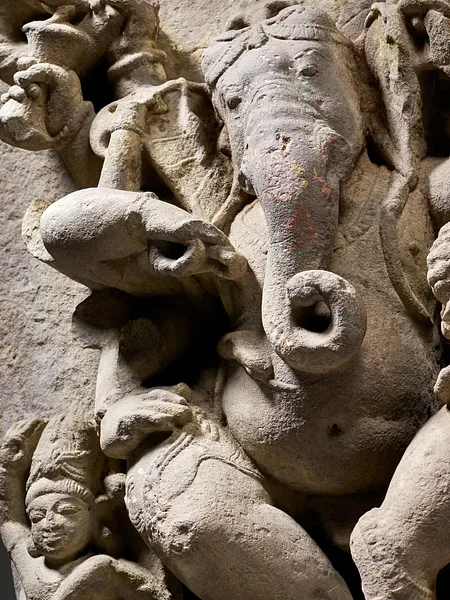
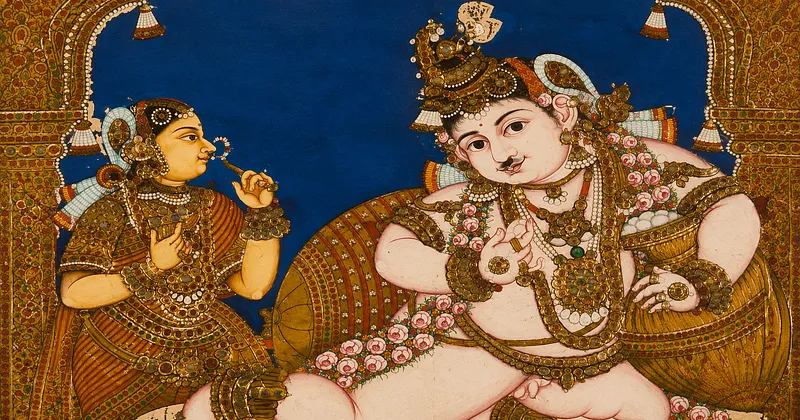
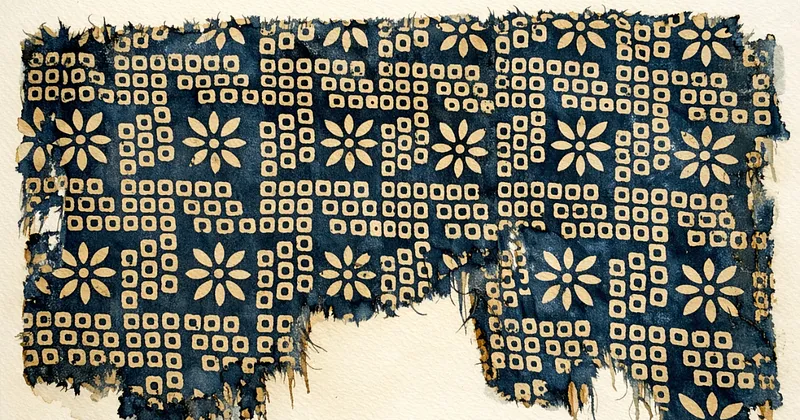
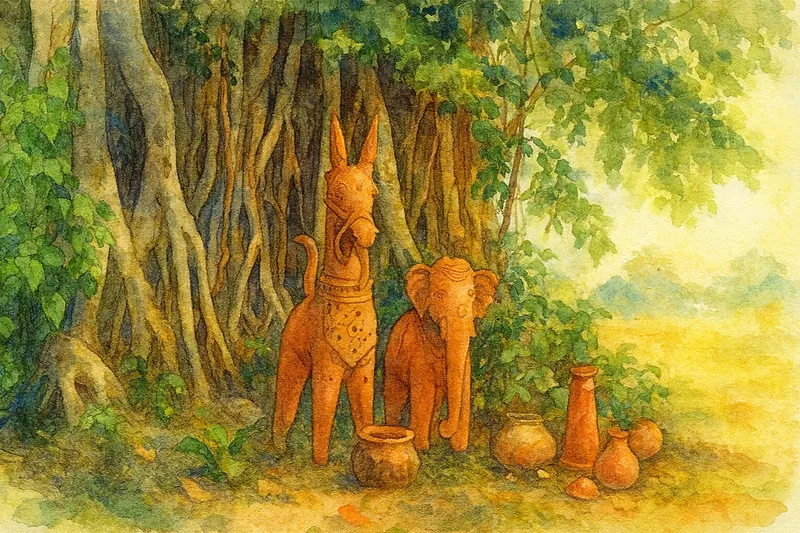
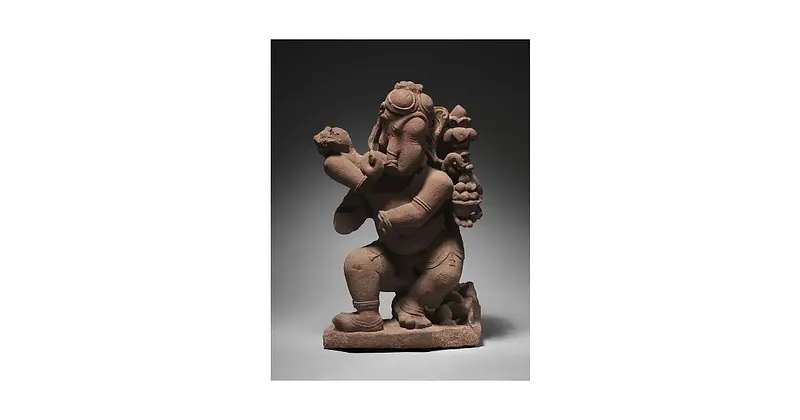
Material culture tells the same story. Alongside temple sculpture and court painting ran the continuous stream of tribal and village art—terracotta offerings, wood carvings, ritual masks, bronzes carried in festival dances. Communities such as the Bhils, Gonds, Todas, Nagas, and many others created visual forms deeply tied to ceremony and movement. Floor and wall paintings across India—drawn in rice paste or coloured powders—carry ritual and symbolic meaning. Geometric formations like the mandala, the square, intersecting triangles, and serpentine forms reappear in dance formations. Textile traditions—from Naga weaves to Bengal’s kantha and Punjab’s phulkari—echo the same visual language. Scroll and mural paintings and puppetry narrate stories from the same ritual world. . Within this wide cultural landscape, dance traditions may be understood as unfolding across many interwoven planes—emerging from the life of nomadic hunters and food-gatherers, from ritual acts of fertility and spirit propitiation, from the cyclical labours of agriculture, from seasonal and communal celebrations, from epic and devotional imagination, and from evolving forms of theatre that bridge village and town.
Dance is woven into all these practices. It is not an isolated art with decorative additions; it is part of an integrated way of life where sculpture, painting, costume, storytelling, and movement form a single aesthetic vision. Tribal, folk, and śāstrīya traditions have always coexisted, influencing and sustaining one another. When literary, sculptural, and painted evidence is read alongside oral traditions, the division between classical and folk dissolves. Indian art is not a linear progression from primitive to refined. It is layered, regional, and interdependent— consisting of overlapping currents. Precise chronology remains elusive without drawing together literary, archaeological, sculptural, anthropological, and oral sources, yet what becomes unmistakable is the continuity of a living tradition. The seemingly simple gestures of folk performance carry within them centuries of memory—of land, labour, belief, and story. Tribal, folk, and classical are not stages in a linear “evolution” but disparate expressions of one civilizational rhythm, sustained through dialogue, adaptation, and enduring collective participation.
Inspired by an essay by Kapila Vatsyayana
Reference: Kapila Vatsyayan. Traditions of Indian Folk Dance. New Delhi: Indian Book Company, 1976.