
Sacred Geography Immersion
A conscious immersion into the devatā-tattva that greets us in every corner of Bhārata
Upcoming Chapter
Registration Open
Assām Edition
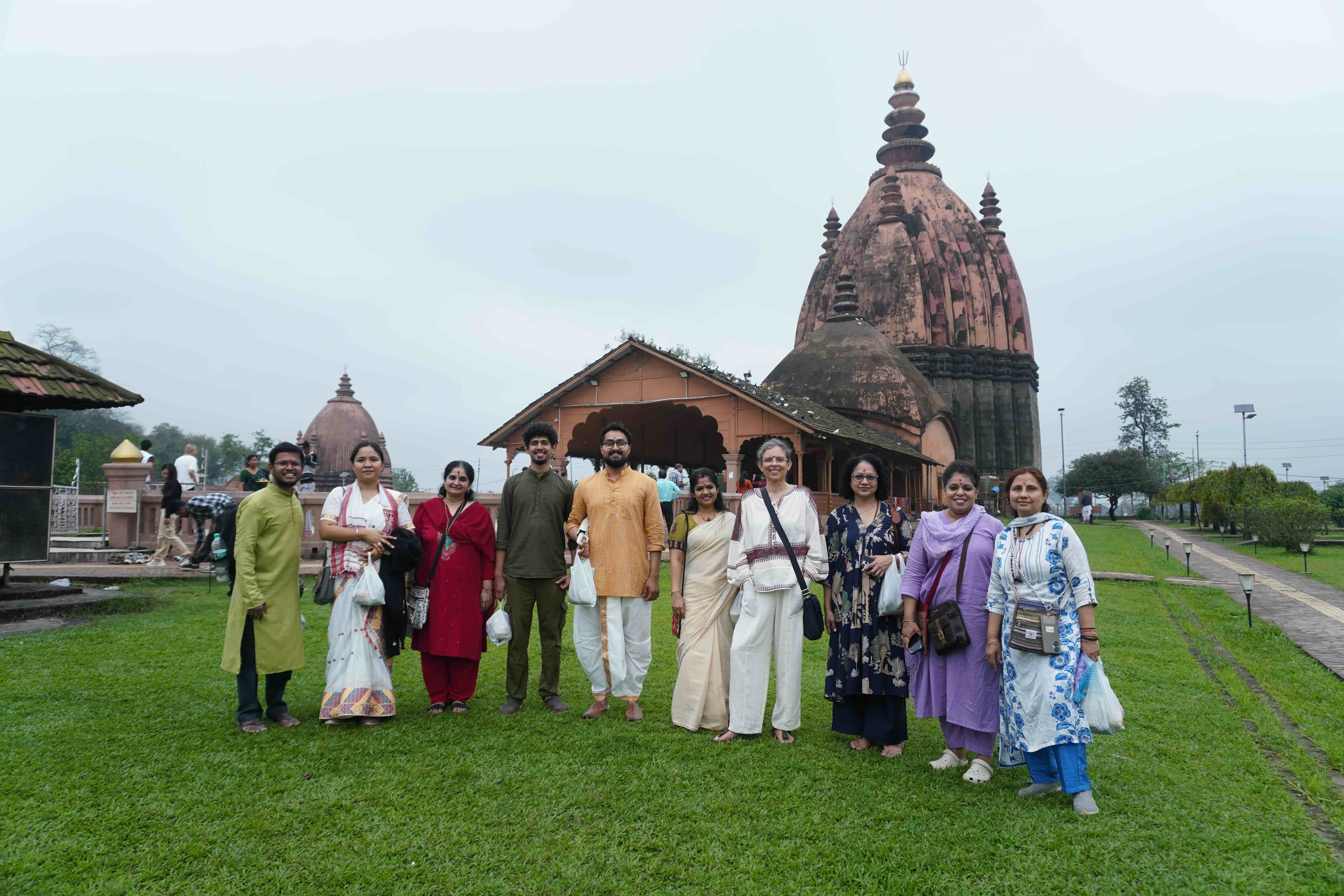
Land of Śakti, Śiva, Satrās and the River that Remembers Śākta intensity; Śaiva majesty; Vaiṣṇava discipline; Ahom sovereignty; Riverbased ecology; Monastic continuity; Indigenous resilience. ...
Dates
4 - 7 Apr 2026
Duration
4 Nights 4 Days
Price
₹41,999
Why Kṣetrabhūmi?
Kṣetra signifies the sacred precincts of the temple, while bhūmi is that divine land that lends herself to the presence of the kṣetra. Together, kṣetrabhūmi is a term synonymous with Bhāratavarṣa herself.
Here, beauty emerges from the sacred and the seeming dichotomies of prakṛti and puruṣa; parā and aparā are effortlessly harmonized.
The Bhagavad Gītā crystallizes what this term means to us:
श्रीभगवानुवाच -
इदं शरीरं कौन्तेय क्षेत्रमित्यभिधीयते |
एतद्यो वेत्ति तं प्राहु: क्षेत्रज्ञ इति तद्विद: || 2||
śrī-bhagavān uvāca -
idaṁ śarīraṁ kaunteya kṣetram ityabhidhīyate
etad yo vetti taṁ prāhuḥ kṣetra-jña iti tad-vidaḥ
The Supreme Divine Lord said: O Arjuna, this body is termed as kṣetra (the field of activities), and the one who knows this body is called kṣetrajña (the knower of the field) by the sages who discern the truth about both. (BG 13.2)
Kṣetrabhūmi is a journey of experiential discovery, and like all true journeys, it moves both outward and inward. Just as the Gītā reveals that this body, the śarīra, is itself the kṣetra, the living field of activity and experience, so too does every landscape traversed in a Kṣetrabhūmi tour become a mirror of the inner terrain.
The pilgrim does not merely visit a place; the place touches and awakens something within the pilgrim. Within a tīrthakṣetra, the mūla-devatā presides as the supreme kṣetrajña, the all-knowing witness of the field. But the deeper invitation of Kṣetrabhūmi is this: as the traveller moves through sacred geographies, the very act of conscious, wakeful journeying begins to awaken the kṣetrajña within, the cetanā-tattva, the principle of pure awareness that knows the body, knows the land, and ultimately knows itself.
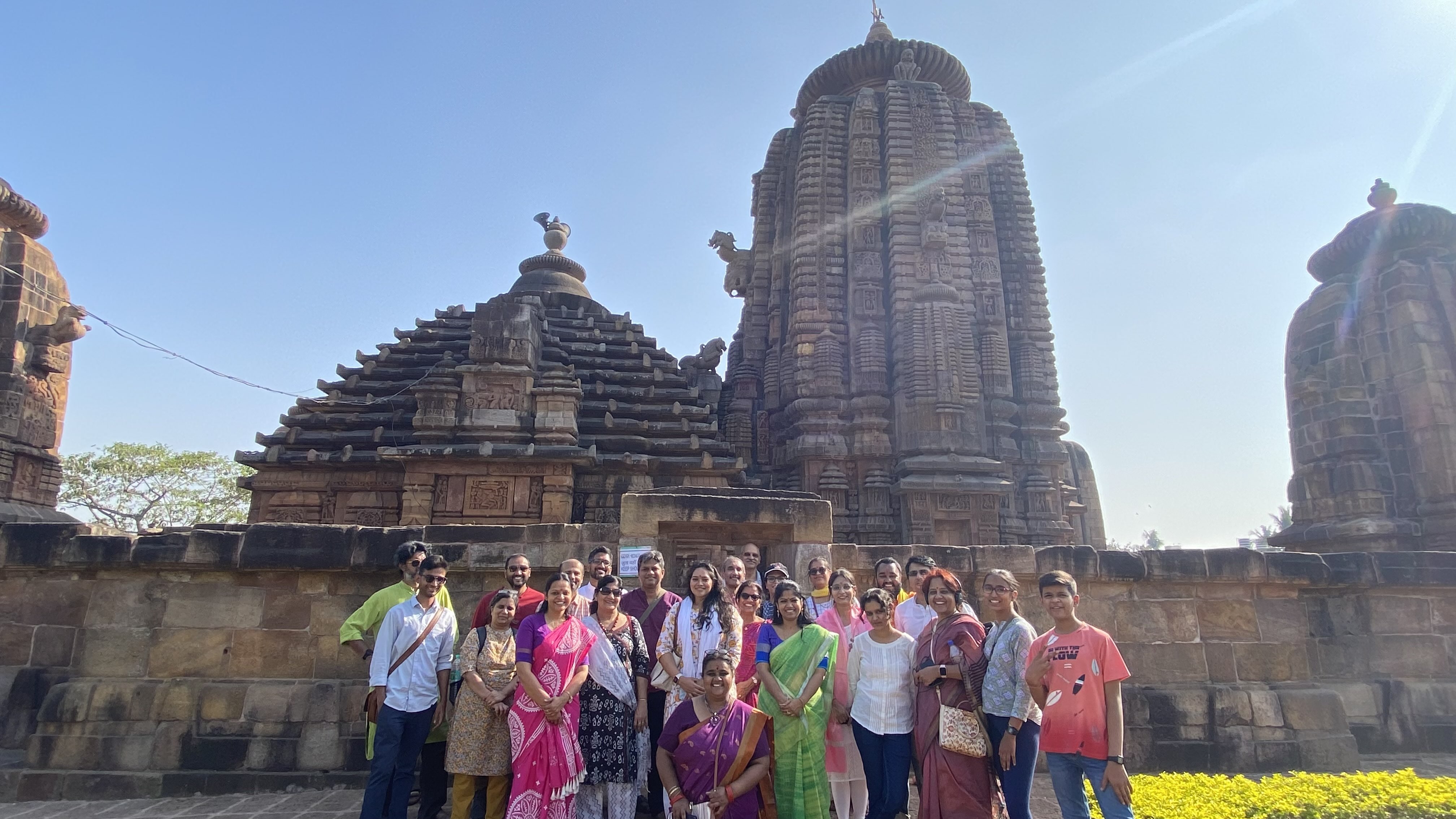
The tour becomes the teaching. The terrain becomes the text. And the traveller, in learning to know the field, begins to remember the Knower.
A yātrā is one of the most transformative civilizational mechanisms that helps us touch and be touched by the sacred core that animates all - a concentrated time and space capsule that allows us to expand and elevate.
In our 13th offering of temple tours (and our first in this new format of Kṣetrabhūmi), we offer you an opportunity of visiting the sacred lands of Assām.
Here, beauty emerges from the sacred and the seeming dichotomies of prakṛti and puruṣa; parā and aparā are effortlessly harmonized.
The Bhagavad Gītā crystallizes what this term means to us:
श्रीभगवानुवाच -
इदं शरीरं कौन्तेय क्षेत्रमित्यभिधीयते |
एतद्यो वेत्ति तं प्राहु: क्षेत्रज्ञ इति तद्विद: || 2||
śrī-bhagavān uvāca -
idaṁ śarīraṁ kaunteya kṣetram ityabhidhīyate
etad yo vetti taṁ prāhuḥ kṣetra-jña iti tad-vidaḥ
The Supreme Divine Lord said: O Arjuna, this body is termed as kṣetra (the field of activities), and the one who knows this body is called kṣetrajña (the knower of the field) by the sages who discern the truth about both. (BG 13.2)
Kṣetrabhūmi is a journey of experiential discovery, and like all true journeys, it moves both outward and inward. Just as the Gītā reveals that this body, the śarīra, is itself the kṣetra, the living field of activity and experience, so too does every landscape traversed in a Kṣetrabhūmi tour become a mirror of the inner terrain.
The pilgrim does not merely visit a place; the place touches and awakens something within the pilgrim. Within a tīrthakṣetra, the mūla-devatā presides as the supreme kṣetrajña, the all-knowing witness of the field. But the deeper invitation of Kṣetrabhūmi is this: as the traveller moves through sacred geographies, the very act of conscious, wakeful journeying begins to awaken the kṣetrajña within, the cetanā-tattva, the principle of pure awareness that knows the body, knows the land, and ultimately knows itself.
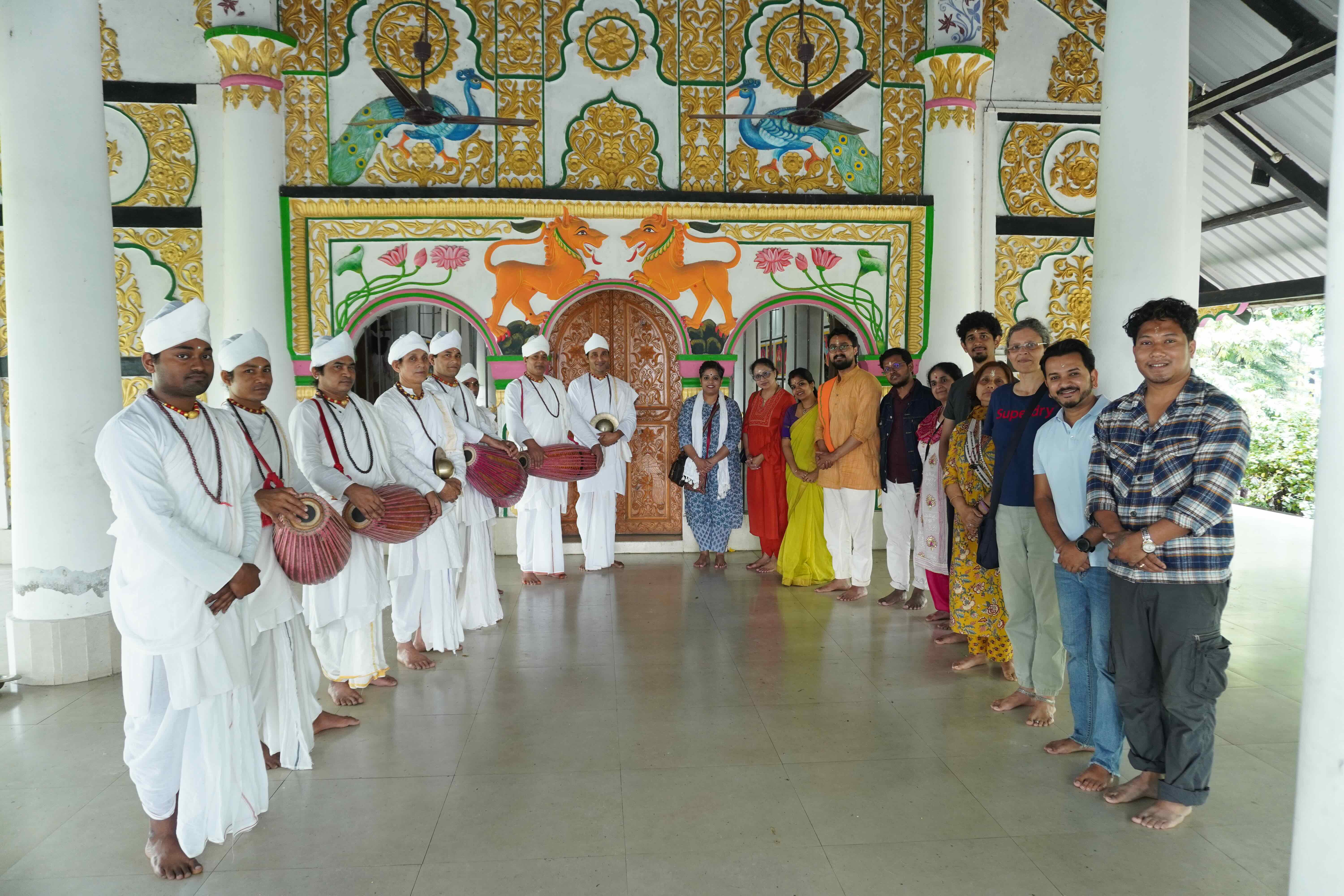
The tour becomes the teaching. The terrain becomes the text. And the traveller, in learning to know the field, begins to remember the Knower.
A yātrā is one of the most transformative civilizational mechanisms that helps us touch and be touched by the sacred core that animates all - a concentrated time and space capsule that allows us to expand and elevate.
In our 13th offering of temple tours (and our first in this new format of Kṣetrabhūmi), we offer you an opportunity of visiting the sacred lands of Assām.
Kṣetrabhūmi is for those who
hold a deep love and reverence for kṣetras and yātrās
yearn to decode civilizational roots and universal ideas that animate Bhārata
cherish sacred geometry, sculpture and timeless art as lifelong keepsakes
delight in folk art, expression, local cuisines and lore
seek a tribe who is animated by the idea of Bhārata as a Kṣetrabhūmi
aspire to reconnect with real history, geography, philosophy and metaphysics
All this and more - through and within the sanctum of a kṣetra.
What can you expect in a Kṣetrabhūmi Yātrā?
A conscious immersion into the devatā-tattva that greets us in every corner of Bhārata
An opportunity to remember, relive, and revive the timeless tradition of tīrthayātrā
A curated experience with the profound diversity of Sanātana Dharma, viewed from a spiritual, cultural and civilizational lens
An invitation to wonder at the sacred geography and architecture that wraps the metaphysical in stone and stories
A sangha of people who experience joy in dialogue, reflection, and shared rediscovery of what we have always known, deeply and intuitively
A deliberate pause from the ambient noise of deadlines and digital distraction into a space of anubhūti - of experiencing the divine first hand.
About Kṣetrabhūmi
What is Kṣetrabhūmi?
Bhāratabhūmi is a puṇyabhūmi - a sacred, ancient land lived and walked by devatās, sanctified by the tapas of the ṛṣi paramparā.
Bhāratabhūmi is a tīrthakṣetra - where every inch is sacred and worthy of bhakti. From the yajña-vedis of the Vaidika times to the kṣetras of later centuries, while forms evolved, the devatā-tattva and samarpaṇa-bhāva remained constant.
From the trees and stones, to the flowing rivers, all of prakṛti manifests and reflects the divine principle.
Bhāratabhūmi is also a kṣetra of vīras - From the northern frontiers of Kaśmīra and the Mārtaṇḍa Sun Temple, to Somnātha, to Kāśī, to Mathurā, to Kāmākhyā, to Causaṭh Yoginī, to Śṛṅgerīi, Ranganāthasvāmī in the south, the story is only one - of ancestors protecting our kṣetras and vigrahās, with kṣatra-vīrya and unwavering resilience.
Why was this?
Our kṣetras are living, breathing spaces where our devatās reside and preside, and commune with millions. They are the nerve-centers of the Hindu civilization. To the Hindu, nothing is greater or more important than the devata. Therefore Somnātha rises again. That is why Kāśī endures and the fight for Mathurā and others continue.
Kṣetras are mokṣa-dhāmas and loka-kalyāṇa-kārakās, i.e. they facilitate individual freedom and collective flourishing. They are sacred spaces of great śakti, where millions seek fulfilment of the catur-vidha puruṣārthas, but also experience bliss, even for a momentary glimpse of their iṣṭa, of the central, divine principle, of sat-cit-ānanda.
Each tīrthakṣetra is a multi-generational sacred ecosystem - spiritual, cultural, economic, social and more, sustained over centuries by families and purohitas serving kṣetras, to various artisans such as flower sellers, craftsmen, weavers, sculptors, to cooks who prepare the prasāda.
With deep reverence to this sacred core of Bhārata, Bṛhat presents:
Kṣetrabhūmi - our new format of temple tours, which are curated sacred geography immersions, where the yātrā itself is a civilizational rediscovery and a spiritual odyssey into oneself.
Bhāratabhūmi is a tīrthakṣetra - where every inch is sacred and worthy of bhakti. From the yajña-vedis of the Vaidika times to the kṣetras of later centuries, while forms evolved, the devatā-tattva and samarpaṇa-bhāva remained constant.
From the trees and stones, to the flowing rivers, all of prakṛti manifests and reflects the divine principle.
Bhāratabhūmi is also a kṣetra of vīras - From the northern frontiers of Kaśmīra and the Mārtaṇḍa Sun Temple, to Somnātha, to Kāśī, to Mathurā, to Kāmākhyā, to Causaṭh Yoginī, to Śṛṅgerīi, Ranganāthasvāmī in the south, the story is only one - of ancestors protecting our kṣetras and vigrahās, with kṣatra-vīrya and unwavering resilience.
Why was this?
Our kṣetras are living, breathing spaces where our devatās reside and preside, and commune with millions. They are the nerve-centers of the Hindu civilization. To the Hindu, nothing is greater or more important than the devata. Therefore Somnātha rises again. That is why Kāśī endures and the fight for Mathurā and others continue.
Kṣetras are mokṣa-dhāmas and loka-kalyāṇa-kārakās, i.e. they facilitate individual freedom and collective flourishing. They are sacred spaces of great śakti, where millions seek fulfilment of the catur-vidha puruṣārthas, but also experience bliss, even for a momentary glimpse of their iṣṭa, of the central, divine principle, of sat-cit-ānanda.
Each tīrthakṣetra is a multi-generational sacred ecosystem - spiritual, cultural, economic, social and more, sustained over centuries by families and purohitas serving kṣetras, to various artisans such as flower sellers, craftsmen, weavers, sculptors, to cooks who prepare the prasāda.
With deep reverence to this sacred core of Bhārata, Bṛhat presents:
Kṣetrabhūmi - our new format of temple tours, which are curated sacred geography immersions, where the yātrā itself is a civilizational rediscovery and a spiritual odyssey into oneself.
Why join us at Kṣetrabhūmi?
We live in times where our roots beckon in myriad ways - waiting to be seen, heard and re-discovered anew. Temple traditions act as a balm to our fast lives. Simple spiritual sādhānās become an anchor. Magnificent living structures stoke wonder. Local celebrations and perfected cuisines whisper millennia of knowledge-practices preserved.
Many among us may not know every śloka of our sacred texts and yet, instinctively, we know they must endure beyond us. So, what is the unifying thread?
We are part of a living, throbbing culture etched into us through grandmother’s stories, family temple trips, and festivals that shaped our earliest memories. At the very heart of all this, is the kṣetra, where all vidyās and kalās, all principles and practices meet with the devatā tattva at the center.
Kṣetrabhūmi is an invitation to relive, surrender, and participate in the transformative touch of a kṣetra, that we have all experienced, one time or another.
Here we anchor back in our collective civilizational identity - an immersion into each region's stories, traditions and knowledge systems that make the edifice of Bhāratabhūmi. Each of you will experience these yātrās in your own way - for that is how this civilization works. It meets you where you are and lifts you up from there. A space to pause, reflect, learn and find joy alongside a saṅgha of like-minded people.
Many among us may not know every śloka of our sacred texts and yet, instinctively, we know they must endure beyond us. So, what is the unifying thread?
We are part of a living, throbbing culture etched into us through grandmother’s stories, family temple trips, and festivals that shaped our earliest memories. At the very heart of all this, is the kṣetra, where all vidyās and kalās, all principles and practices meet with the devatā tattva at the center.
Kṣetrabhūmi is an invitation to relive, surrender, and participate in the transformative touch of a kṣetra, that we have all experienced, one time or another.
Here we anchor back in our collective civilizational identity - an immersion into each region's stories, traditions and knowledge systems that make the edifice of Bhāratabhūmi. Each of you will experience these yātrās in your own way - for that is how this civilization works. It meets you where you are and lifts you up from there. A space to pause, reflect, learn and find joy alongside a saṅgha of like-minded people.
Frequently Asked Questions
Find answers to the most common questions about our program.
All participants should have innate śraddhā (reverence) in the Hindu tradition and be open and willing to experience it. Trust and respect for the guru śiṣya paramparā, kṣetra vidhis (temple rules), other traditional practices etc. is of utmost importance to undertake this yātrā. Also, as this is an in-person retreat, prepare in advance to be fully present with all your faculties. Participants should be medically fit to endure a wide range of experiences.
In our culture, there is no age restriction as to when one can embark on a tīrtha yātrā. However, from our experience of such yātrās, we have learnt that the below guidelines have been helpful:
- Participants must be between 18 and 60 years of age.
- Participants below the age of 18 must either be accompanied by a parent/guardian or submit a letter of parental consent.
- Participants above the age of 60 must be in good fitness that enables joyful participation, as the yātrā is designed to optimise our presence in a kṣetra as a group and therefore disallows any special attention to individuals.
Please ensure all regular medicines/aids are also packed for personal well-being.
- Participants must be between 18 and 60 years of age.
- Participants below the age of 18 must either be accompanied by a parent/guardian or submit a letter of parental consent.
- Participants above the age of 60 must be in good fitness that enables joyful participation, as the yātrā is designed to optimise our presence in a kṣetra as a group and therefore disallows any special attention to individuals.
Please ensure all regular medicines/aids are also packed for personal well-being.
This is not a regular holiday or temple hopping programme. Our focus is always on the devatā, on the darśana and on the understanding of the history, rituals, lore and traditions of the temples. Hence, daily travel can span anywhere between 8-12 hours in a day, with brief recesses. It’s also important to remember that the itinerary is subject to changes based on local contexts such as weather, pilgrimage crowds/queues, temple festivals, rituals, schedules, etc.
We ensure clean and comfortable hotel stay with basic amenities (usually 3 star and above standard). The rooms provided will be on a twin-sharing basis. Special requests for single rooms will be charged on twin room tariffs, payable additionally (not included in Tour fees) on a strict availability and first-come-first-serve basis. Some regions have highly limited options for comfortable hotel stays for large groups, hence please remember we do our best to secure the best options for you
Cost varies between editions and primarily includes:
- Clean, comfortable accommodation on a twin-sharing basis
- Three vegetarian meals per day throughout the yātrā
- Regular Temple darshan and curated cultural immersions
- Expert guidance with civilizational and contextual insights
- All local transportation as per the itinerary
What is not included in the cost?
- Travel to and from the yātrā’s starting and concluding locations
- Special/Private darśanas or abhiśekas, entry fees, donations to temple authorities etc.
- Mid meal snacks/beverages, special dietary requirements, and other personal expenses, shopping, or discretionary purchases/special requests
- Travel or medical insurance
- Clean, comfortable accommodation on a twin-sharing basis
- Three vegetarian meals per day throughout the yātrā
- Regular Temple darshan and curated cultural immersions
- Expert guidance with civilizational and contextual insights
- All local transportation as per the itinerary
What is not included in the cost?
- Travel to and from the yātrā’s starting and concluding locations
- Special/Private darśanas or abhiśekas, entry fees, donations to temple authorities etc.
- Mid meal snacks/beverages, special dietary requirements, and other personal expenses, shopping, or discretionary purchases/special requests
- Travel or medical insurance
All the tour related expenses are already covered in the travel cost. However, expenses during the trip such as local snacks, shopping, souvenirs that are personal or entry fees, voluntary donations to any temple or cultural experiences etc are largely additional expenses to expect. Also, participants will bear expenses in case of evacuation due to medical emergencies or natural calamities such as earthquakes, floods, etc. towards travel, boarding, lodging, and medical costs.
In case you are not able to join the yātrā due to any avoidable or unavoidable reason(s), you should notify us at the earliest in writing and over a phone call.
Our Refund Policy:
- Cancellations made 30 days or more before departure – 90% of program fees.
- Cancellations made under 29 days to 21 days before departure – 50% of programme fees.
- Cancellations made 21 days or less before departure – No refund.
Our Refund Policy:
- Cancellations made 30 days or more before departure – 90% of program fees.
- Cancellations made under 29 days to 21 days before departure – 50% of programme fees.
- Cancellations made 21 days or less before departure – No refund.
Click on the ‘Register Now’ button on the webpage. Proceed to the fill and submit the form. Within 5 days of form submission, you can expect an email with all details.
We’re here to assist you at every stage. For any queries, write to reena.george@brhat.in.
To ensure a smooth registration process, please avoid:
- Incomplete or incorrect details (Name, Email ID, Phone Number)
- Uploading unclear or black-and-white photographs or ID proofs
Please note, that submitting your basic details is only the first step. Your registration is complete only after payment acknowledgment and receipt of the enrollment completion form via email by us, so do keep an eye on your inbox.
Kindly also plan your last-mile travel to the hotel on Day 0 and your return only post seat confirmation. We recommend you to coordinate with fellow yātrīs in the WhatsApp group.
To ensure a smooth registration process, please avoid:
- Incomplete or incorrect details (Name, Email ID, Phone Number)
- Uploading unclear or black-and-white photographs or ID proofs
Please note, that submitting your basic details is only the first step. Your registration is complete only after payment acknowledgment and receipt of the enrollment completion form via email by us, so do keep an eye on your inbox.
Kindly also plan your last-mile travel to the hotel on Day 0 and your return only post seat confirmation. We recommend you to coordinate with fellow yātrīs in the WhatsApp group.
Please drop us an email at contact@brhat.in or at +91 8886358583 for further assistance.
Your health is of utmost importance to us and while we will strive to get you assistance for any emergency situations, we recommend that you take sufficient stock of your regular medications/aids for regular and or special ailments as we cannot guarantee that these would be readily available during travel.
We recommend you to take required precautions and preparation as you would during your own travel plans, while undertaking these yātrās as some chapters may have trekking, prolonged queues, walking etc. We recommend anyone with asthma and any special conditions to have a chat with us before you plan enrolment.
We intend to primarily visit religious institutions and local communities. Prepare to dress modestly, keeping the religious sentiments and local culture in mind. Please strictly avoid sleeveless and short clothes for temple visits.
- Male Participants: Please carry a pair of dhotis along with you as some temples only allow men in dhotis without shirt/tees.
- Female Participants: Please carry traditional Bhāratīya attire like a saree or a long kurti with dupatta/stole to cover the torso, as some temples only permit females in traditional Indian wear.
- Male Participants: Please carry a pair of dhotis along with you as some temples only allow men in dhotis without shirt/tees.
- Female Participants: Please carry traditional Bhāratīya attire like a saree or a long kurti with dupatta/stole to cover the torso, as some temples only permit females in traditional Indian wear.
We recommend you check edition specific weather and forecast to be well-prepared for a hassle free yātrā. In case of additional questions, you can email or call us and closer to dates, use the whatsapp group we create