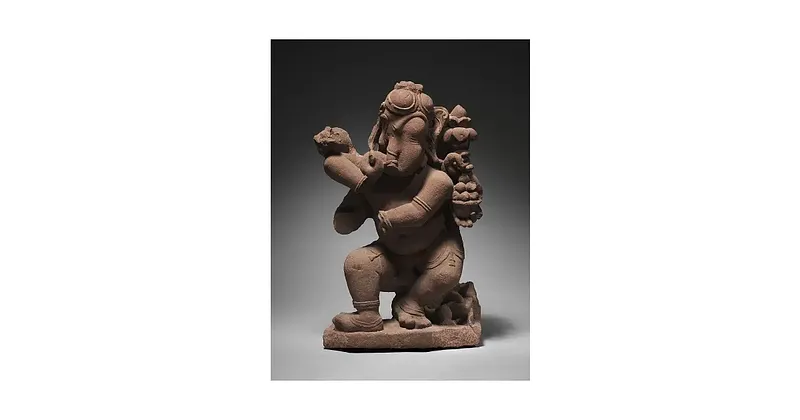
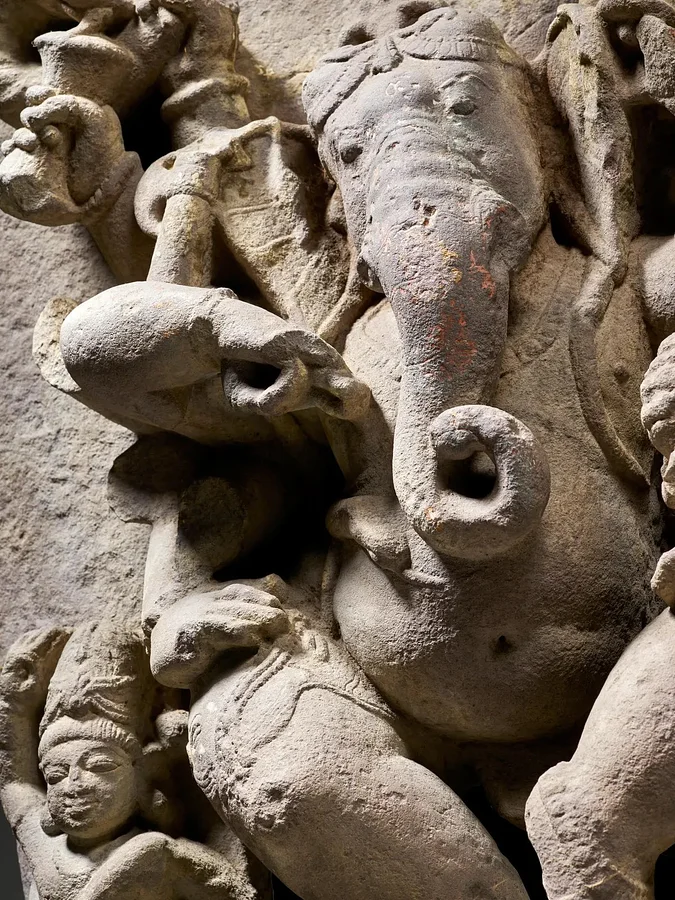
Gaṇeśa is one of the most recognizable figures of the Hindu pantheon, yet presents a striking paradox. He is both subordinate and indispensable: a pārśvadevatā, a minor or ancillary deity in ontology, yet ritually unavoidable at the threshold of every undertaking. He is vighneśvara, the Lord of obstacles, being both a vighnakartā, 'creator of obstacles' and vighnahartā, 'remover of obstacles'. His name is invoked before essentially every ceremony: before the recitation of mantras, before the start of journeys, before domestic rites of passage, and before royal or communal ceremonies. He is worshipped across sectarian divides—by Śaivas, Vaiṣṇavas, Śāktas, Buddhists, and Jains—making him not only the most popular but also the most ecumenical of the Hindu gods.
Emergence of Gaṇapati
The earliest text that foreshadows the emergence of Gaṇeśa is the Atharvaveda. Here, misfortunes, illnesses, and obstacles are caused by malevolent entities: grahas, piśācas, rakṣasas, and bhūtas. The Mānava-gṛhyasūtra (7th–5th centuries BCE) names four Vināyakas—Kūṣmāṇḍarājaputra, Śālakaṭaṅkaṭa, Usmita, and Devayajana—who obstruct prosperity, prevent childbirth, and cause mental affliction. They...