The King as Sustainer of Dharma
The king as dharma’s guardian: how righteous rule sustains social order, cosmic balance, and civilizational continuity
Title Image - https://drive.google.com/file/d/1JjOpPGX8wi1Cr39z1dNPBupqQuLQG5Mc/view?usp=sharing
Introduction
In the classical Bhāratīya conception of governance, the Rāja/svāmī occupies a position far beyond that of a mere political administrator. The Saṃskṛta tradition envisions the king as a cosmic functionary, a pivotal agent in maintaining the delicate balance between social order and universal harmony. Two consecutive verses from the Kāmandaka Nītisāra (2nd Sarga), along with their classical commentaries by Jayamaṅgalā and Upādhyāyanirapekṣā, articulate this profound vision with striking clarity. These verses present the king not as an autocrat, but as a dharma-pravartaka—one who sets righteousness into motion and sustains it through the exercise of rightful authority.
The King as Enforcer of Universal Dharma
sarvasyāsya yathānyāyaṃ bhūpatiḥ sampravartakaḥ |
tasyābhāve dharmanāśas tadabhāve jagaccyutiḥ || 34 ||
"The king is the rightful enforcer of this entire dharma. In his absence, dharma is destroyed; and when dharma is destroyed, the world itself collapses."
Textual Analysis
The verse establishes a cascading logic of cosmic consequence. It begins with the affirmation of royal authority (bhūpati) as the sampravartaka—the one who initiates and maintains dharma. The term yathānyāyam is particularly significant here, as it qualifies the nature of this authority. The king's power is not arbitrary; it must accord with nyāya (justice), propriety, and śāstrīya maryādā. This is governance aligned with dharma, not despotism masquerading as righteousness.
The verse then presents two stages of disintegration:
-
Dharmanāśa (destruction of dharma): When the rightful enforcer is absent, the entire structure of religious, ethical, and social responsibilities begins to collapse.
-
Jagaccyuti (cosmic collapse): When dharma itself is destroyed, the world loses its foundation, leading to civilizational and cosmic disorder.
Commentary Insights
Both traditional commentaries illuminate the depth of this vision. Jayamaṅgalā explains that sarvasyāsya dharmasya encompasses all categories of dharma detailed in prior verses—personal (svadharma), social (sāmājika dharma), renunciate (sannyāsa dharma), and universal (sāmānya dharma). The king is thus the guardian not of a single aspect of righteousness, but of the entire moral and ritual ecosystem.
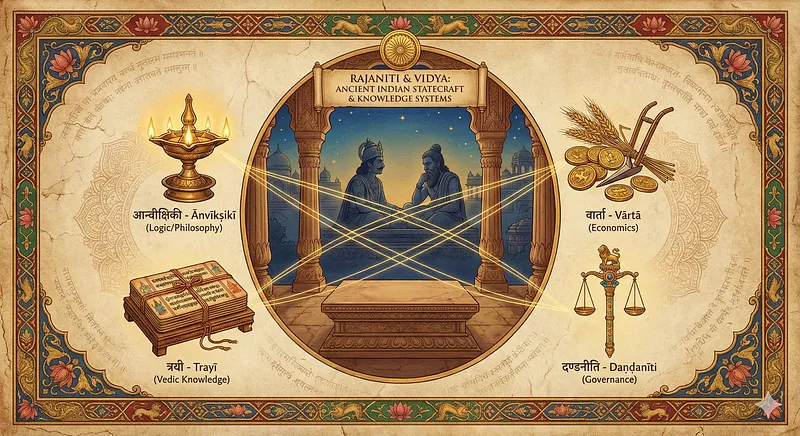
The commentary further clarifies that the king sustains dharma primarily through wielding the daṇḍa—the rod of authority representing law, justice, and corrective punishment. He is a daṇḍadhārī, a bearer of righteous force, ensuring that ethical action is not merely recommended but enforced.
Upādhyāyanirapekṣā adds a crucial dimension by describing the king as vijigīṣu—one who desires conquest. But this is no ordinary military ambition. The commentator envisions the ideal king as a cakravartin, a universal monarch who seeks to establish dharma everywhere, not merely to expand territorial control. This transforms conquest from an act of aggression into a mission of cosmic restoration.
The commentaries also invoke the Nirukta's profound definition: lokadharaṇāddharmaḥ—"Dharma is that which upholds the world." This establishes the ontological foundation for the verse's claim. Dharma is not simply a code of conduct; it is the very principle that prevents the world from descending into chaos. And the king, as enforcer of dharma, becomes the human agent of this cosmic sustenance.
Verse 35: The Reward of Dharmic Kingship
The Original Verse
varṇāśramācārayuto varṇāśramavibhāgavit |
pātā varṇāśramāṇāṃ ca pārthivaḥ svargalokabhāk || 35 ||
"The king who upholds the conduct of varṇa and āśrama, and who understands their proper divisions, is the protector of that system and becomes a partaker of heaven (svarga)."
The Threefold Qualification
This verse presents three essential qualities of the dharmic monarch:
1. Varṇāśramācārayuta (Embodiment of Conduct)
The king must himself be endowed with the ācāra (right conduct and practices) appropriate to his own varṇa and āśrama. This is leadership by example. Jayamaṅgalā emphasizes that he lives by the dharma he enforces—he does not merely issue edicts from a position of privilege while remaining exempt from moral discipline. Upādhyāyanirapekṣā underscores that he must be tatpara (dedicated) to upholding these practices, suggesting not passive compliance but active commitment.
2. Varṇāśramavibhāgavit (Knower of Proper Divisions)
The king must possess deep knowledge of the vibhāga (divisions) among varṇas and āśramas. This is not merely administrative awareness but philosophical understanding. He must discern the roles, duties, interdependencies, and functions of each social and spiritual order. Upādhyāyanirapekṣā frames this as the ability to answer the question: kasya kā pratipattiḥ?—"Who should do what?" This represents sophisticated knowledge of both individual capacities and systemic harmony.
3. Pātā varṇāśramāṇām (Protector of the System)
The king is designated as pātā (protector, guardian, sustainer). He is rakṣitā—one who guards the boundaries and prevents corruption and degeneration of the social order. His protection extends not merely to territorial integrity but to the preservation of the varṇāśrama system's internal structure, harmony, and evolutionary capacity.
The Divine Reward
The verse concludes with svargalokabhāk—the king becomes a partaker of celestial realms. Both commentaries interpret this as Śakraloka, the heaven of Indra. This is the fruit (phala) of dharmasaṃrakṣaṇa (protection of dharma).
What emerges is a vision where temporal power and transcendent destiny are intimately linked. Kingship is simultaneously:
-
An earthly responsibility (iha-loka bhāktva)
-
A sacred act of cosmic maintenance
-
A meritorious path leading to divine reward (para-loka phala)
The Mahārāja Ideal: Integration and Implications
The King as Cosmic Functionary
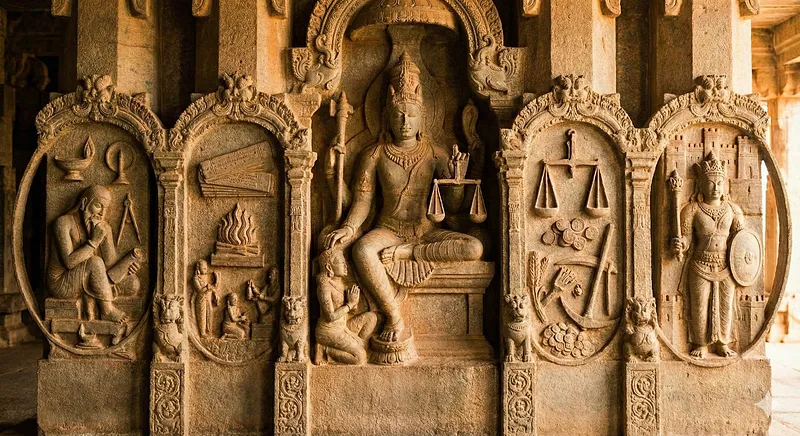
These two verses, read together with their commentaries, present a coherent philosophy of governance that transcends modern political categories. The king is neither a democratic representative nor an absolute sovereign in the Western sense. He is a cosmic functionary—one who maintains ṛta (cosmic order) through the dual instruments of daṇḍa and dharma.
This conception rests on several interconnected principles:
Dharma as Ontological Foundation
The world (jagat) does not merely contain dharma as one element among others. Rather, dharma is the structural principle that prevents cosmic and social dissolution. The Nirukta's definition—lokadharaṇād-dharmaḥ—establishes this clearly.
Authority Grounded in Sacred Law
The qualifier yathānyāyam in verse 34 is crucial. The king's authority derives not from personal power but from alignment with śāstra (scriptural law). Upādhyāyanirapekṣā's phrase smārtanyāyānatikrameṇa (without deviation from Smṛti tradition) reinforces this constraint.
Exemplary Leadership
Verse 35's emphasis on the king being ācārayuta establishes that legitimate authority requires moral embodiment. The ruler cannot demand what he himself does not practice. This creates an internal check on arbitrary power.
Systemic Understanding
The requirement that the king be vibhāgavit (knower of divisions) indicates that dhārmika governance requires sophisticated comprehension of social complexity, individual diversity, and the interdependence of specialized functions.
The Cascade of Consequences
The logic of verse 34 presents a stark warning: the absence of the dhārmika king initiates a chain of disintegration. Without the enforcer, dharma deteriorates; without dharma, the world collapses. This is not political hyperbole but a statement about the fragility of civilizational order.
The commentaries clarify that jagaccyuti (world-collapse) implies total breakdown—ritual systems fail, ethical norms dissolve, social cooperation disintegrates, and even cosmic balance is disturbed. The term cyuti suggests loss of foundation, leading to anārthas (evils, disasters) and ultimate vināśa (destruction).
This creates an almost unbearable weight of responsibility on the monarch. He is not merely managing affairs of state but preventing an apocalypse. His failure is not just political incompetence but cosmic catastrophe.
The Reward Structure
Verse 35's promise of svarga for the dhārmika king serves multiple functions:
1. Moral Incentive
It provides transcendent motivation beyond worldly power and pleasure.
2. Cosmic Justice
It affirms that righteous governance will be rewarded, even if earthly recognition fails.
3. Validation of the Path
It establishes that kingship, when properly executed, is not merely a political role but a sacred vocation (dharmasādhana) comparable to ritual performance or ascetic discipline.
4. Integration of Realms
It bridges the temporal and eternal, showing that secular governance and spiritual attainment are not separate domains but mutually implicated realities.
Contemporary Relevance
While the specific institution of monarchy described in these verses belongs to a historical context, the underlying principles retain philosophical significance:
Governance as Sacred Trust
The conception of authority as grounded in dharma rather than naked power offers an alternative to both might-makes-right realism and procedural formalism.
Leadership by Example
The requirement that rulers embody the values they enforce addresses the perennial problem of elite hypocrisy.
Systemic Understanding
The emphasis on vibhāgavit—deep comprehension of social complexity—remains relevant to contemporary governance challenges.
Consequences of Institutional Failure
The cascade from absent enforcement to dhārmika collapse to civilizational dissolution mirrors modern concerns about institutional decay and social fragmentation.
The Weight of Responsibility
The vision of rulers as cosmic functionaries, whose failures have apocalyptic consequences, counters trivializing approaches to governance.
Conclusion
These two verses from the Kāmandaka Nītisāra, illuminated by their classical commentaries, present a vision of kingship that is simultaneously exalted and demanding. The monarch is elevated to cosmic significance—he is the human pivot upon which the world's order depends. But this elevation comes with crushing responsibility and stringent qualifications.
The king must:
-
Align his authority with sacred law (yathānyāyam)
-
Embody the dharma he enforces (ācārayuta)
-
Understand the complex divisions of society (vibhāgavit)
-
Actively protect the moral and social order (pātā)
-
Wield corrective force when necessary (daṇḍadhārī)
-
Seek to establish dharma universally (vijigīṣu)
In return, he becomes:
-
The sustainer of civilization
-
The preventer of cosmic collapse
-
A partaker of divine realms (svargalokabhāk)
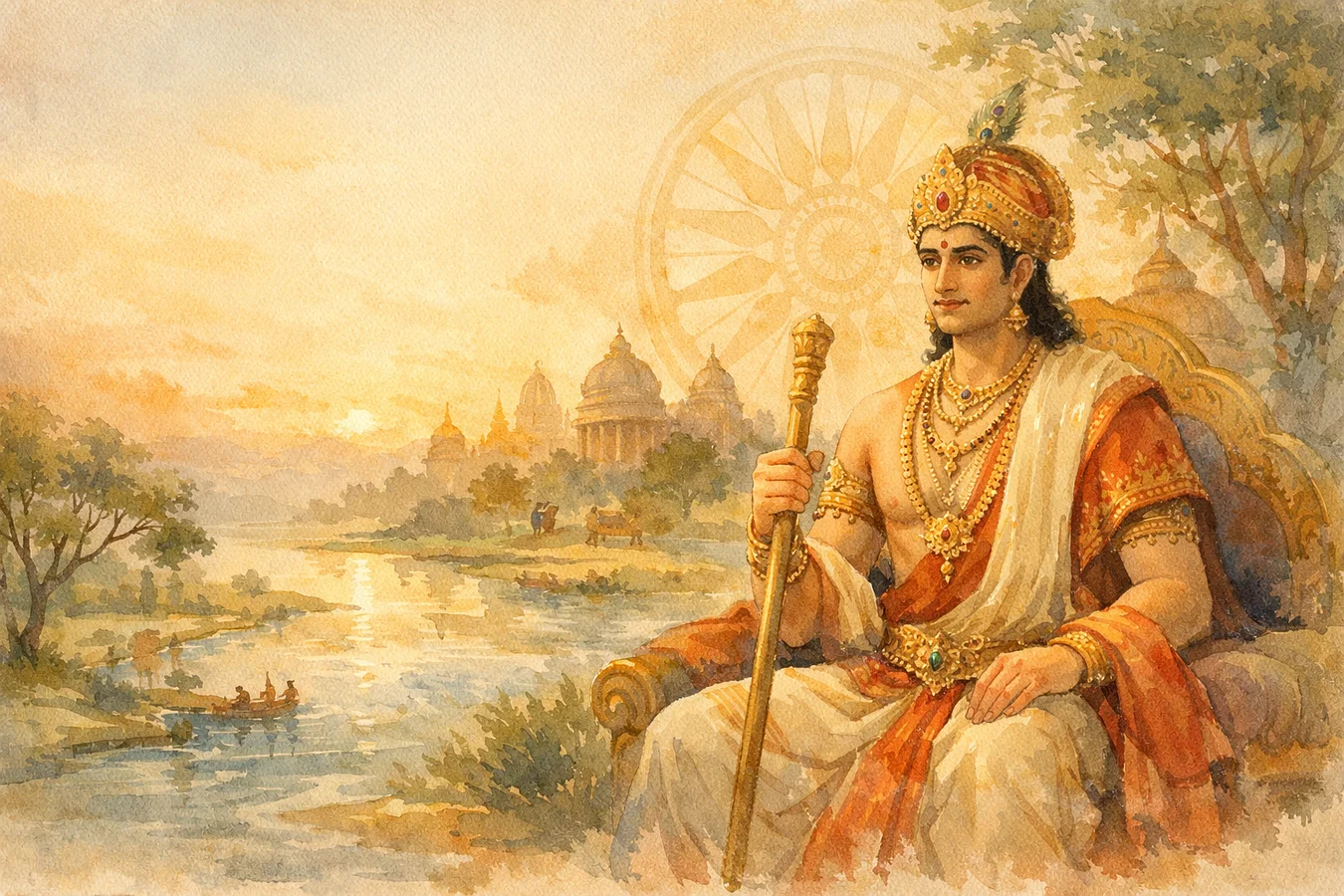
This is the mahārāja ideal—the great king who is neither tyrant nor mere administrator, but a conscious agent in the maintenance of ṛta, the cosmic order that underlies and sustains all existence. His throne is not a seat of privilege but a station of service. His crown is not merely an ornament but the weight of the world's dharma resting upon his brow.