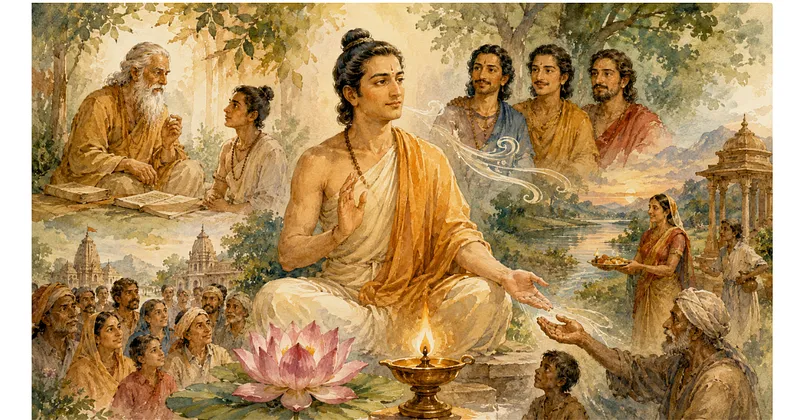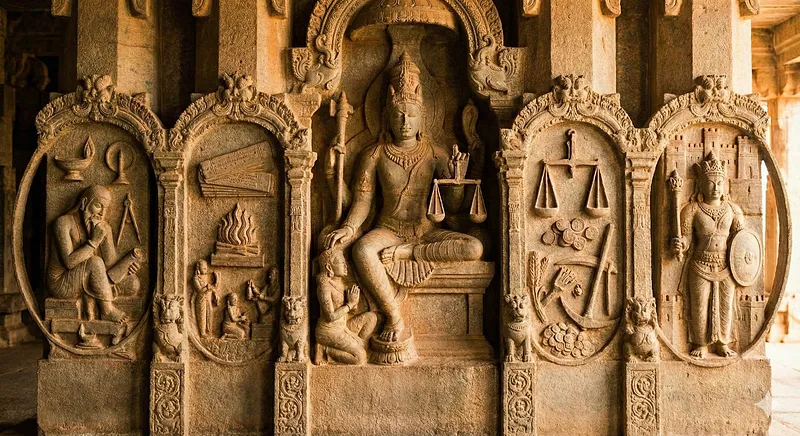
In a world perpetually oscillating between the extremes of joy and despair, an ancient Sanskrit verse offers a profound methodology for achieving inner stability. The eleventh verse of the second chapter of the Kāmandakīya Nītisāra introduces us to ānvīkṣikī, a systematic science of self-inquiry that promises liberation from the tyranny of emotional extremes.
The verse states:
आन्वीक्षिक्यात्मविद्या स्यादीक्षणात् सुखदुःखयोः । ईक्षमाणस्तया तत्त्वं हर्षशोको व्युदस्यति ॥ २.११ ॥
ānvīkṣikyātmavidyā syādīkṣaṇāt sukhaduḥkhayoḥ | īkṣamāṇastayā tattvaṁ harṣaśoko vyudasyati || 2.11 ||
"Ānvīkṣikī (the science of critical inquiry) is the knowledge of the self, attained through the examination of pleasure and pain. One who observes their true nature through it discards both elation and sorrow."
Kāmandaka's Framework of Knowledge
The Kāmandakīya Nītisāra, composed by the Kāmandaka, is a comprehensive work on governance and ethical conduct drawing heavily from the Arthaśāstra tradition. In this second chapter, Kāmandaka systematically discusses the classification of different vidyās (sciences or branches of knowledge) essential for a complete understanding of dharma and artha, and for the conduct of life.
Within this framework, verse 2.11 defines ānvīkṣikī (आन्वीक्षिकी) as knowledge of the self (ātmavidyā, आत्मविद्या) gained through the deliberate examination (īkṣaṇa, ईक्षण) of pleasure (sukha, सुख) and pain (duḥkha, दुःख). More than mere introspection, this represents a rigorous analytical approach to understanding our inner nature. The promise is striking: those who observe their true nature through this lens can transcend both elation (harṣa, हर्ष) and sorrow (śoka, शोक).
What is Ānvīkṣikī?
The term ānvīkṣikī itself carries the weight of systematic inquiry. It is not passive observation but active investigation—a critical examination of the causes and effects that shape our emotional landscape. In the context of Nītisāra (political science and ethics), this philosophical foundation becomes crucial. A ruler or any person navigating the complexities of life requires not just external knowledge but inner stability.
The verse's use of īkṣaṇa (ईक्षण - examination) and īkṣamāṇa (ईक्षमाण - one who observes) emphasizes the active, ongoing nature of this practice. This is not a one-time insight but a continuous mode of relating to experience.
The Method: Analyzing Pleasure and Pain
According to the classical commentaries on the Nītisāra, ānvīkṣikī operates through a deceptively simple but powerful mechanism: understanding impermanence. The Jayamaṅgalā commentary illustrates this with practical examples. When prosperity arrives, instead of unbridled celebration, the practitioner contemplates its temporary nature. Gains are fleeting. Similarly, when misery strikes, one reflects on the cyclical nature of fortune—how even fallen heroes like Nala eventually returned to righteousness and happiness.
The Upādhyāya-nirapekṣā commentary goes deeper into the mechanics. It establishes that the self is known through its characteristics: dharma (धर्म - righteous action), adharma (अधर्म - unrighteous action), sukha (सुख - pleasure), and duḥkha (दुःख - pain). Through careful investigation, a crucial realization emerges: dharma causes pleasure, adharma causes pain, but both effects are inherently temporary.
The Cause-Effect Framework
This philosophical system rests on logical reasoning (anumāna, अनुमान) and valid means of knowledge (pramāṇa, प्रमाण) rather than blind faith. The framework is elegantly structured:
-
Dharma (righteous action) → Sukha (pleasure) → Temporary
-
Adharma (unrighteous action) → Duḥkha (pain) → Temporary
Understanding this causal chain through rational means fundamentally alters one's relationship with experience. The verse promises that arriving at tattva (तत्त्व - ultimate truth) through this examination leads to the discarding (vyudasyati, व्युदस्यति) of emotional extremes. In moments of joy, the practitioner thinks: "This too shall end." In moments of sorrow: "This too will pass, and happiness may return."
Beyond Emotional Extremes
The practical wisdom here is remarkable. By recognizing both pleasure and pain as temporary effects of actions, one achieves what the commentaries call freedom from emotional disturbance. This is not nihilistic detachment or suppression of feeling, but rather a profound equanimity born from understanding.
The verse's coupling of harṣa (हर्ष - elation, joy) and śoka (शोक - sorrow, grief) represents the full spectrum of emotional reactivity. The practitioner doesn't merely moderate these feelings but transcends the compulsive need to cling to one and avoid the other.
The Upādhyāya-nirapekṣā commentary even suggests that avoiding emotional extremes has health benefits—preventing prāṇātyaya (प्राणात्यय), loss of life force or vitality. Excessive joy or overwhelming sorrow can literally endanger one's well-being—a particularly relevant consideration for those bearing the responsibilities of governance and leadership.
Practical Applications in the Nītisāra Tradition
Both commentaries emphasize that ānvīkṣikī is not abstract philosophy but practical guidance. In the context of Kāmandaka's political treatise, this becomes especially significant. It provides:
Emotional Resilience: By understanding impermanence, practitioners develop stability in the face of life's inevitable ups and downs—essential for leaders facing the vicissitudes of statecraft.
Ethical Clarity: Recognizing the cause-and-effect relationship between actions and their consequences naturally guides one toward dharma and away from adharma—the foundation of righteous governance.
Mental Balance: Liberation from the compulsion to chase pleasure or flee from pain creates space for clearer thinking and better decision-making in matters of policy and personal conduct.
Protection from Extremes: By avoiding excessive emotional reactions, one protects not only mental equilibrium but physical health—enabling sustained effectiveness in one's duties.
The Self Through Its Characteristics
A subtle but crucial point emerges from these commentaries: the self (ātman, आत्मन्) is known through its characteristics and experiences, not as some abstract entity separate from life. The verse's formulation ātmavidyā (आत्मविद्या - knowledge of the self) through īkṣaṇa (ईक्षण) of sukhaduḥkha (सुखदुःख - pleasure and pain) grounds this inquiry firmly in lived experience.
Dharma, adharma, pleasure, and pain are not external to the self but are the very means through which the self is recognized and understood. As the commentary notes, quoting traditional sources: "dharma, adharma, sukha, duḥkha—these are said to be characteristics of the self."
Relevance for Modern Life
In an age of dopamine-driven social media, instant gratification, and equally instant despair, this ancient science from the Kāmandakīya Nītisāra feels remarkably contemporary. The wisdom of ānvīkṣikī speaks directly to our current crisis of emotional volatility.
The methodology offers a middle path between the hedonistic pursuit of pleasure and the ascetic rejection of life. It suggests neither chasing happiness nor fearing sadness, but understanding both as temporary phenomena arising from causes—causes we can influence through our choices.
Conclusion
Ānvīkṣikī (आन्वीक्षिकी) represents more than a philosophical system; it is a practical technology for inner freedom. Through rational inquiry into the nature of pleasure and pain, their causes and impermanence, one can achieve the remarkable state described in the verse: tattvaṁ harṣaśoko vyudasyati (तत्त्वं हर्षशोको व्युदस्यति)—discarding both elation and sorrow by realizing the ultimate truth.
The verse promises that one who truly observes through this lens becomes free—not by becoming cold or indifferent, but by achieving a deeper stability rooted in understanding. The practitioner (īkṣamāṇa, ईक्षमाण) engages in continuous examination (īkṣaṇa, ईक्षण), arriving at experiential wisdom rather than mere intellectual knowledge.
This ancient science of critical inquiry, embedded within a treatise on practical wisdom and governance, remains as relevant today as when Kāmandaka first articulated it, offering a path to the emotional equanimity and ethical clarity that seem increasingly elusive in our turbulent times.