Introduction
In the labyrinth of modern life, where success is often measured by material accumulation alone, ancient Bhāratīya wisdom offers a profound framework for meaningful existence. The Kāmandaka Nītisāra, a classical treatise on statecraft and ethics, presents a revolutionary understanding of how life should be pursued through its elegant verse on the triad of human aspirations: Dharma, Artha, and Kāma.
This timeless wisdom, preserved through centuries and illuminated by scholarly commentaries, provides a roadmap for living that transcends cultural boundaries and temporal limitations. It speaks to the universal human quest for a life that is not merely successful but truly fulfilling.
The Sacred Verse: A Blueprint for Life
The foundational verse states:
धर्मादर्थोऽर्थतः कामः कामात् सुखफलोदयः । आत्मानं हन्ति तौ हत्वा युक्त्या यो न निषेवते ॥ ५१ ॥dharmādartho 'rthataḥ kāmaḥ kāmāt sukhaphalodayaḥ | ātmānaṁ hanti tau hatvā yuktyā yo na niṣevate ||
"From dharma arises artha (wealth), from artha comes kāma (desire fulfillment), and from kāma arises happiness. One who neglects to follow these with proper balance destroys both them and oneself."
This verse encapsulates a profound understanding of human nature and the interconnectedness of life's essential pursuits. It presents not just a sequence but a sacred ecology of human aspirations where each element nurtures and sustains the others.
The Sequential Harmony: Understanding the Flow
Dharma as the Foundation
Dharma, often translated as righteousness or duty, represents the ethical foundation upon which all meaningful pursuits must rest. It is not merely religious observance but encompasses moral integrity, social responsibility, and alignment with universal principles of justice and compassion. When our actions are grounded in dharma, they naturally generate the conditions for sustainable prosperity.
Artha as the Means
Artha, representing wealth and material resources, emerges naturally from righteous action. This wealth is not merely monetary but encompasses all forms of resources—knowledge, relationships, skills, and opportunities—that enable us to fulfill our desires and responsibilities. The commentaries emphasize that wealth earned through dharma carries the seeds of further prosperity and contentment.
Kāma as Fulfillment
Kāma, the pursuit of desires and pleasures, represents the legitimate fulfillment of human aspirations. The Upādhyāyanirapekṣā commentary provides crucial insight here, distinguishing between basic sensory cravings and refined desires that are "aligned with self-awareness, purpose, and values." True kāma is not indulgence but conscious engagement with life's pleasures in ways that enhance rather than diminish our humanity.
Sukha as the Culmination
From the balanced pursuit of kāmaemerges sukha—genuine happiness and well-being. This is not a fleeting pleasure but an enduring contentment that arises when our desires are fulfilled within a framework of ethics and sustainability.
The Wisdom of Balance: Insights from the Commentaries
The Jayamaṅgalā Perspective: The Dangers of Excess
The Jayamaṅgalā commentary provides stark warnings about the consequences of pursuing any single element in isolation or excess:
Excessive Dharma: Too much charity can deplete wealth, ultimately harming our ability to fulfill responsibilities to family and society. Extreme austerity can damage health, making us less capable of ethical action.
Obsessive Wealth Accumulation: The commentary cites King Ilā as an example of how hoarding wealth destroys both enjoyment and virtue. When wealth becomes an end in itself, it loses its capacity to serve life's deeper purposes.
Uncontrolled Desire: Overindulgence in hunting, gambling, wine, or sensual pursuits leads to the destruction of wealth, virtue, reputation, and ultimately physical and mental health.
The Upādhyāyanirapekṣā Insight: The Cause-and-Effect Chain
This commentary emphasizes the causal relationship between the three pursuits. Dharma does not just coexist with artha—it generates it. Wealth does not merely enable pleasure—it provides the foundation for meaningful desire fulfillment. And refined desires do not just bring momentary satisfaction—they create lasting happiness.
The commentary's reference to Kauṭilya's definition of kāma is particularly illuminating. It distinguishes between crude sensory gratification and sophisticated desires that involve "self-awareness, purpose, and values." This suggests that true desire fulfillment requires wisdom and discrimination.
Practical Applications: Living the Balanced Life
In Personal Development
The triad offers a framework for personal growth that integrates ethical development, practical competence, and emotional fulfillment. Rather than seeing these as competing priorities, we can understand them as mutually reinforcing aspects of human flourishing.
A career pursued with integrity (dharma) naturally generates resources (artha) that enable us to enjoy life's pleasures responsibly (kāma), leading to genuine satisfaction (sukha). Conversely, a career built on deception may generate short-term wealth but lacks the foundation for sustained prosperity and peace of mind.
In Relationships
The principle applies beautifully to relationships. Treating others with respect and honesty (dharma) creates the conditions for mutual support and shared resources (artha). This foundation enables the relationship to fulfill desires for companionship, intimacy, and shared experiences (kāma), resulting in lasting happiness for both parties.
In Social Responsibility
At the societal level, the triad suggests that sustainable prosperity requires ethical governance and business practices. Economic systems that ignore dharma inevitably create conditions of inequality and social unrest that undermine long-term prosperity. Similarly, societies that suppress legitimate human desires create conditions for rebellion and eventual breakdown.
The Modern Relevance: Ancient Wisdom for Contemporary Challenges
Beyond Material Success
In our achievement-oriented culture, the Kāmandaka framework offers a corrective direction to the narrow pursuit of material success. It suggests that true achievement integrates ethical integrity, practical competence, and conscious enjoyment of life's gifts.
Sustainable Living
The emphasis on balance speaks directly to contemporary concerns about sustainability. Just as excessive pursuit of any single element destroys the harmony of individual life, excessive focus on economic growth without regard for ethical and environmental considerations threatens the well-being of society and the planet.
Mental Health and Well-being
The framework offers insights into mental health by suggesting that lasting happiness emerges not from maximizing any single pursuit but from maintaining dynamic balance among multiple life domains. Depression and anxiety often arise when this balance is disrupted—when we sacrifice relationships for career success, pleasure for security, or integrity for advancement.
The Warning: Self-Destruction Through Imbalance
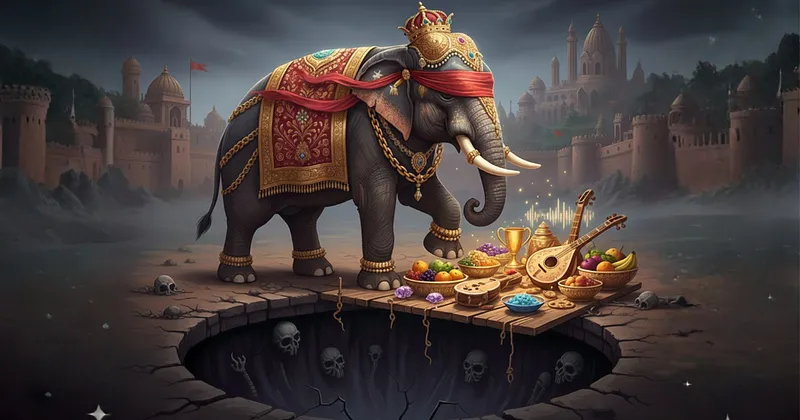
The verse's concluding warning is particularly powerful: one who fails to pursue these three with wisdom "destroys both them and oneself." This is not merely metaphorical. The commentaries provide concrete examples of how imbalance leads to ruin:
- The over-generous person who impoverishes their family
- The miser who dies wealthy but unloved and unfulfilled
- The hedonist who destroys their health and relationships in pursuit of pleasure
- The workaholic who achieves professional success at the cost of personal happiness
The Saṃskṛta term "ātmānaṃ hanti" (destroys oneself) suggests something deeper than material loss—it points to the dissolution of the integrated self that comes from harmonious living.
Conclusion: The Art of Balanced Living
The wisdom of Kāmandaka's Nītisāra offers more than philosophical insight—it provides a practical framework for navigating the complexities of human existence. In recognizing that dharma, artha, and kāma are not competing priorities but interconnected aspects of a flourishing life, we discover a path that honors both our spiritual aspirations and our earthly needs.
The commentaries remind us that this balance is not a static state but a dynamic process requiring constant attention and adjustment. The word "yuktyā" (with wisdom/balance) suggests that living well is an art that requires discernment, timing, and the courage to make difficult choices.
In our contemporary world, where individuals and societies struggle with issues of meaning, sustainability, and well-being, this ancient framework offers a timeless invitation: to pursue our legitimate desires within a context of ethical integrity and practical wisdom, creating lives that are not merely successful but genuinely fulfilling.
The pursuit of life, according to Kāmandaka, is not about choosing between virtue and prosperity, or between duty and pleasure, but about discovering the profound interconnection that makes genuine happiness possible. In this integration lies not only personal fulfillment but the foundation for a more just and sustainable world.
True happiness arises only when desires are fulfilled ethically, with wealth earned righteously, and all guided by self-restraint and purpose.