In an era where governance, economics, ethics, and knowledge systems seem increasingly fragmented, the ancient Indian political treatise Kāmandaka Nītisāra offers a remarkably integrated vision of statecraft and social order. Written as a guide for kings, its opening verses outline a framework that remains strikingly relevant for modern leadership and institution-building.
The Foundation of Wise Rule
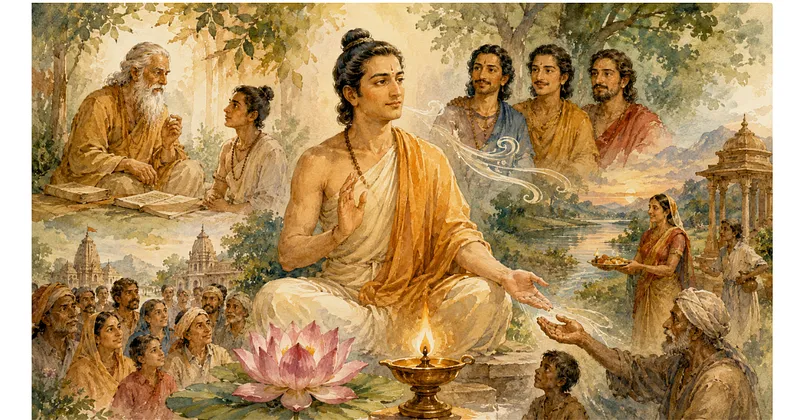
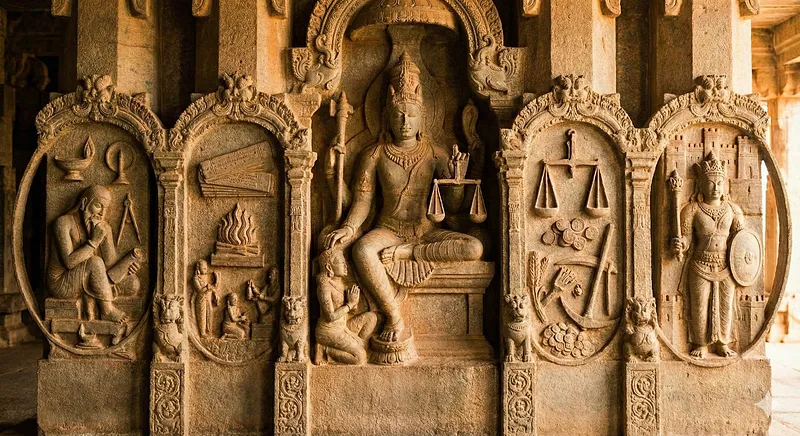
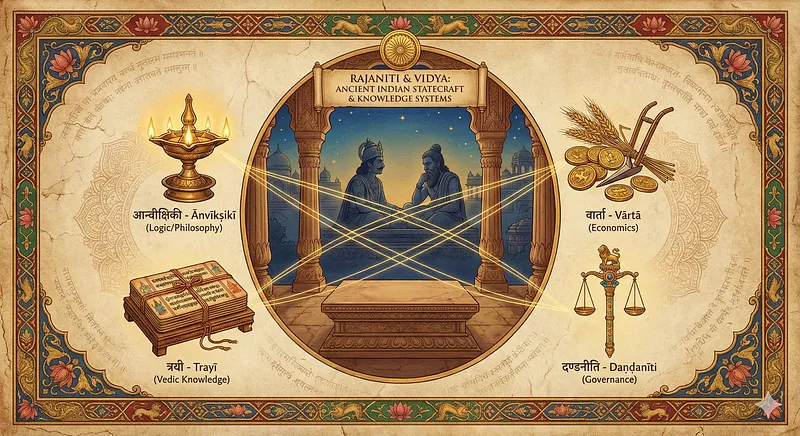
Kāmandaka begins the Second sarga, The Vidyāvibhāga Sarga (Chapter on the Classification of Knowledge), with a fundamental principle: before a ruler can govern others or expand influence, they must first master themselves and understand the knowledge systems that sustain civilization. The opening verse prescribes that a king should deeply reflect upon four essential branches of knowledge:
-
Ānvīkṣikī – the science of logical reasoning and critical inquiry
-
Trayī – vaidika knowledge encompassing ethics and spiritual wisdom
-
Vārtā – economics, including agriculture, trade, and commerce
-
Daṇḍanīti – governance, law, and administration
Crucially, this reflection must not be solitary or theoretical. The king must engage with experts who both understand and practice these disciplines, approaching this learning with vinaya – humility and self-discipline.
Internal Strength Before External Expansion
The classical commentary Jayamaṅgalā emphasizes a principle that resonates across history: a ruler must strengthen their own kingdom before considering expansion. Without internal coherence and stability, external ambitions become hollow and ultimately unsustainable. This is not merely pragmatic advice—it reflects a deeper understanding that social stability fundamentally depends on knowledge systems being properly understood and maintained.
The Upādhyāya Nirapekṣā commentary goes further, arguing that self-mastery (indriyajaya) and inner discipline are prerequisites for effective rule. Before discussing political strategy or administrative technique, one must cultivate personal restraint and humility. Leadership, in this view, flows from character rather than merely from position or power.
The Four Eternal Sciences
The second verse makes an even bolder claim: these four disciplines are not merely useful—they are the very foundation that sustains human civilization (lokasaṃsthiti). Each serves an indispensable function:
Ānvīkṣikī enables critical thinking across all domains. Kauṭilya's Arthaśāstra describes it as:
प्रदीपः सर्वविद्यानामुपायः सर्वकर्मणाम् । आश्रयः सर्वधर्माणां शश्वदान्वीक्षिकी मता (१-१-१)
pradīpaḥ sarvavidyānāmupāyaḥ sarvakarmaṇām| āśrayaḥ sarvadharmāṇāṃ śaśvadānvīkṣikī matā (1-1-1)
"a lamp for all knowledge, a tool for all actions, and the basis for all dharma." It helps overcome the emotional disturbances—excessive joy, sorrow, or passion—that cloud judgment. In essence, it is the capacity for rational inquiry that allows us to distinguish truth from falsehood.
Trayī governs ethical and spiritual life. It provides the moral framework within which both individual conduct and social norms operate. The commentaries note that one who lives according to its precepts "attains both worlds"—suggesting success in both temporal and transcendent dimensions.
Vārtā supports material livelihood. A society cannot function without economic foundations—the production of food, creation of wealth, and circulation of goods through trade. When economics is properly understood and managed, people are freed from the fear of want and can pursue higher aims.
Daṇḍanīti maintains order and protects what has been achieved. Described as eternal (śāśvatī), it ensures that disruptions to social harmony are addressed and prevented. Even when temporarily weakened, systems of justice and governance inevitably revive because civilization cannot persist without them.
An Integrated Vision
What makes this framework remarkable is its integration. These are not four separate silos but interconnected systems that support one another. Critical thinking illuminates ethical principles; ethics guides economic activity; economics provides the resources for governance; governance protects the conditions for thinking, ethics, and prosperity to flourish.
The commentaries stress that these disciplines must be both understood theoretically and practiced actively. A ruler must engage in ongoing analysis and evaluation (cintana)—not one-time learning but continuous reflection with wise counsel. Knowledge without application remains sterile; practice without understanding becomes blind routine.
Contemporary Relevance
For modern leaders—whether in government, business, or civil society—Kāmandaka's framework offers several enduring insights:
-
Integration over specialization: While technical expertise has its value, leadership requires understanding how different domains interconnect. Economic policy cannot ignore ethics; governance cannot function without critical reasoning; material prosperity requires both intellectual and moral foundations.
-
Character precedes strategy: Personal discipline, humility, and self-mastery are not optional virtues but fundamental prerequisites for effective leadership. Without inner stability, outer achievements remain fragile.
-
Learning requires community: Wise counsel from those who both understand and practice their fields is essential. Leadership is not a solo performance but a collaborative engagement with knowledge and experience.
-
Stability before expansion: Whether building an organization, implementing policy, or developing communities, internal coherence must precede external ambition. Sustainable growth requires strong foundations.
Conclusion
The four pillars that Kāmandaka identified remain as essential as ever. A society that neglects critical thinking becomes vulnerable to deception. One that abandons ethical foundations finds its social fabric fraying. Economic systems that ignore broader purposes generate material wealth at the cost of human flourishing. Governance without justice degenerates into mere coercion.
The wisdom of Kāmandaka Nītisāra lies not in offering quick solutions but in identifying the enduring structures that make civilized life possible. For those willing to approach these disciplines with the humility and discipline Kāmandaka prescribes, they remain a lamp illuminating the path toward sustainable leadership and human flourishing.