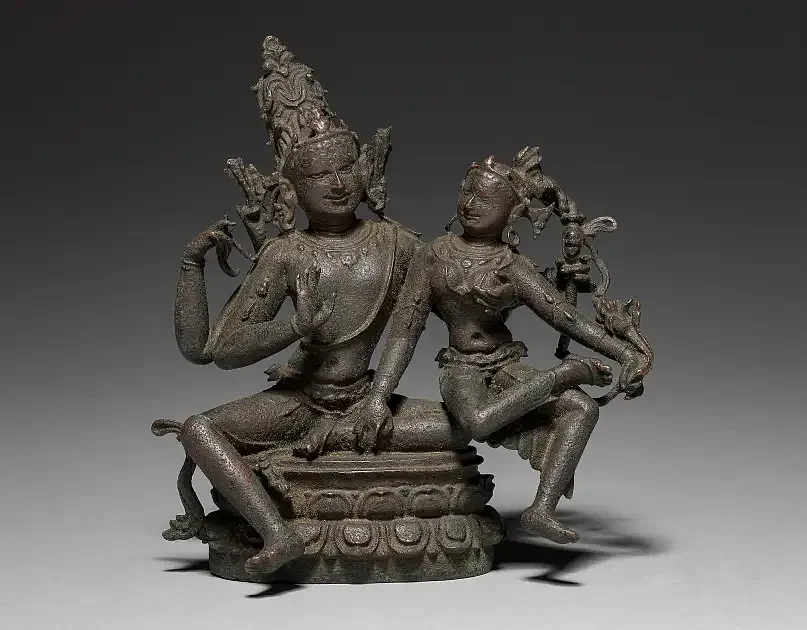
Header image: Umāmaheśvara, Pala era (9th century), East India
namaḥ śivābhyāṃ navayauvanābhyāṃ parasparāśliṣṭavapurdharābhyām । nagēndrakanyāvṛṣakētanābhyāṃ namō namaḥ śaṅkarapārvatībhyām ॥ 1 ॥ śrī umāmaheśvara stotramMy namaskāra to Śiva and Pārvatī (referred to by the epithet Śivā) who are eternally youthful, who embrace each other affectionately; of whom one is the daughter of the mountain and the other bears the symbol of a bull; I offer my namaskāra again and again to that Śaṅkara and Pārvatī.
Images of Śiva and Pārvatī embracing (āliṅgana) are numerous from the beginning of the present era, found in every school and era of art across the country. Umāmaheśvaramūrti brings the God and Goddess of the universe together in the most tender of love. Śiva's body is curved towards Pārvatī, whose shape aligns with his. Śiva's hand cups Pārvatī’s breast in an endearing gesture of love.

Umā-Maheśvaramūrti, Nepal. 900s. Stone. Previously held by The Denver Art Museum, the sculpture has been returned to the people of Nepal in 2021
In this stunning mūrti from the tenth century Thakuri Dynasty of Nepal, Śiva and Pārvatī, are seen sumptuously adorned and enthroned amid mountains...