Introduction
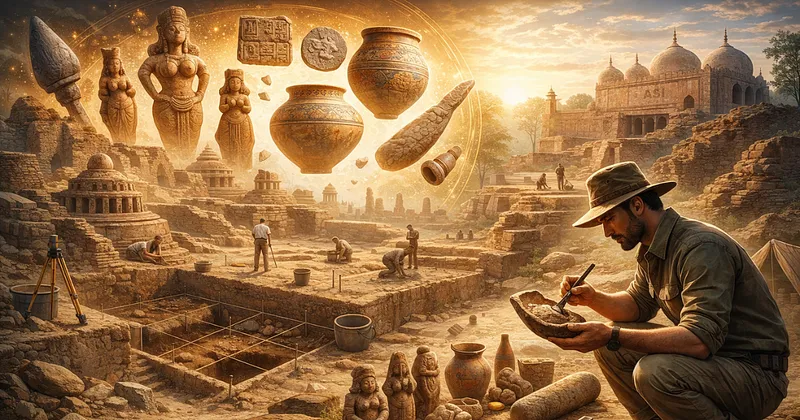
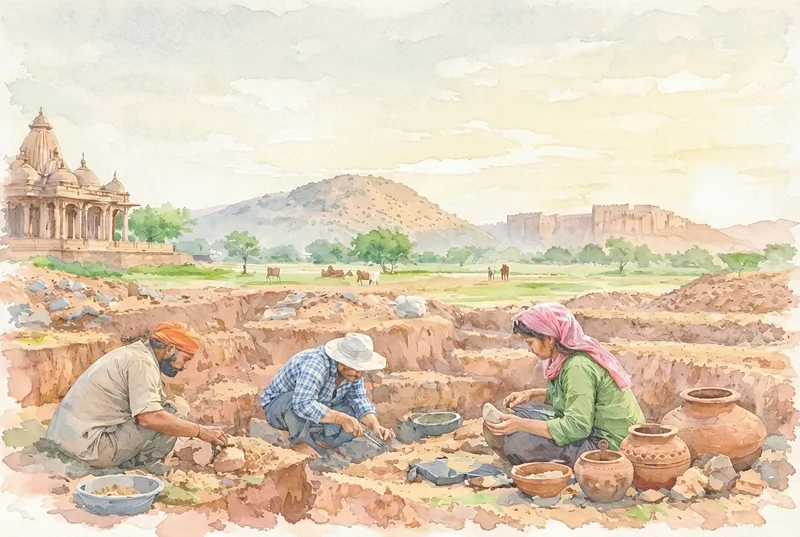
Archaeological excavations in the Braj region, and lo behold!
We uncover a series of discoveries that showcase our civilizational prowess that comes with the sacred at its core. These excavations at Bahaj were carried out by the Archaeological Survey of India (ASI) under the expert supervision of Dr. Vinay Kumar Gupta, Superintending Archaeologist, Jaipur Circle, ASI, who published a paper on his critical and marvelous findings. Based on his publications, we have curated a series of seven articles walking you through the background, history, process, findings, and the impact of these findings on our history. Here is part one of this series describing the etymology and origin, history, extent, and scriptural traces and paurāṇika descriptions of the sacred land of Braj.
Scriptural References of Braj:
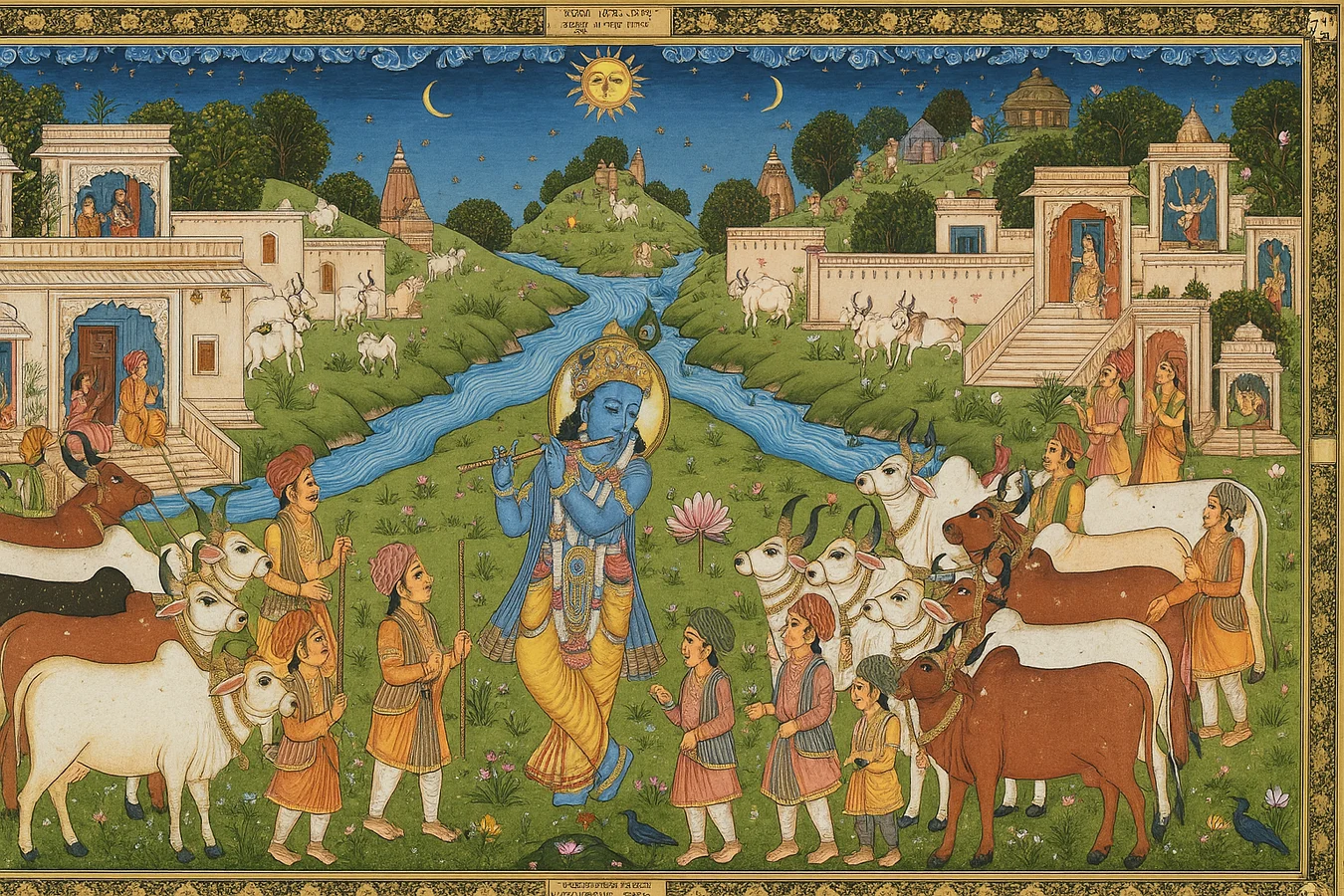
‘Vraja’ is an old Saṃskṛta word that has now changed to Braj in the popular local dialect. Vraja and Braj/Brij words are presently used to denote a particular area related to the childhood activities of Bhagavāna Kṛṣṇa. word Vraja is derived from Saṃskṛta dhātu Vraj, which, as per the dictionary (Katre 1969: 337), means “to go, to walk, to proceed” implying “motion and movement”. The place where cows move or graze has also been called Vraja (vrajanti gāvo yasminniti vrajaḥ).
“yaṃ tvāṃ janāso abhisañcaranti gāva uṣṇamiv vrajaṃ yaviṣṭha (10.4.2)”
In the Ṛgveda, the word Vraja has been used for gauśālā or for the areas where cows graze. Prayers have been made for the growth of cattle wealth:
gavāmaya vrajaṃ vṛdhi kṛṇudhva rādho adrivaḥ (Ṛgveda 1.10.7).1
The Amarakośa (3.3.30) provides three meanings of the word Vraja: goṣṭha (cow’s stable), mārga (pathway), and vṛnda or herd (goṣṭhādhvanivahā vrajaḥ). In the Yajurveda (1.25), the grazing ground of the cows and gauśālā have been called vraja and goṣṭha respectively — vraja gachchha goṣṭhān.
yāte dhāmānyuśmasi gamadhyai yatra gāvo bhūriśṛṅgā ayāsaḥ.
In the Śukla Yajurveda (6.3), reference is found to Vraja related to the grazing ground of cows having beautiful horns.
śūro nṛṣātā śravasaśca kāma ā gomati vraje bhajāṃ tvaṃ naḥ (Chaturvedi 1987: 57)
The Sāmaveda (3.318) mentions that Vraja is the same as Goloka Dhāma.
The author has earlier suggested that the word Virāja mentioned in the Atharvaveda might have some connection with the word Vraja (Gupta 2013: 2). In the Atharvaveda (8.10), the cosmic principle Virāja is successively associated with various classes of beings: gods, asuras, men, manes (pitaras), tree-spirits (vanaspati), the seven seers, gandharvas, apsarās, yakṣas, and snakes. In each case, the two chief representatives of the group are mentioned as the calf (vatsa) and the milker of Virāja, which evidently is conceived as a “cow”.
Besides Vraja being one of the most sacred landscapes and the originator of various art and iconographic forms, the conceptualization of the cosmic principle in the form of a cow also indicates the great association of the region with the cows. This link between Virāja (also defined as a cosmic deity) and Vraja is quite significant.
“tad vrajasthānaṃ adhikaṃ su śubhe kānanāvṛtaṃ”
In the Harivaṃśa Purāṇa (Viṣṇu Parva, 9.30), Vraja denotes the interior parts of the region near Mathurā; in that sense, these are the villages of cowmen. The Viṣṇu Purāṇa (Pañchama Aṃśa) also mentions Vraja in a similar sense. The places of Vraja mentioned in both these texts are: Gokula, Vṛndāvana, Govardhana, Tālavana, Bhāṇḍīravana, and Yamunā.
The word Vraja is used in a similar sense in the Śrīmadbhāgavata Purāṇa (10.1.10):
vraje vasan kiṃkaron madhuparyāṃ cha keśavaḥ.
Scriptural References of Mathura
Mathurā, the most famous place of Vraja, is frequently mentioned in brāhmaṇical literature. The Uttarakāṇḍa of the Rāmāyaṇa (Sarga 68-70) deals with the incidents of Madhupurī; the fight of Śatrughna with Lavaṇāsura and the establishment of the capital city Madhurā. The Harivaṃśa Purāṇa (54/56-62) provides some important information about Mathurā. It mentions that this city was established in the forest area of Madhuvana by Śatrughna after killing the demon Lavaṇāsura there. It also speaks of the fortification wall, moat, the crescent shape, gardens, high-rise buildings, prosperity (in terms of crop production, availability of precious jewels), and the commerce of the city.
The epics, especially the Mahābhārata, are stocked with references to Mathurā and the Śūrasena region. The genealogy of solar and lunar dynasties describes several kings who held sway over this land. Pāṇini’s Aṣṭādhyāyī mentions a number of references related to Mathurā (all indirectly). The place has been described as a stronghold of Andhaka-Vṛṣṇi clans (6.2.34). Patañjali’s Mahābhāṣya while elaborating the Aṣṭādhyāyī sūtras mentions that the glory of Mathurā owes to the traditions of the Mahābhārata (Sharma 1984: 18). In it, Mathurā is mentioned on at least eight occasions and at one place the text (5.3.57) admires the general conditions of this place saying that the people were happy and good looking and better off than the residents of Sāṃkāśya and Pāṭaliputra (Sharma 1984: 18-19). Kauṭilya in his Arthaśāstra describes the cotton cloth of Mathurā as of high quality (II.11.115). Manusmṛti (2.16) mentions the Vraja region (Śūrasena) as part of Brahmarṣi country.
The Garuḍa Purāṇa mentions Mathurā along with the other six most holy cities of India in this famous śloka:
Ayodhyā Mathurā Māyā Kāśī Kāñchī Avantikā|Purī Dvārāvatī chaiva saptaitaḥ mokṣadāyikāḥ||
The Padma Purāṇa (73.44-45) mentions Mathurā to be even holier than the holiest city of Kāśī. It further adds that Mathurā is the city of Lord Viṣṇu and is worshipped by many deities as a sanātana purī (583.12-14). In the Varāha Purāṇa (152.8-9), Lord Varāha tells the Goddess Earth that no place on earth, space, or nether world is so liked by him as is Mathurā, which is higher than the heavens in its reputation for being the birthplace of Kṛṣṇa.
Area of Braj Based on Purāṇas and Traditions
Among all the Purāṇas in which Braj has been mentioned, the reference in the Varāha Purāṇa is the most significant. The Mathurāmaṇḍala section of the Varāha Purāṇa solely deals with the Braj maṇḍala. A part of this text is famous as Mathurā Mahātmya (Chapter 158). In it, the extent of Mathurā maṇḍala has been told as 20 yojanas, and at many places it has been repeated while telling the importance of various places in this territory (viṃśatiryojanāntu māthuraṃ maṃ maṇḍalaṃ| yatra tatra naraḥ snāto muchyate sarvakilviṣai|| 158.1). In the Vāyu Purāṇa, the extent of Mathurā maṇḍala has been told as 40 yojanas, but this reference has not attained wider popularity as references of the Varāha Purāṇa have. One yojana roughly measures about 4 krośa (kos) or 7 miles (12 km), and hence the traditional extent of Braj is considered to be 84 krośas. A popular kiṃvadanti in Braj says (Mittal 1966: 5):
ita varahada uta sonahada sūrasena uta grāma| vraja chaurāsī kosa mein mathurāmaṇḍaladhāma||
This couplet had probably been drawn from Śrīmadgargasaṃhitā, one of the important compositions exclusively related to Vraja and its episodes. In it, Gargāchārya talks about Vraja to Nandarāya in the following ślokas (Vṛndāvana Khaṇḍa, Chapter 1, ślokas 11-12):
prāgudivyāṃ varhiṣado dakṣiṇasyāṃ yadopurāt|paśchimāyāṃ śoṇapurānmathurāmaṇḍalaṃ viduḥ || viṃśadyojana vistīrṇasārdhayadyojane navai|mathurāmaṇḍalaṃ divyaṃ vrajamahurmanīṣinaḥ||
In these references, Varhiṣad or Barhad in the north-east direction can be identified with Barhad near Bijaigarh in District Hathras. In the south of Braj is Yadupura or Śūrasena kā Grāma, which has been identified with Bateshwar near Shikohabad along the River Yamuna. In the west of Braj is Śoṇapura or Sonhad, which can be identified either with Sohna near Gurgaon or with Saundhad near Hodal. Gargāchārya mentioned that surrounded by these places, the region is called Vraja by manīṣis. While in local tradition, only three side extremes have been mentioned, in Śrīmadgargasaṃhitā, an attempt has been made to mention the four extremes by putting Varhiṣad in the northeastern direction. In one of the editions of Vrajabhakti Vilāsa of Nārāyaṇa Bhaṭṭa, published by Gauḍīya scholar Baba Krishnadas, the northern limit of Braj has been mentioned as Sonagaon, while the reference quoted by F.S. Growse mentions Bhuvana vana as the northern limit.

The mention in the Vrajabhakti Vilāsa (Chapter 6.1) is as follows:
caturśīti krośāḍhyāṃ caturdikṣu virājitā|mathurā maṇḍala tkrośamekaṃ viṃśatikaṃ bhajet||caturdikṣu pramāṇena pūrvādikramato gaṇat|pūrva bhāge stithaṃ kroṇaṃ vanaṃ hāsyabhidhānakaṃ||bhāge ca dakṣiṇe koṇaṃ śubhaṃ janhuvanaṃ stithaṃ|bhāge va paśchime koṇe parvatākhyavanaṃ stithaṃ||bhāgehuttara koṇasthaṃ sūryapatana saṃjñakaṃ|ityetā vrajamaryadā catuṣkoṇābhidāyinī||
It appears that the northern limit of Braj would have been Sonagaon and can be identified with Sohna near Gurgaon. Growse (1883: 79) has identified Upahāravana with Sohna as well, but for the northern limit, he identified Bhuvanavana with Bhūṣaṇa vana near Shergarh, which does not appear to be the case. Because of the contribution of Gauḍīya scholars, the view of greater Braj can be ascertained, which has been called ‘cultural Braj’. Rūpa Gosvāmī on the basis of his research of various Purāṇas, had arrived at the conclusion that from Yāyāvara to Śaukarī Vateśvara was the position of Braj. Yāyāvara has been identified with Jewar in Gautam Buddha Nagar District. Based on the references provided by Nārāyaṇa Bhaṭṭa and the analysis of various scholars like Mittal, and Growse, the following limits of the greater Braj (a single religio-cultural entity) can be drawn: in the north Śoṇapura (Sohna near Gurgaon) or Yāyāvara (Jewar along Yamuna in District Gautam Buddha Nagar); in the east Varhiṣad (Barhad near Bijaigarh, Hathras, which would be in the north-east direction actually) or Soron (along the Ganga if it is the ancient Saurapura) and Hāsyavana (Hasayan in District Hathras or Hasangarh near Jalesar); in the south Janhuvana (Jajau near Dholpur) and Bateshwar near Shikohabad (in the south-east direction); in the west Apahārīvana (Pahari village, near Govindgarh in District Alwar). Mathura city has to be considered the centre point of Braj.
A beautiful description of Vraja in Viṣṇu Rahasya as cited by Nārāyaṇa Bhaṭṭa in the Vrajabhakti Vilāsa (1.93) is “Mathurāpurī is the hṛdaya of Vraja, Madhuvana the nābhi, Tālavana and Kumudavana the two breasts, Vṛndāvana the forehead, Bahulāvana and Mahāvana the two arms, Kokilāvana and Bhāṇḍīravana the hands, Khādiravana and Bhadrakavana the shoulders, Chhatravana and Lohajaṅghavana two eyes, Bilvavana and Bhadravana two ears, Kāmyakavana the chibuka, Triveni and Sakhīkūpa the lips, Vihvala etc. the teeth, Surabhivana the tongue, Mayūravana the lalāṭa, Mānengitavana the nose, Śeṣasāyī and Parmānandavana the nostrils, Karahla and Kamai the hips, Karṇavana the liṅga, Kṛṣṇākṣipanaka the anus, Nandanavana the head, Indravana the back, Śikṣāvana the vāṇī, Dayāvana, Lohavana, Nandragrāma, Śrīkuṇḍa, Govardhana, Jāvavaṭa, Saṃketavana, Nāradavana, Madhuvana, Mṛdvana, Janhuvana, Menakāvana, Kajalīvana, Nandakūpavana etc. are the fingers of hands and feet of Vraja in the form of Śrīkṛṣṇa. Indriyas are the gau (cows), Jīva is the Gopa. Gopāla is the supreme soul (Paramātmā). Desires of the Jīva are the Gopikās.
Another aspect of Braj can be taken as the area in which the language of Braj (Brajbhasha) is spoken. This region is quite larger than the area so far talked about. This area extends up to Gurgaon, Mewat in the north-west direction, Gautam Buddha Nagar in the north, Sambhal/Chandausi (Bahjoi), Bareilly, Badaun districts and parts of Pilibhit, Shahjahanpur in the north-east, parts of Mainpuri, Farrukkhabad, Etawah districts in the east, Bhind district in the south-east, Morena, Gwalior, Datiya in the south, Dausa in the south-west, and Alwar in the west. In this area, the districts where pure Brajbhasha is spoken are: Mathura, Aligarh, Hathras, Palwal, Bulandshahr, Kasganj, Badaun, Bharatpur, Karauli, Dholpur, Morena, Agra, Firozabad, and Etah (Map 2). This vast area has been included by Dhirendra Varma (1954: 33), a great linguist, in his analysis of the Braj-bhasha speaking region. The far-off parts of this area are those in which Brajbhasha is spoken with slight regional variations. The area of the Brajbhasha-speaking Braj region is 38,000 square miles (Varma 1954: 34). In the northeastern direction, this area where Brajbhasha is spoken is quite extended.
Geographical Features of Braj
The vast area of Braj is mostly fertile plain land irrigated by the Ganges, the Yamuna, and their tributaries. The area in the west and to the south-west has low-lying Aravalli hills in the Alwar and Dausa districts, respectively, and the area in the south has some Vindhyan hills as well. The major cities are situated on the course of the major rivers as well as without them. Noida, Mathura, Palwal, and Agra are on the Yamuna, Bulandshahr and Soron on the Ganges, Kasganj on the Kali Nadi, Dholpur-Morena on the Chambal, whereas Aligarh, Hathras, Bharatpur, Alwar, and Gwalior have no major streams visible at present. There is a possibility of the presence of dried-up streams at some of the major sites.
Important Vanas of Braj
Braj is the land of sacred groves and forests. Besides the important 36 vanas (12 major and 24 upavanas), there were many other vanas or small groves in the region. Many of the village names in Braj and the greater region derive their names from various sacred groves.
12 Major Vanas as Mentioned in the Braja Vastu Varṇana
1. Madhuvana2. Tālavana 3. Kumudavana4. Bahulāvana5. Kāmavana 6. Khādiravana7. Vṛndāvana8. Bhadravana9. Bhāṇḍīravana10. Belavana 11. Lohavana12. Mahāvana
With this, we conclude part one of this series. In the next part, we shall cover the 84 kos Parikrama route and archaeology of the Braj region.
Footnote: 1 This and the following Vedic references are cited by Mittal (1966: 1). These are quite popular in tradition, and even one of the greatest classical singers of India, Pandit Jasraj, has sung them.
References:Primary Sources:
- Arthaśāstra of Kauṭilya. 1961 (tr.) Shamsastry, R. Mysore: Mysore Printing and Publishing House
- Aṣṭādhyāyī of Pāṇini’s (tr.). Pt. Isvarachandra. 2009. Delhi: Chaukhambha Sanskrit Pratishthana.
- Braja Vastu Varṇana by Jagatānanda.
- Garuḍa Purāṇa. Gorakhpur: Gita Press.
- Harivaṃśa Purāṇa. Gorakhpur: Gita Press.
- Mahābhārata. Gorakhpur: Gita Press.
- Padma Purāṇa. Gorakhpur: Gita Press.
- Rāmāyaṇa. Gorakhpur: Gita Press.
- Ṛgveda Saṃhitā (available on www.vedicheritage.gov.in)
- Śrīmadbhāgavata Purāṇa. Gorakhpur: Gita Press.
- Śrīmadgarga Saṃhitā. Gorakhpur: Gita Press.
- Varāha Purāṇa. Varanasi: Kashiraj Trust.
- Viṣṇu Purāṇa. Gorakhpur: Gita Press.
- Vraja Bhakti Vilāsa by Nārāyaṇa Bhaṭṭa. Mathura (Kusumsarovar): Baba Krishnadas.
- Yajurveda Saṃhitā (available on www.vedicheritage.gov.in)