“And the wild team
Which love thee, yearning for thy yoke, arise,
And shake the darkness from their loosen'd manes,
And beat the twilight into flakes of fire." Tithonus, Alfred Lord Tennyson
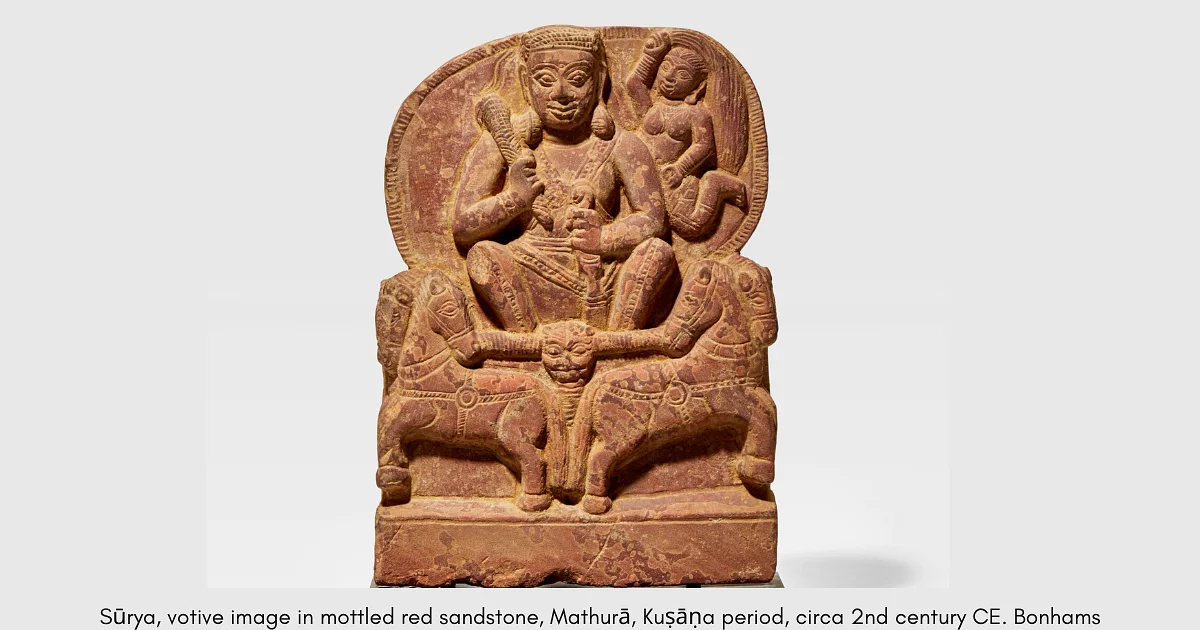
The earliest anthropomorphic representations of Sūrya demonstrate how Indian artists adapted existing artistic models to express indigenous religious and political ideas. Although these sculptures share formal features with solar imagery from the wider Mediterranean world, they were not merely imitations of foreign prototypes. In combining the imagery of the celestial chariot that travels across the dawn sky with the insignia of kingship, artists developed a visual language that associated the sun with cosmic order, sovereign authority, and spiritual power. These images represented not only a celestial body but also a source of symbolic meaning, linking the observable phenomenon of sunrise with abstract ideas of knowledge, illumination, and extraordinary power.
Vedic Foundations of Solar Imagery
The earliest literary sources of India, including the four Vedas and their associated texts (Vedāṅgas), refer to several deities with solar attributes. These include Sūrya, Savitṛ, and the...