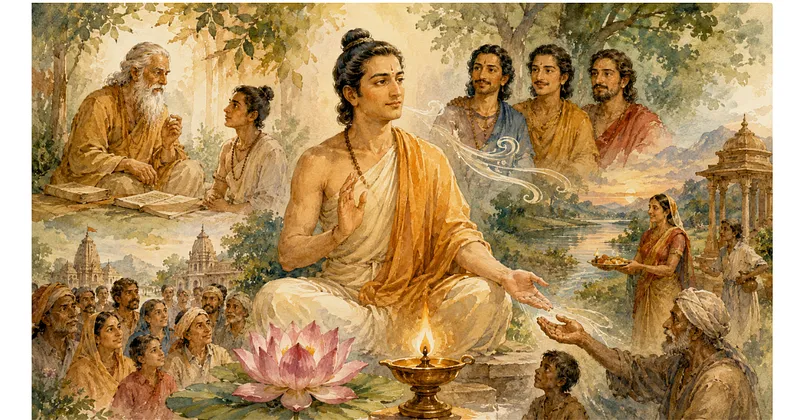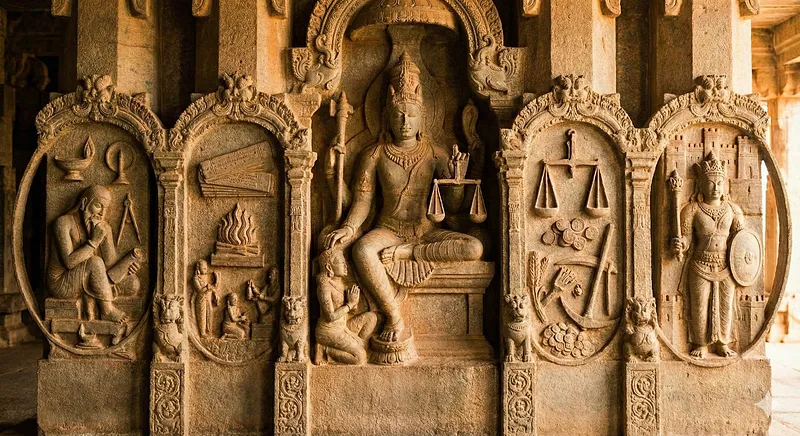
In public life, communication is often treated as a skill: how to speak well, present confidently, frame a message, manage perception, persuade an audience, or respond under pressure. These are certainly useful. A leader who cannot communicate clearly cannot lead effectively. Yet, if communication is reduced only to performance, technique, or messaging strategy, it becomes shallow. It may impress, but it may not build trust. It may persuade for a moment, but it may not create lasting respect.
The Indian nīti tradition approaches communication differently. It does not begin with speech as performance. It begins with speech as character.
In Kāmandaka Nītisāra, especially in the verses on sūnṛtā-vāk—gentle, truthful, pleasing, and refined speech—we find a profound framework for public communication. Kāmandaka does not merely ask a leader to “speak well.” He asks the leader to cultivate the inner disposition from which good speech naturally arises. The true communicator is not simply one who has mastered words. He is one who has mastered himself.
This is particularly relevant for public leadership today. Public leaders operate in environments of conflict, criticism, social media outrage, ideological polarisation, institutional pressure, and constant scrutiny. In such a world, communication is not just about clarity; it is about restraint. It is not just about persuasion; it is about trust. It is not just about visibility; it is about dignity.
Kāmandaka’s teaching offers a civilizational framework for communication based on maitrī — goodwill, mādhurya — sweetness, vāk-saṃyama — restraint in speech, dayā — compassion, and satkāra — respectful conduct.
The leader’s task, in this framework, is not merely to win arguments. It is to win hearts.
The Limits of the Modern Communication-Skills Approach
The modern approach to communication skills usually emphasizes practical competencies. These include public speaking, audience analysis, storytelling, message framing, body language, listening skills, emotional intelligence, negotiation, conflict resolution, and crisis communication. In professional and leadership training, communication is often linked to effectiveness: how to influence people, build a brand, manage stakeholders, motivate teams, and shape public perception.
This approach is useful, but it has certain limitations.
First, it often focuses on external expression rather than inner formation. It trains the leader to speak better, but not always to become better. A person may learn to sound empathetic without being empathetic. One may learn the language of respect without actually respecting people. One may become persuasive without becoming truthful.
Second, modern communication training often treats the listener as an audience, stakeholder, voter, customer, or target group. Kāmandaka treats the listener as a conscious being whose heart must not be wounded. This is a significant shift. Communication is not simply transmission of information. It is an ethical act.
Third, modern communication often prizes assertiveness, confidence, and impact. Kāmandaka does not reject these, but he places them within a deeper discipline: speech must be pleasing, restrained, dignified, and rooted in goodwill. Impact without restraint can become aggression. Confidence without sweetness can become arrogance. Persuasion without dharma can become manipulation.
Thus, the modern approach asks: “How can I communicate effectively?”
Kāmandaka asks a deeper question: “From what inner state should I speak, so that my words create trust, joy, and harmony?”
This is the difference between communication as skill and communication as nīti.
1. Begin with Maitrī: Goodwill Before Words
Kāmandaka begins his framework with a striking instruction:
ह्लादिनीं सर्वसत्त्वानां सम्यग् जनजिहीर्षया ।
भावयेत् परमां मैत्रीं विसृजेल्लौकिकीं गिरम् ॥
hlādinīṃ sarva-sattvānāṃ samyag jana-jihīrṣayā,
bhāvayet paramāṃ maitrīṃ visṛjed laukikīṃ giram.
“Wishing to rightly win people’s hearts, one should cultivate supreme friendliness and speak words that bring joy to all beings, avoiding harsh or merely worldly speech.”
— Kāmandaka Nītisāra 2.22
The key phrase here is janajihīrṣayā — the desire to win people’s affection or goodwill. But Kāmandaka does not recommend manipulation, charm, or flattery. He says: cultivate paramā maitrī, supreme friendliness. In other words, if one wants to win hearts, one must first purify one’s intention.
This is the first principle of public leadership communication: goodwill precedes good speech.
A leader who speaks from contempt cannot hide it for long. Even if the words are polished, the listener senses the absence of respect. Similarly, a leader who speaks from genuine concern carries warmth even in simple words. People may forget the exact sentence, but they remember the emotional atmosphere created by the speaker.
Kāmandaka also uses the word hlādinī — that which gives joy or delight. Speech should not merely inform. It should uplift. It should leave the listener feeling more respected, more included, more hopeful, and more capable.
This does not mean that public leaders must avoid hard truths. Sometimes leadership demands correction, warning, discipline, or disagreement. But even difficult truths can be expressed with maitrī. There is a difference between truth that awakens and truth that humiliates. Kāmandaka’s ideal leader chooses the former.
In modern terms, this goes beyond “audience engagement.” It is not about saying what people want to hear. It is about speaking in a manner that preserves the dignity of the listener. The public leader must ask: Are my words arising from goodwill? Do they strengthen social trust? Do they create unnecessary bitterness? Do they help people move toward a higher possibility?
Where modern communication begins with the message, Kāmandaka begins with the heart.
2. Speech as a Gift to the Mind
The next verse deepens the idea:
नित्यं मनोपहारिण्या वाचा प्रह्लादयेज्जनम् ।
उद्वेजनीयो भवति क्रूरवागर्थदोऽपि सन् ॥
nityaṃ manopahāriṇyā vācā prahlādayej janam,
udvejanīyo bhavati krūra-vāg-artha-do’pi san.
“One should always delight people with words that please the heart. Even if one gives wealth, a person who speaks harshly becomes disturbing and disliked.”
— Kāmandaka Nītisāra 2.23
The phrase manopahāriṇī vāk is beautiful. It means speech that offers delight to the mind. Speech is treated as an offering. A leader’s words are not merely sound; they are a form of upahāra, a gift.
This idea has immediate relevance for public life. Many leaders may deliver material benefits: schemes, funds, services, reforms, institutional support, employment, welfare, or infrastructure. But if their speech is harsh, dismissive, insulting, or arrogant, the benefit loses its warmth. People may receive the material help, but they do not feel respected.
Kāmandaka is clear: even one who gives artha—wealth or benefit—becomes udvejanīya, a source of agitation, if he is krūra-vāk, harsh in speech.
This is a profound insight into human psychology. People do not experience leadership only through policies and outcomes. They experience leadership through tone, gesture, acknowledgment, and words. A sentence of respect can make people feel seen. A sentence of contempt can erase the goodwill created by years of work.
For public leadership, this means that communication must not be treated as an accessory to governance. It is part of governance itself. The way a leader speaks to citizens, workers, opponents, officers, journalists, volunteers, and critics shapes the moral climate of public life.
In modern training, we often hear of “stakeholder management.” Kāmandaka would transform this into “mind-honouring speech.” The leader should not merely manage people; he should honour the minds of people.
3. Never Weaponize Pain
Kāmandaka then moves from sweetness to restraint:
हृदि विद्ध इवात्यर्थं यया सन्तप्यते जनः ।
पीडितोऽपि हि मेधावी न तां वाचमुदीरयेत् ॥
hṛdi viddha ivātyarthaṃ yayā santapyate janaḥ,
pīḍito’pi hi medhāvī na tāṃ vācam udīrayet.
“A wise person should never utter words that pierce another’s heart and cause deep pain, even when he himself is suffering or provoked.”
— Kāmandaka Nītisāra 2.24
This verse may be one of the most important teachings for contemporary public life. Kāmandaka recognizes that people often speak harshly when they themselves are hurt. Pain becomes speech. Frustration becomes accusation. Fear becomes aggression. Humiliation becomes revenge.
But the medhāvī, the wise person, does not allow his own suffering to become a weapon against another. Even when pīḍitaḥ—pained, troubled, or provoked—he does not utter words that pierce another’s heart.
This is the essence of vāk-saṃyama, restraint in speech.
For public leaders, this is not optional. Leaders are often attacked, criticized, misunderstood, mocked, or provoked. They face pressure from opponents, media, public anger, institutional constraints, and internal conflict. If every provocation produces a harsh response, leadership becomes reactive. Such a leader may appear strong for a moment, but he slowly loses moral authority.
Kāmandaka’s standard is higher. The wise leader does not say, “I was hurt, therefore I spoke harshly.” He says, “Because I am hurt, I must be even more careful with my words.”
This is not weakness. It is strength. Anyone can speak sharply when angry. Only the disciplined can remain dignified under pressure.
Modern communication training speaks of crisis communication and emotional regulation. Kāmandaka gives it an ethical foundation: do not let your pain become another person’s wound.
4. Words Can Become Weapons
Kāmandaka intensifies the warning:
तीव्राण्युद्वेगकारीणि विसृष्टान्यशमात्मकः ।
कृन्तन्ति देहिनां मर्म शस्त्राणीव वचांसि च ॥
tīvrāṇy udvega-kārīṇi visṛṣṭāny aśamātmakaḥ,
kṛntanti dehināṃ marma śastrāṇīva vacāṃsi ca.
“Harsh and agitating words, released by an unrestrained person, cut into the vital core of beings like weapons.”
— Kāmandaka Nītisāra 2.25
Here, speech is compared to weapons. The words of the aśamātmakaḥ—one whose self is unrestrained—are tīvrāṇi, sharp and intense; udvega-kārīṇi, causing agitation. Such words cut into the marma, the vulnerable core of a person.
This verse is especially relevant in the age of digital communication. Today, leaders do not speak only in assemblies or meetings. They speak through posts, interviews, comments, short videos, slogans, and instant responses. A careless sentence travels quickly. A harsh phrase becomes a headline. A humiliating remark becomes a permanent record. Public speech now has a longer life and wider reach than ever before.
Kāmandaka’s warning is therefore even more urgent today: uncontrolled speech wounds more people than the speaker may ever meet.
In a public setting, harsh words do not only hurt the immediate target. They also shape the behaviour of followers. When leaders speak with contempt, supporters often imitate that contempt. When leaders normalize insult, public culture becomes coarser. When leaders weaponize language, society becomes more suspicious and divided.
Thus, speech is not private when the speaker is public. The leader’s words become part of the moral atmosphere of society.
Kāmandaka’s teaching is clear: mastery of speech begins with mastery of the self. A person without inner restraint cannot produce trustworthy communication. Technique cannot compensate for an undisciplined mind.
5. Speak Pleasantly Even to Opponents
The next verse gives one of the most powerful principles for public leadership:
प्रियमेवाभिधातव्यं सत्सु नित्यं द्विषत्सु च ।
शीखीव केकामधुरः प्रियवाक् कस्य न प्रियः ॥
priyam evābhidhātavyaṃ satsu nityaṃ dviṣatsu ca,
śikhīva kekā-madhuraḥ priyavāk kasya na priyaḥ.
“One should always speak pleasantly, to the good and friendly as well as to adversaries. Like the sweet call of the peacock, who does not love one who speaks pleasantly?”
— Kāmandaka Nītisāra 2.26
Kāmandaka does not say: speak sweetly only to friends. He says: speak pleasantly to satsu and dviṣatsu—to the good, the friendly, and even to those who oppose you.
This is not sentimental advice. It is political wisdom.
A public leader will always have opponents. Opposition may come from ideological rivals, critics, community groups, media voices, administrative actors, or citizens who feel wronged. The immature leader sees every opponent as an enemy to be defeated. The wise leader sees opposition as a reality to be handled with dignity.
Pleasant speech toward opponents does not mean surrender. It does not mean avoiding disagreement. It means refusing to dehumanize the other. It means one can oppose a position without insulting the person. It means one can debate strongly without poisoning the relationship.
This is a mark of high leadership. A leader who speaks respectfully even to critics creates confidence among neutral observers. People begin to feel: this person can be trusted with power because he does not lose balance in conflict.
In modern terms, this principle applies to negotiation, diplomacy, conflict resolution, stakeholder engagement, and public debate. But Kāmandaka expresses it in a more refined way: priyavāk kasya na priyaḥ? Who does not love one who speaks kindly?
Pleasant speech is not cosmetic. It is a bridge-building force.
6. Sweetness is the Ornament of Wisdom
Kāmandaka then turns to imagery:
अलङ्क्रियन्ते शिखिनः केकया मदरक्तया ।
वाचा विपश्चितोऽत्यर्थं माधुर्यगुणयुक्तया ॥
alaṅkriyante śikhinaḥ kekayā mada-raktayā,
vācā vipaścito ’tyarthaṃ mādhurya-guṇa-yuktayā.
“Just as peacocks are adorned by their joyful sweet call, the wise are adorned by speech filled with the quality of sweetness.”
— Kāmandaka Nītisāra 2.27
A peacock is already beautiful, but its call adds to its presence. Similarly, the wise may possess knowledge, intelligence, authority, or experience, but their true beauty is revealed through mādhurya-guṇa-yuktā vāk—speech endowed with sweetness.
This is an important reminder for scholars, administrators, teachers, activists, and leaders. Knowledge alone is not enough. If knowledge is expressed harshly, arrogantly, or impatiently, people resist it. Wisdom needs a graceful vehicle. Sweet speech becomes that vehicle.
Many public leaders fail not because they lack ideas, but because their manner of communication creates distance. They may be right in content but wrong in tone. Kāmandaka would say that wisdom without sweetness is incomplete. Speech is the ornament of the wise.
This does not mean artificial politeness. Mādhurya is not sugary speech. It is not flattery, manipulation, or decorative language. It is the natural sweetness that arises from inner refinement. It is the ability to make truth receivable.
For public leadership, this is crucial. A leader must often communicate complex, difficult, or unpopular decisions. Sweetness in speech helps people listen without feeling attacked. It allows correction without humiliation. It allows authority without arrogance.
The wise are adorned not by noise, but by refinement.
7. The Voice of the Virtuous is Sweeter Than Birdsong
Kāmandaka continues:
मदरक्तस्य हंसस्य कोकिलस्य शिखण्डिनः ।
हरन्ति न तथा वाचो यथा साधु विपश्चितः ॥
mada-raktasya haṃsasya kokilasya śikhaṇḍinaḥ,
haranti na tathā vāco yathā sādhu vipaścitaḥ.
“The voices of the swan, cuckoo, and peacock, though sweet and full of delight, do not charm the heart as deeply as the words of a noble and wise person.”
— Kāmandaka Nītisāra 2.28
Here, Kāmandaka makes a subtle distinction between sound and speech. Birds may have sweet sounds, but the speech of the sādhu vipaścitaḥ—the noble and discerning person—has a deeper sweetness. Why? Because human speech carries intention, meaning, memory, values, and compassion.
A pleasant voice alone is not enough. A leader may have excellent delivery, dramatic pauses, humour, vocal range, and command over language. But if the words are not rooted in sādhutva—nobility—and viveka—discernment—they remain only performance.
Kāmandaka’s ideal communicator is not merely pleasing to the ear. He is nourishing to the heart.
This distinction is important in the age of media-driven leadership. Public communication today often rewards charisma, dramatic speech, sharp replies, viral phrases, and emotional intensity. But Kāmandaka would ask: does the speech carry wisdom? Does it calm or inflame? Does it elevate the listener? Does it arise from nobility?
The speech of the wise charms not because it is melodious, but because it carries moral fragrance.
8. Communication Must Accompany Action
The next verse expands the framework from speech to conduct:
गुणानुरागी स्थितिमान् श्रद्दधानो दयान्वितः ।
धनं धर्माय विसृजेत् प्रियां वाचमुदीरयन् ॥
guṇānurāgī sthitimān śraddadhāno dayānvitaḥ,
dhanaṃ dharmāya visṛjet priyāṃ vācam udīrayan.
“One who loves virtue, is steady in conduct, full of faith and compassion, should give wealth for the sake of dharma, while speaking gentle and pleasing words.”
— Kāmandaka Nītisāra 2.29
This verse is crucial because it prevents a misunderstanding. Kāmandaka is not saying that sweet speech is enough. Words must accompany dharmic action.
The ideal person is guṇānurāgī—one who loves virtue; sthitimān—steady and disciplined; śraddadhānaḥ—filled with faith; and dayānvitaḥ—endowed with compassion. Such a person gives wealth for dharma and does so with priyā vāk, pleasing speech.
This is a complete public leadership model: values, steadiness, faith, compassion, generosity, and graceful communication.
In public life, service delivered without respect can feel mechanical. Welfare without dignity can feel patronising. Charity without humility can become self-display. Policy without compassion can become cold administration. Kāmandaka says: even when giving, speak gently. The receiver’s dignity is part of the gift.
This is a powerful principle for administrators, donors, political leaders, social workers, institution-builders, and community leaders. Help must not humiliate. Public service must not make people feel small. The act of giving must be joined with satkāra, respect.
Modern leadership often speaks of service delivery, impact metrics, and stakeholder outcomes. Kāmandaka adds: what was the emotional and ethical experience of the receiver? Did your words preserve their dignity? Did your conduct express compassion?
A leader’s communication is not separate from his action. It is the tone of his action.
9. The Divine Standard of Public Conduct
Kāmandaka concludes this section with praise:
ये प्रियाणि च भाषन्ते प्रयच्छन्ति च सत्कृतम् ।
श्रीमन्तो वन्द्यचरणा देवास्ते नरविग्रहाः ॥
ye priyāṇi ca bhāṣante prayacchanti ca satkṛtam,
śrīmanto vandya-caraṇā devās te nara-vigrahāḥ.
“Those prosperous ones who speak kindly and give respectfully are worthy of reverence; they are gods in human form.”
— Kāmandaka Nītisāra 2.30
This is a striking conclusion. Kāmandaka does not call people divine merely because they are wealthy, powerful, learned, or successful. They become devāḥ nara-vigrahāḥ—divine beings in human form—when prosperity is joined with kind speech and respectful giving.
The standard is not possession, but conduct. Wealth becomes sacred when it uplifts. Power becomes noble when it protects dignity. Speech becomes divine when it brings joy and respect.
This gives us a profound measure for public leadership. The true leader is not the one who dominates public attention. The true leader is one whose presence makes people feel seen, protected, respected, and uplifted. Such a leader combines śrī—prosperity or capacity—with maitrī, dayā, and priyavāk.
In this sense, communication is not a soft skill. It is a civilizational responsibility.
Kāmandaka’s Ideal Communication Framework for Public Leadership
From these verses, we can draw a complete framework for leadership communication.
The first principle is maitrī-pūrvaka-vāk — speech preceded by goodwill. Before speaking, the leader must examine his inner state. Is he speaking to serve, heal, guide, clarify, and uplift? Or is he speaking to dominate, humiliate, provoke, or display superiority?
The second principle is manopahāriṇī vāk — speech as an offering to the mind. Words should not leave people agitated unnecessarily. They should create clarity, steadiness, and dignity.
The third principle is vāk-saṃyama — restraint in speech. A leader must not speak from injury, anger, haste, or ego. Especially under provocation, restraint becomes the mark of wisdom.
The fourth principle is aśastra-vāk — non-weaponized speech. Words must not be used to pierce another’s marma, the vulnerable core. Public language must not normalize cruelty.
The fifth principle is priyavāk — pleasant speech toward all, including opponents. Disagreement must not destroy courtesy. Conflict must not erase dignity.
The sixth principle is mādhurya — sweetness as the ornament of wisdom. Knowledge, authority, and experience become attractive only when expressed with grace.
The seventh principle is sādhu-vāk — speech rooted in virtue. The sweetest speech is not merely melodious; it is noble, truthful, compassionate, and wise.
The eighth principle is satkṛta-dāna-vāk — respectful communication in action and giving. Public service must be accompanied by words that preserve the dignity of the receiver.
Together, these form a dharmic communication framework: speak from goodwill, speak with sweetness, speak with restraint, speak with dignity, and let speech accompany righteous action.
What Nītisāra Adds to Modern Communication
Modern communication training gives us tools. Kāmandaka gives us orientation.
Modern training says: know your audience. Kāmandaka says: cultivate maitrī toward them.
Modern training says: speak clearly. Kāmandaka says: speak in a way that brings hlāda, delight and upliftment.
Modern training says: manage conflict. Kāmandaka says: speak pleasantly even to dviṣat, the adversary.
Modern training says: develop emotional intelligence. Kāmandaka says: even when pīḍitaḥ, wounded or provoked, do not wound another’s heart.
Modern training says: communicate impact. Kāmandaka says: even when giving wealth or benefit, speak with respect, because harshness destroys goodwill.
Modern training says: build influence. Kāmandaka says: win hearts through paramā maitrī and priyavāk.
Modern training says: protect your image. Kāmandaka says: refine your character.
This is the great contribution of Nītisāra. It does not reject skill, strategy, or effectiveness. But it refuses to separate them from ethics. It reminds us that the most powerful communication is not produced by technique alone. It emerges from a disciplined mind, a compassionate heart, and a refined culture of speech.
The Relevance for Today
Today’s public sphere is noisy. Much of public communication is designed to provoke, divide, trend, or dominate. Sharpness is mistaken for courage. Insult is mistaken for honesty. Aggression is mistaken for strength. Viral speech is mistaken for meaningful speech.
Kāmandaka offers a different ideal.
A leader need not be weak to be gentle. He need not be vague to be kind. He need not be silent to be restrained. He need not flatter in order to be pleasant. He need not avoid conflict in order to remain dignified.
The ideal public communicator is firm without being cruel, clear without being harsh, persuasive without being manipulative, and powerful without being arrogant.
Such communication is not merely useful. It is necessary for social trust.
Families break because of harsh words. Institutions weaken because of disrespectful communication. Communities polarise because leaders speak without restraint. Public culture declines when language loses dignity. Kāmandaka’s verses are therefore not only advice for kings and ministers; they are guidance for anyone who carries responsibility in society.
Teachers, administrators, public servants, politicians, activists, entrepreneurs, community leaders, spiritual guides, parents, and citizens all need this discipline of speech.
Conclusion: Speak to Heal, Not to Strike
Kāmandaka’s communication framework can be summarized in one line: speak to win hearts, not to wound them.
This is not a call for superficial niceness. It is a call for disciplined, dhārmika, and effective public speech. The leader must cultivate maitrī before speaking, use priyavāk even in disagreement, practice vāk-saṃyama under provocation, and ensure that words preserve the dignity of all.
The modern world teaches us how to communicate better. Kāmandaka Nītisāra teaches us how to become the kind of person whose communication naturally builds trust.
In the end, the highest form of public leadership is not merely to command attention. It is to create confidence. It is not merely to speak powerfully. It is to speak responsibly. It is not merely to win arguments. It is to win hearts without losing truth.
Such speech is not ordinary. It is nīti. It is leadership. It is civilization expressed through words.