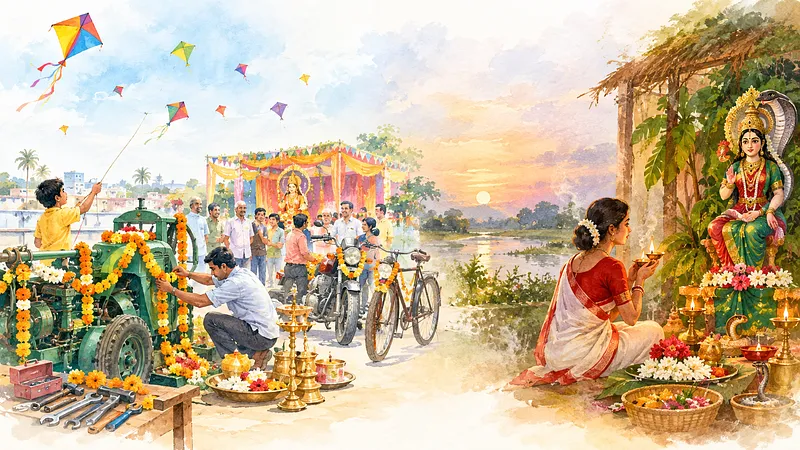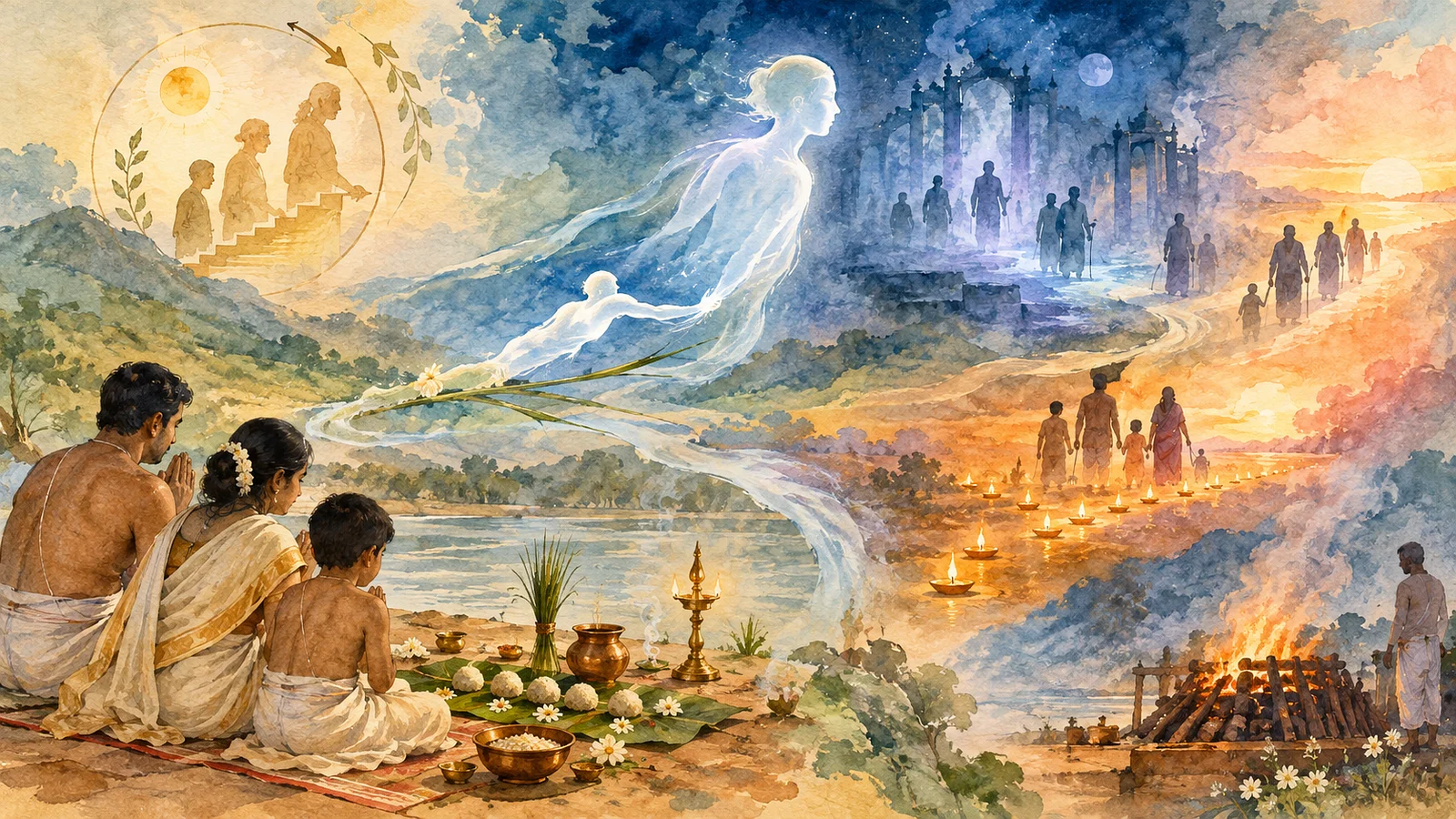
For fifteen days in the dark half of Bhādrapada, households across India turn towards their ancestors. Priests are booked weeks ahead. Sesame, darbha grass and rice are bought in quantity, and on the appointed tithi the family sits facing south while the names and gotras of three generations are spoken over the piṇḍas. The fortnight is the Pitṛ Pakṣa, also called the Mahālaya pakṣa, and it ends on the Mahālaya amāvāsyā, the day kept for every ancestor whose tithi the family no longer remembers.
The rite rests on a set of pramāṇas about death, and those pramāṇas raise a hard question. The Bṛhadāraṇyaka Upaniṣad compares the departing self to a leech that reaches the end of one blade of grass and grips the next before it lets go:
tad yathā tṛṇajalāyukā tṛṇasyāntaṃ gatvānyam ākramam ākramyātmānam upasaṃharati, evam evāyam ātmedaṃ śarīraṃ nihatyāvidyāṃ gamayitvānyam ākramam ākramyātmānam upasaṃharati (BU 4.4.3).
If the self moves straight into its next body, it is fair to ask what the family is feeding. The śrāddha also addresses the father as a Vasu, the grandfather as a Rudra and the great-grandfather as an Āditya. Read as a ladder, that scheme would keep a self waiting fifty or a hundred years before it could be born again. This essay sets out what the fortnight is and what the texts say happens at death. It then asks who the pitṛs are, and how the tradition itself answered the question.
The Fortnight of the Fathers
The word itself is the place to begin. Mahālaya is a compound of maha and ālaya. Maha here means a festival or celebration (utsava). Ālaya ordinarily means a place or an abode, and in this setting it stands for a time. Mahālaya is then the time of celebration, and those celebrated in it are the ancestors.
The digests fix the fortnight by the moon and the sun together. A verse cited in the Parāśara-Mādhavīya names the fifteen days from the first tithi of the dark half of Nabhasya, that is Bhādrapada, when the sun has entered Kanyā.
nabhasya-kṛṣṇapakṣa-pratipat-prabhṛti pañcadaśa dināni kṛtsnaḥ / aparapakṣaḥ savitari kanyāgate sati mahālaya iti proktaḥ.
A verse ascribed to the Bṛhanmanusmṛti counts from the full moon of Āṣāḍha. The pitṛs, it says, wait for the fifth fortnight after that day, distressed, and long for food and water every day.
āṣāḍhīm avadhiṃ kṛtvā pañcamaṃ pakṣam āśritāḥ / kāṅkṣanti pitaraḥ kliṣṭā annam apy anvahaṃ jalam.
By the amānta months, that fifth fortnight is exactly the dark half of Bhādrapada. Yājñavalkya already singles out a day inside it. Offerings made on the trayodaśī of the rainy season under the Maghā asterism, he says, bring an endless result, like those made at Gayā (Yāj. 1.261).
yad dadāti gayāsthaś ca sarvam ānantyam aśnute / tathā varṣātrayodaśyāṃ maghāsu ca viśeṣataḥ (Yāj. 1.261).
The Bhaviṣya Purāṇa supplies the picture most families carry. When the sun enters Kanyā, by order of Yama, the city of the dead stands empty, and it stays empty until the sun is seen in Vṛścika. Then the pitṛs return to their own abode, and if they have been disappointed they leave a harsh curse behind them.
kanyāṃ gate savitari pitṛrājño 'nuśāsanāt / tāvat pretapurī śūnyā yāvad vṛścikadarśanam // tato vṛścikam āyāte nirāśāḥ pitaro nṛpa / punaḥ svabhavanaṃ yānti śāpaṃ dattvā sudāruṇam.
A further verse fixes the gift on the fifth fortnight itself. The pitṛs long for it, so the offering must be made then, and a gift made at another time bears no fruit.
ākāṅkṣanti sma pitaraḥ pañcamaṃ pakṣam āśritāḥ / tasmāt tatraiva dātavyaṃ dattam anyatra niṣphalam.
The fortnight also widens the circle of those remembered. The annual ābdikam addresses three generations, and in its pārvaṇa form the mother's line as well. In the Mahālaya the piṇḍas go further, to other kin, to friends and to teachers.
The season ends with light. On Naraka caturdaśī, as the pitṛs begin their journey back, households light lamps and fire crackers to show them the road. This is the ulkādāna, and its verse covers the whole family, those who were cremated and those who were not. It asks that they reach the highest state by this blazing light, and that those who left Yama's world and come to Mahālaya, see the road by it and go on.
agnidagdhāś ca ye jīvāḥ ye 'py adagdhāḥ kule mama / ujjvalajjyotiṣā dagdhāḥ te yāntu paramāṃ gatim // yamalokaṃ parityajya āgatā ye mahālaye / ujjvalajjyotiṣā vartma prapaśyantu vrajantu te.
What Dies, and What Travels On
Antyeṣṭi means the final offering. Manu places the cremation inside the series of saṃskāras when he speaks of rites performed with mantras from conception to the cremation ground (Manu 2.16).
niṣekādiśmaśānānto mantrair yasyodito vidhiḥ / tasya śāstre 'dhikāro 'smiñ jñeyo nānyasya kasya cit (Manu 2.16).
The Ṛgveda's funeral mantras show what the fire was meant to do. Agni is asked not to consume the dead man entirely and, once the body is cooked through, to send him on to the fathers (RV 10.16.1).
mainam agne vi daho mābhi śoco māsya tvacaṃ cikṣipo mā śarīram / yadā śṛtaṃ kṛṇavo jātavedo 'them enam pra hiṇutāt pitṛbhyaḥ (RV 10.16.1).
The eye goes to the sun and the breath to the wind (RV 10.16.3).
sūryaṃ cakṣur gacchatu vātam ātmā dyāṃ ca gaccha pṛthivīṃ ca dharmaṇā / apo vā gaccha yadi tatra te hitam oṣadhīṣu prati tiṣṭhā śarīraiḥ (RV 10.16.3).
The Baudhāyana Pitṛmedha Sūtra states the purpose in one line: by the rites after birth a man wins this world, and by the rites after death he wins the next.
jātasaṃskāreṇemaṃ lokam abhijayati mṛtasaṃskāreṇāmuṃ lokam.
What travels on is explained by the doctrine of the three bodies (deha-traya).
-
The gross body (sthūla śarīra) is built from the compounded elements and is the house in which pleasure and pain are lived through.
-
The subtle body (sūkṣma śarīra), built from the elements before compounding, is the instrument of experience. The Tattvabodha counts seventeen parts in it: the five organs of knowing and the five of action, the five prāṇas, manas and buddhi.
-
The causal body (kāraṇa śarīra) is beginningless ignorance (anādi avidyā).
Only the first of the three ends at death. Sāṅkhya adds a point that matters later. The subtle liṅga migrates from body to body, yet by itself it cannot undergo experience (Sāṅkhyakārikā 40), and it cannot stand without the support of a body (41).
pūrvotpannam asaktaṃ niyataṃ mahadādisūkṣmaparyantam / saṃsarati nirupabhogaṃ bhāvair adhivāsitaṃ liṅgam (Sāṅkhyakārikā 40).
citraṃ yathāśrayam ṛte sthāṇvādibhyo vinā yathā chāyā / tadvad vinā viśeṣair na tiṣṭhati nirāśrayaṃ liṅgam (Sāṅkhyakārikā 41).
In ordinary terms, then, death is the subtle body leaving the gross. Uddālaka puts it plainly to his son: this body dies when the jīva has left it, and the jīva does not die (ChU 6.11.3).
evam eva khalu somya viddhīti hovāca jīvāpetaṃ vāva kiledaṃ mriyate na jīvo mriyata iti (ChU 6.11.3).
The Chāndogya also describes the deathbed. The relatives gather and ask, "Do you know me?", and the dying man knows them until his speech has merged into his mind (ChU 6.15.1).
puruṣaṃ somyota upatāpinaṃ jñātayaḥ paryupāsate jānāsi māṃ jānāsi mām iti / tasya yāvan na vāṅ manasi sampadyate manaḥ prāṇe prāṇas tejasi tejaḥ parasyāṃ devatāyāṃ tāvaj jānāti (ChU 6.15.1).
Speech merges into mind, mind into prāṇa, prāṇa into heat, and heat into the highest deity (ChU 6.8.6).
asya somya puruṣasya prayato vāṅ manasi sampadyate manaḥ prāṇe prāṇas tejasi tejaḥ parasyāṃ devatāyām (ChU 6.8.6).
The Bṛhadāraṇyaka adds that the tip of the heart lights up and the self goes out through the eye, the crown or some other part of the body. Prāṇa follows it, and knowledge, action and former awareness go with it (BU 4.4.2).
tasya haitasya hṛdayasyāgraṃ pradyotate / tena pradyotenaiṣa ātmā niṣkrāmati cakṣuṣṭo vā mūrdhno vānyebhyo vā śarīradeśebhyaḥ / tam utkrāmantaṃ prāṇo 'nūtkrāmati prāṇam anūtkrāmantaṃ sarve prāṇā anūtkrāmanti / savijñāno bhavati savijñānam evānvavakrāmati / taṃ vidyākarmaṇī samanvārabhete pūrvaprajñā ca (BU 4.4.2).
The Praśna names the sign the family reads at the bedside: a person whose heat has subsided goes on to rebirth (Praśna 3.9).
tejo ha vā udānas tasmād upaśāntatejāḥ / punarbhavam indriyair manasi sampadyamānaiḥ (Praśna 3.9).
For one who knows the self, the prāṇas do not go out at all (BU 4.4.6).
yo 'kāmo niṣkāma āptakāma ātmakāmo na tasya prāṇā utkrāmanti brahmaiva san brahmāpyeti (BU 4.4.6).
Every rite that follows assumes a jīva still bound, travelling with its karma and its memory intact.
The First Year
From the cremation to the sapiṇḍīkaraṇa the dead person is a preta, one who has gone forth. The sapiṇḍīkaraṇa, literally the making of a sapiṇḍa, is the rite that admits him to the company of the fathers. From then on he shares the piṇḍa with the three generations above him and is counted among the pitṛs. In the Sāroddhāra of the Garuḍa Purāṇa the son offers a piṇḍa each day for ten days, and each piṇḍa builds part of a new body about a cubit long. The head forms on the first day and the neck and shoulders on the second, and the work continues down to the knees and feet, until hunger and thirst arrive on the tenth (Sāroddhāra 1.47–53). According to the Garuḍa Purāṇa, the preta is never without a body during these ten days. At the moment of death he already has one, for the text describes him as a person the size of a thumb, drawn out of the old body by Yama's messengers (1.32). The Pretakhaṇḍa explains how this relates to the new body: the piṇḍas join the airy body (vāyuja) he left with to a body made of piṇḍas (piṇḍaja). The ten days add a body fit for experience to a subtle one already present, which is what the Sāṅkhya kārikā leads one to expect.
The eleventh day brings the first ekoddiṣṭa, a śrāddha addressed to one person alone. The sapiṇḍīkaraṇa then joins the preta to the ancestors. Four vessels of scented water and sesame are prepared, and the preta's vessel is poured into the three vessels of the fathers with the two mantras beginning ye samānāḥ (Yāj. 1.253–254).
gandhodakatilair yuktaṃ kuryāt pātracatuṣṭayam / arghyārthaṃ pitṛpātreṣu pretapātraṃ prasecayet // ye samānā iti dvābhyāṃ śeṣaṃ pūrvavad ācaret / etat sapiṇḍīkaraṇam ekoddiṣṭaṃ striyā api (Yāj. 1.253–254).
Yājñavalkya allows this to be done before the year is out, provided food and a pot of water are still given each month until it ends (Yāj. 1.255).
arvāk sapiṇḍīkaraṇaṃ yasya saṃvatsarād bhavet / tasyāpy annaṃ sodakumbhaṃ dadyāt saṃvatsaraṃ dvije (Yāj. 1.255).
The calendar is fixed in a single verse: the rite falls on the day of death, every month for a year and every year after that, with the first on the eleventh day (Yāj. 1.256).
mṛte 'hani prakartavyaṃ pratimāsaṃ tu vatsaram / pratisaṃvatsaraṃ caivam ādyam ekādaśe 'hani (Yāj. 1.256).
The Garuḍa Purāṇa ties each monthly offering to a city on the road to Yama, from Saumyapura on the eighteenth day to Śītāḍhya at the year's end, where the annual piṇḍa reaches the traveller (Sāroddhāra 2.43–83). The text's own numbers come to about a year, for the road is 86,000 yojanas and the preta covers 247 a day. The same text says, however, that it describes the way of the pāpīs, those weighed down by pāpa, through the southern of Yama's four gates (1.13; 2.85). It is one route among several.
Manu supplies a scale for all this. For the pitṛs a human month is one day and night, with the dark fortnight as their day and the bright as their night (Manu 1.66).
pitrye rātryahanī māsaḥ pravibhāgas tu pakṣayoḥ / karmaceṣṭāsv ahaḥ kṛṣṇaḥ śuklaḥ svapnāya śarvarī (Manu 1.66).
The monthly offering on the tithi is a daily meal in their time, and the amāvāsyā is their noon. From the second year the rite becomes the ābdikam, performed on the lunar tithi of the death, and each Bhādrapada the Pitṛ Pakṣa comes round beside it.
Who the Pitṛs Are
The word pitṛ covers two kinds of being. The first are permanent divine classes. Manu calls them the primeval gods (pūrvadevatāḥ), free of anger, devoted to purity and chaste, and he names the Agniṣvāttas, the Barhiṣads, the Somapās and others (Manu 3.192–199).
akrodhanāḥ śaucaparāḥ satataṃ brahmacāriṇaḥ / nyastaśastrā mahābhāgāḥ pitaraḥ pūrvadevatāḥ (Manu 3.192).
virāṭsutāḥ somasadaḥ sādhyānāṃ pitaraḥ smṛtāḥ / agniṣvāttāś ca devānāṃ mārīcā lokaviśrutāḥ // daityadānavayakṣāṇāṃ gandharvoragarakṣasām / suparṇakinnarāṇāṃ ca smṛtā barhiṣado 'trijāḥ // somapā nāma viprāṇāṃ kṣatriyāṇāṃ havirbhujaḥ / vaiśyānām ājyapā nāma śūdrāṇāṃ tu sukālinaḥ (Manu 3.195–197).
The Ṛgveda already invokes the Agniṣvāttas and the Barhiṣads (RV 10.15).
agniṣvāttāḥ pitara eha gacchata sadaḥ-sadaḥ sadata supraṇītayaḥ / attā havīṃṣi prayatāni barhiṣy athā rayiṃ sarvavīraṃ dadhātana (RV 10.15.11).
In the Matsya Purāṇa these classes keep account of the human dead, their names and gotras, times and places, even after they have passed into another birth (Matsya 19.5).
agniṣvāttādayas teṣām ādhipatye vyavasthitāḥ / nāmagotrakāladeśā bhavāntaragatān api (Matsya 19.5).
The second kind is the family's own dead, and here the texts answer the question of form in two ways. One answer is the ancestor's actual state, which his karma decides. The other is the form under which the rite addresses him. The fathers are called Vasus, the grandfathers Rudras and the great-grandfathers Ādityas, and Manu calls this an ancient śruti (Manu 3.284).
vasūn vadanti tu pitṝn rudrāṃś caiva pitāmahān / prapitāmahāṃs tathādityān śrutir eṣā sanātanī (Manu 3.284).
Medhātithi reads the verse as aimed at a son who is reluctant to perform śrāddha: the three generations who receive piṇḍas are to be regarded as gods. The saṅkalpa does exactly this when it names them as vasu-rudra-āditya-svarūpa.
The three classes come from the thirty-three gods of the Bṛhadāraṇyaka (BU 3.9.2), and each carries an etymology.
katame te trayastriṃśad iti / aṣṭau vasavaḥ ekādaśa rudrāḥ dvādaśādityāḥ te ekatriṃśat indraś caiva prajāpatiś ca trayastriṃśāv iti (BU 3.9.2).
The eight Vasus are fire, earth, wind, the mid-region (antarikṣa, the space between earth and sky), sun, sky, moon and stars, in whom all wealth (vasu) is placed (BU 3.9.3).
katame vasava iti / agniś ca pṛthivī ca vāyuś cāntarikṣaṃ cādityaś ca dyauś ca candramāś ca nakṣatrāṇi caite vasavaḥ / eteṣu hīdaṃ vasu sarvaṃ hitam iti tasmād vasava iti (BU 3.9.3).
The eleven Rudras are the ten prāṇas together with the self. They are called Rudras because when they leave the body they make people weep (BU 3.9.4).
katame rudrā iti / daśeme puruṣe prāṇā ātmaikādaśaḥ / te yadāsmāc charīrān martyād utkrāmanty atha rodayanti / tad yad rodayanti tasmād rudrā iti (BU 3.9.4).
The twelve Ādityas are the months, which go on carrying everything away (BU 3.9.5).
katama ādityā iti / dvādaśa vai māsāḥ saṃvatsarasya eta ādityāḥ / ete hīdaṃ sarvam ādadānā yanti / te yad idaṃ sarvam ādadānā yanti tasmād ādityā iti (BU 3.9.5).
The Mahābhārata gives them personal names: Dhara and Prabhāsa are among the Vasus, Ajaikapād and Ahirbudhnya among the Rudras, and Mitra, Varuṇa and Aryaman among the Ādityas. Kṛṣṇa says that among the pitṛs he is Aryaman (Gītā 10.29).
anantaś cāsmi nāgānāṃ varuṇo yādasām aham / pitṝṇām aryamā cāsmi yamaḥ saṃyamatām aham (Gītā 10.29).
Yājñavalkya states the link with prosperity. The Vasus, the Rudras and the sons of Aditi are the deities of the śrāddha; satisfied by it, they satisfy the human ancestors (Yāj. 1.269). The pleased ancestors then give long life, offspring, wealth, learning, heaven, liberation, happiness and even a kingdom (Yāj. 1.270).
vasurudrāditisutāḥ pitaraḥ śrāddhadevatāḥ / prīṇayanti manuṣyāṇāṃ pitṝn śrāddhena tarpitāḥ // āyuḥ prajāṃ dhanaṃ vidyāṃ svargaṃ mokṣaṃ sukhāni ca / prayacchanti tathā rājyaṃ prītā nṝṇāṃ pitāmahāḥ (Yāj. 1.269–270).
Most of these belong to this world (aihika), while heaven and liberation belong to the next (āmuṣmika). The Upaniṣadic definitions suggest how the three classes share that range. The Vasus hold wealth and make life settled. The Rudras are the breath that governs health and the length of life. The Ādityas are time, which carries the lifespan away and delivers the fruit of action in the next world.
The Leech on the Grass Blade
The tradition raised the leech objection itself. In his commentary on Brahmasūtra 3.1.1, Śaṅkarācārya has an opponent argue that the caterpillar example shows the jīva keeping hold of its present body until it reaches the next. He replies that the comparison covers only the stretching of the mind's projection (bhāvanā) towards the new body that karma has already set before it. Ānandagiri's example of such a projection is the thought "I am a god". Meanwhile the jīva itself travels wrapped in subtle elements (BS 3.1.1).
tadantarapratipattau raṃhati sampariṣvaktaḥ praśnanirūpaṇābhyām (BS 3.1.1).
The front end of the leech, reaching for the next blade, is the dying mind already turned towards what comes next, which is what the Gītā says of the last thought (8.6).
yaṃ yaṃ vāpi smaran bhāvaṃ tyajaty ante kalevaram / taṃ tam evaiti kaunteya sadā tadbhāvabhāvitaḥ (Gītā 8.6).
The very next verse of the Upaniṣad names what the next blade may be. As a goldsmith works gold into a newer and more beautiful form, the self makes for itself a new form, that of the pitṛs or the gandharvas, the gods, Prajāpati, Brahmā or other beings (BU 4.4.4).
tad yathā peśaskārī peśaso mātrām apādāyānyan navataraṃ kalyāṇataraṃ rūpaṃ tanute / evam evāyam ātmedaṃ śarīraṃ nihatyāvidyāṃ gamayitvānyan navataraṃ kalyāṇataraṃ rūpaṃ kurute pitryaṃ vā gāndharvaṃ vā daivaṃ vā prājāpatyaṃ vā brāhmaṃ vānyeṣāṃ vā bhūtānām (BU 4.4.4).
A body among the fathers is the first item on the list. The Chāndogya's road of the fathers adds that those who performed sacrifice and charity stay in the world of the moon until the residue of their merit is spent, and then return through rain and plants to a womb (ChU 5.10.3–6).
atha ya ime grāma iṣṭāpūrte dattam ity upāsate te dhūmam abhisaṃbhavanti dhūmād rātriṃ rātrer aparapakṣam aparapakṣād yān ṣaḍ dakṣiṇaiti māsāṃs tān naite saṃvatsaram abhiprāpnuvanti // māsebhyaḥ pitṛlokaṃ pitṛlokād ākāśam ākāśāc candramasam eṣa somo rājā tad devānām annaṃ taṃ devā bhakṣayanti // tasmin yāvat sampātam uṣitvāthaitam evādhvānaṃ punar nivartante yathetam ākāśam ākāśād vāyuṃ vāyur bhūtvā dhūmo bhavati dhūmo bhūtvābhraṃ bhavati // abhraṃ bhūtvā megho bhavati megho bhūtvā pravarṣati ta iha vrīhiyavā oṣadhivanaspatayas tilamāṣā iti jāyante 'to vai khalu durniṣprapataraṃ yo yo hy annam atti yo retaḥ siñcati tad bhūya eva bhavati (ChU 5.10.3–6).
Those who take neither road are born and die again and again as small creatures (ChU 5.10.8).
athaitayoḥ pathor na katareṇa cana tānīmāni kṣudrāṇy asakṛdāvartīni bhūtāni bhavanti jāyasva mriyasveti / etat tṛtīyaṃ sthānam (ChU 5.10.8).
The śruti therefore knows both long delays and almost immediate births. At no stage is the jīva without a vehicle, and nothing in the leech image fixes the pace.
The fifty-to-hundred-year problem comes from reading Vasu, Rudra and Āditya as stages. A simple case shows why they cannot be. Subbayya has died. His younger son Prasad performs his śrāddha and addresses him as a Vasu. His elder son Narasimha has also died, and Narasimha's son Kiran addresses his own father as the Vasu and Subbayya as a Rudra. In the same Mahālaya fortnight, Subbayya is a Vasu in one house and a Rudra in another. The names follow the person who offers, so they cannot report where Subbayya's jīva now is. The digests point the same way, since they keep other three-tier names for the same generations. Hemādri quotes texts that call them Viṣṇu, Brahmā and Śiva, or the months, the seasons and the year.

The Matsya Purāṇa answers the rest. Its sages ask how food eaten by brāhmaṇas or poured into fire can reach the dead, whatever their present state (Matsya 19.1–2).
kathaṃ kavyāni deyāni havyāni ca janair iha / gacchanti pitṛlokasthān prāpakaḥ ko 'tra gadyate // yadi martyo dvijo bhuṅkte hūyate yadi vānale / śubhāśubhātmakaiḥ pretair dattaṃ tad bhujyate katham (Matsya 19.1–2).
Sūta replies that name and gotra carry the offering, together with mantras and faith (19.4).
nāma gotraṃ pitṝṇāṃ tu prāpakaṃ havyakavyayoḥ / śrāddhasya mantrāḥ śraddhā ca upayojyātibhaktitaḥ (Matsya 19.4).
For a father who has become a god the food becomes nectar. For one born an animal it becomes grass, and for one born again as a human being it becomes food and drink of many flavours (19.6–9).
devo yadi pitā jātaḥ śubhakarmānuyogataḥ / tasyānnam amṛtaṃ bhūtvā divyatve 'py anugacchati // daityatve bhogarūpeṇa paśutve ca tṛṇaṃ bhavet / śrāddhānnaṃ vāyurūpeṇa sarpatve 'py upatiṣṭhati // pānaṃ bhavati yakṣatve rākṣasatve tathāmiṣam / danujatve tathā māyā pretatve rudhirodakam / manuṣyatve 'nnapānāni nānābhogarasaṃ bhavet (Matsya 19.6–9).
When a new death moves the great-grandfather out of the piṇḍa share, he also stays within the rite, among the sharers of the wipings left on the darbha (Manu 3.216).
nyupya piṇḍāṃs tatas tāṃs tu prayato vidhipūrvakam / teṣu darbheṣu taṃ hastaṃ nirmṛjyāl lepabhāginām (Manu 3.216).
This also settles the Mahālaya's picture of the pitṛs crowding home. The Bhaviṣya describes the world of the fathers turning towards the living for a season. The offering, carried by name and gotra, reaches each ancestor wherever his karma has placed him, whether that is the world of the fathers, a heaven, or a new life in another household.
The Fortnight's Work
During these fifteen days the household names its ancestors one by one: three generations on the tithi, then kin, friends and teachers, and on the amāvāsyā everyone else. The texts surveyed here give that act a precise place. The jīva goes on under its own karma, wrapped in its subtle body. The family's offering follows it by name and gotra, and on Naraka caturdaśī the lamps are lit for the road back.
References
-
Ṛgveda, maṇḍala 10; Bṛhadāraṇyaka, Chāndogya and Praśna Upaniṣads; Bhagavadgītā.
-
Bādarāyaṇa, Brahmasūtra, with the bhāṣya of Śaṅkarācārya and the gloss of Ānandagiri.
-
Īśvarakṛṣṇa, Sāṅkhyakārikā; Tattvabodha.
-
Manusmṛti, with the Manubhāṣya of Medhātithi; Yājñavalkyasmṛti; Baudhāyana Pitṛmedha Sūtra.
-
Mādhavācārya, Parāśara-Mādhavīya; Bṛhanmanusmṛti (as cited in the digests); Hemādri, Caturvargacintāmaṇi, Śrāddhakalpa.
-
Mahābhārata, Ādiparvan; Garuḍa Purāṇa (Sāroddhāra and Pretakhaṇḍa); Matsya Purāṇa; Bhaviṣya Purāṇa.
-
Acharya, N. R. (Ed.). (1949). Yājñavalkyasmṛti of Yogīśvara Yājñavalkya, with the commentary Mitākṣarā of Vijñāneśvara. Nirnaya Sagar Press.
-
Jammalamadaka, S. (2023, March 9). Mahālaya pakṣamu. Kameswari. https://kameswari.org/mahalaya-pakshamu-english/
-
Jha, G. (Trans.). (1920–1939). Manusmṛti, with the Manubhāṣya of Medhātithi. University of Calcutta.
-
Thibaut, G. (Trans.). (1896). The Vedānta-Sūtras with the commentary by Śaṅkarācārya, Part II (Sacred Books of the East, Vol. 38). Clarendon Press.
-
Wood, E., & Subrahmanyam, S. V. (Trans.). (1911). The Garuda Purana (Sāroddhāra) (Sacred Books of the Hindus, Vol. 9). Panini Office.

.png)
.png)