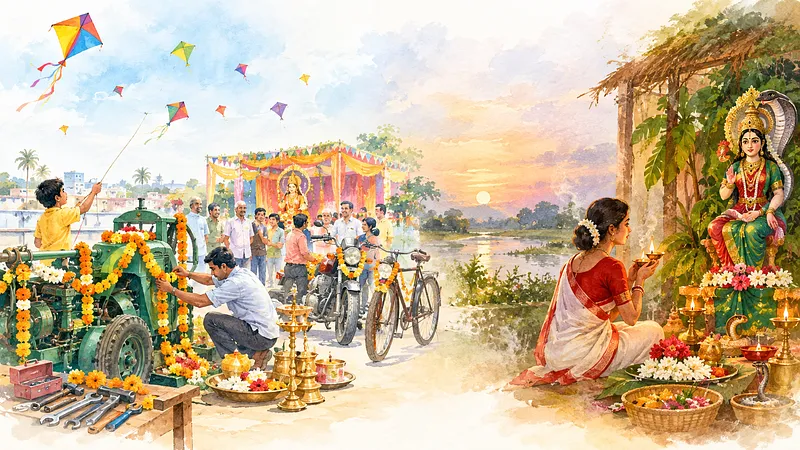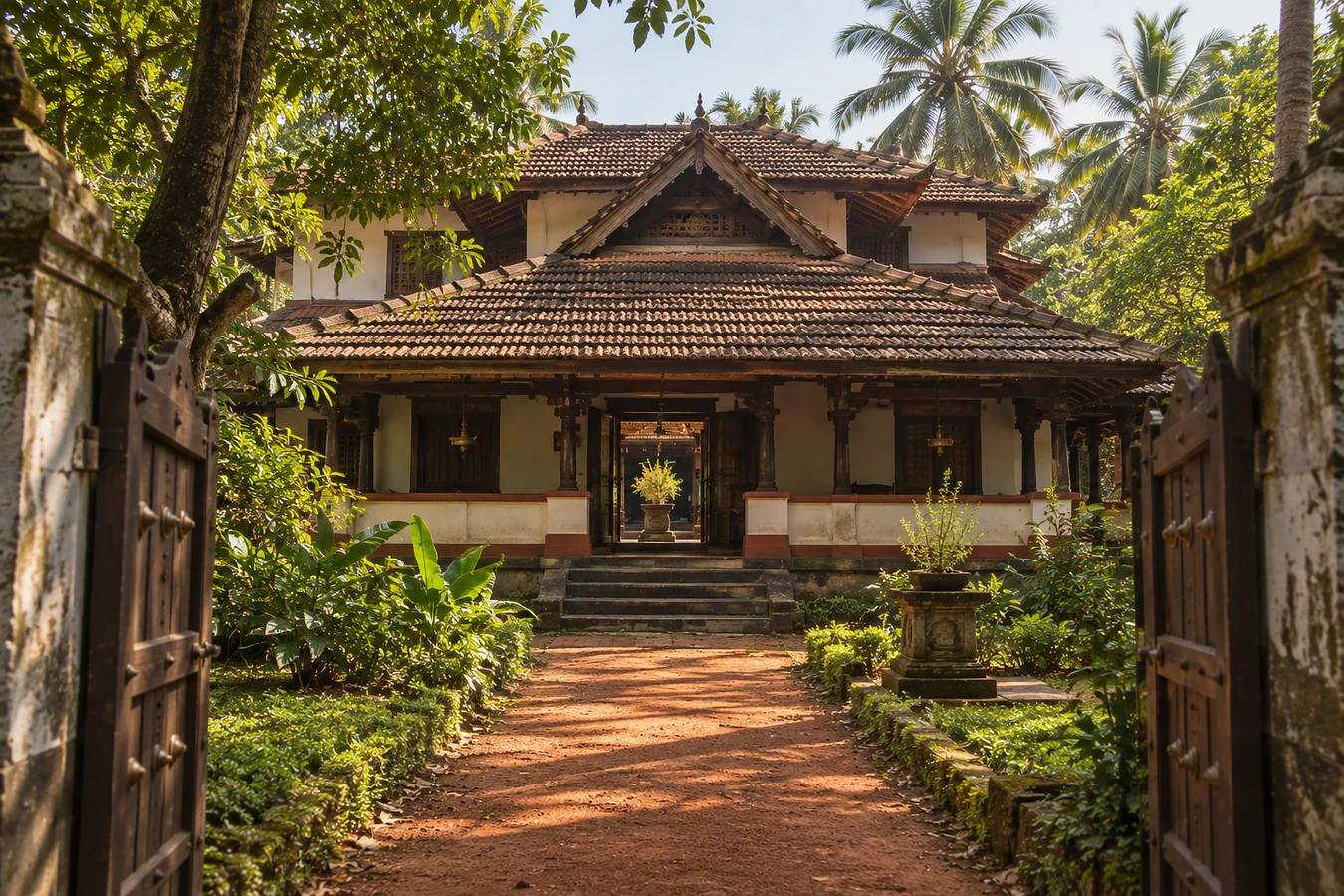
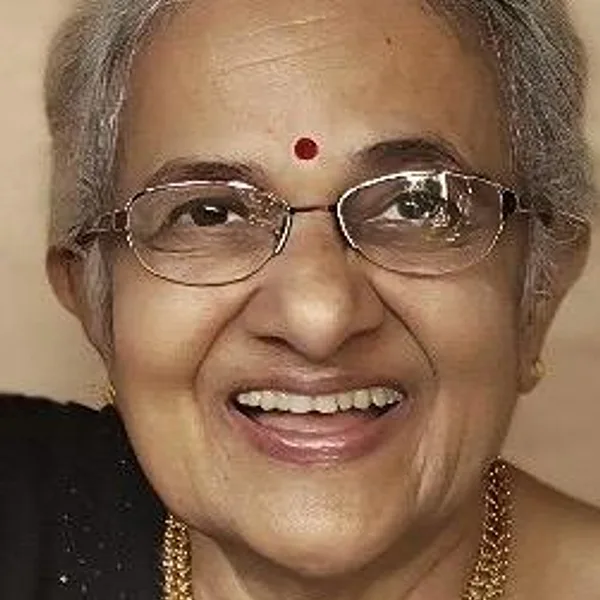
Grandma (Ammuma) (Fig. 1, 4) was born in the last decade of the 19th century and lived in a large Nair joint family home known as the tharavaad (Fig. 2). Parakkal Tharavaad, as it was known, was established in 1770 by two of the nephews of the Zamorin of Calicut. Their descendants continue to maintain the old tharavaad to this date.
The Parakkal tharavaad was a naalu kettu, which meant that it had one large, open courtyard, surrounded by rooms. A wooden staircase led to the rooms above, and the toilets were far away outside the main building. The large compound had a kavu or a grove of fruit trees with idols of snakes, which were worshipped. Cobras lived among the lush undergrowth, and polecats lived in the lofts of the house. Man and beasts lived in harmony together.


I remember being fascinated by her stories of a bygone era, particularly the kind of food that they ate and the rituals that they followed.
Ammuma had a vivid memory of her kettu kalyanam, a symbolic marriage, which took place when she was twelve years old. Today, this historic custom has almost faded. But in Ammuma’s time, this was a grand ceremony – a ritualistic marriage without an actual groom. She was bedecked in jewels and new clothes. An elderly gentleman tied a thali, (mangal sutra), around her neck, signifying that she had come of age. A grand feast was the highlight of the day, and all the relatives gathered to wish the young girl a prosperous and happy future married life.
When it was time for Ammuma’s marriage, since the mangal sutra had already been tied the ceremony was a simple one consisting of the presentation of garments (Podamuri). The bridegroom gave new vestments to the bride, took her hand, and walked with her around an oil lamp three times. The Agni Sakshi, or ‘fire as witness’ part of the ritual was conducted by the kaarnovar or senior most member of the tharavaad. There were no priests present for this part.
After marriage, traditionally, women continued to live in their respective tharavaads and husbands visited them there.
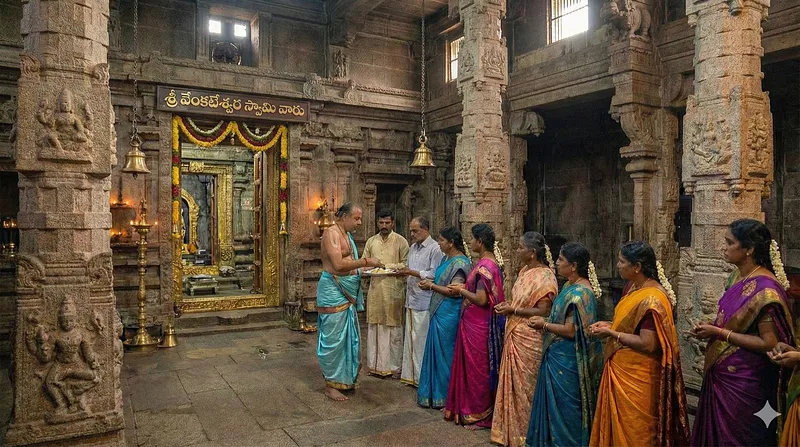
A typical day would begin with all the women and children going down to the pond for their morning bath. After their bath, everyone would go to the tharavaad temple and while the elders did their perambulations, the children ran crazily round and round the temple. The first thing they tasted in the morning would be the offering from the temple (prasadam) consisting of chopped bananas, grated fresh coconut, beaten rice, jaggery and a dash of cardamom powder. Ammuma explained that these first steps of the day were taken to activate the five senses. The bath activated the sense of touch. The beautifully decorated idol, the sense of sight; the incense, flowers and sandalwood paste, the sense of smell; the chanting of prayers, the sound of bells and the conch, the sense of hearing. The prasadam was the culmination for the sense of taste.
The walk back to the tharavaad would whet everyone's appetite. The large hall would be ready for them, laid out with floor mats (paaya). Little brass bowls, each with a spoon made from a jackfruit leaf, were all that was needed as crockery and cutlery for breakfast. The seniormost male head of the family (kaarnovar) would light the lamp and recite a prayer, and then the cooks would ladle out hot rice gruel (kanji) made of broken rice with pappadum, sun-dried and deep fried vegetable morsels (kondatum), and a puzhukku made of whole green gram soaked the previous night and cooked with turmeric and salt. Grated coconut was then ground with cumin and fresh green chillies and mixed into the green gram. Fresh coconut oil with a spluttering of mustard seeds, red chillies and curry leaves was poured on top.
After a hearty breakfast, the children would start their classes in kalaripayattu, kathakali, music and traditional dances. Mathematics, Malayalam, and Saṃskṛtam would be taught by brāhmaṇa tutors. The grown ups would read the Rāmāyaṇa and Mahābhārata and tell the little ones stories until lunch time. Lunch was always served on fresh green banana leaves and consisted of rice, and the tharavaad puli, a pulp made of dried tamarind soaked in water and squeezed out. Shallots, green chillies, and a little ginger were all chopped finely and fried in coconut oil. The tamarind pulp was added to this with salt and turmeric and allowed to boil. It was seasoned with mustard, red chillies and a sprig of fresh curry leaves. Sometimes, if a goat had been killed, there would be tender jackfruit (idichakka) and mutton fry. The jackfruit and mutton were cut into tiny pieces. Shallots, coriander, chilli and turmeric powders, and salt were added to this mixture and it was cooked until the mutton was soft. Coconut oil was added to fry the whole dish, which was served hot.
Another curry served with rice was colocasia leaves and stems that were chopped and washed in rice water (kanji vellum). This was cooked with shallots, green chillies, salt and very little water. Curry leaves and a ladleful of fresh hot coconut oil were poured over the dish at the very end.
During the monsoons, horse gram (kollu rasam) would be prepared for everyone to drink. Horse gram, soaked overnight, was boiled until it was soft enough to be mashed. Tamarind, salt, turmeric and coriander powders were added and cooked with the horse gram mash. It was seasoned with cumin, mustard seeds, fresh curry leaves and red chillies.
After such heavy lunches, it was siesta time. The hot embers in the kitchen and the leftover rice could not go to waste. The cooks would mix beaten duck eggs with leftover rice (chottu mutta). A paste made of shallots and red chillies with salt was added to it. The whole mixture was poured into a pan with a little freshly melted ghee, kept on the hot embers, and stirred from time to time. When the children woke up, milk and chottu mutta would be served to all those who were hungry.
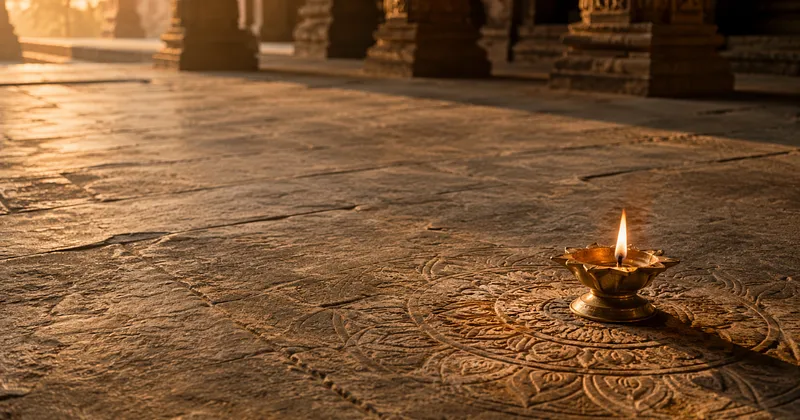
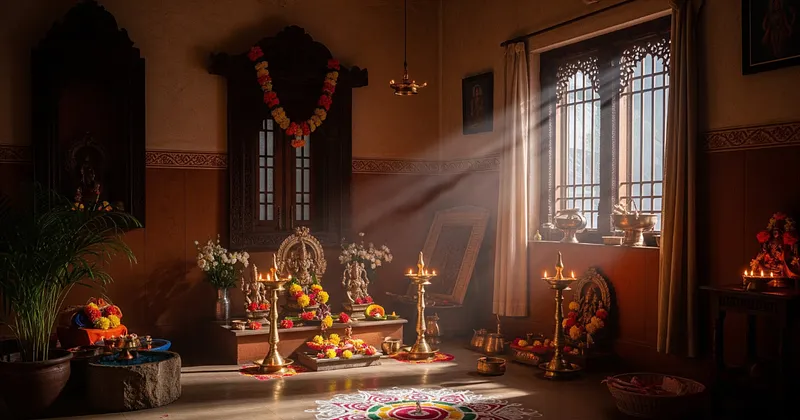
After the evening bath, everyone would gather together and chant the evening prayers around the evening lamp (sandhya deepam) (Fig. 3). After reciting multiplication tables, children would be taught to sing and dance, and entertain the grown-ups. Boys would have kalari competitions and girls would line up for their hair to be disentangled and tied into a knot on top of their head. As the sun went down behind the blue hills, dinner would be served: rice gruel with roasted papadums, and cow pea and jackfruit (puzhukku). Dried cow peas (venn pairu) would be soaked overnight and cooked with salt and turmeric. Raw jackfruit was cut into pieces along with some of its seeds and cooked with turmeric and salt. Then the two were mixed together and seasoned with grated coconut ground with cumin, green chillies and salt. A ladle of hot coconut oil with fresh green curry leaves topped the puzhukku.

Occasionally, a wagon-load of sardines would be brought in the afternoon in a small bullock cart. These were cleaned and their offal was buried under coconut trees as manure. The fish was smeared with freshly ground black pepper and salt and allowed to marinate. After the evening meal had been cooked, the fireplaces would glow with embers and the fish was thrown on top of the embers where it sizzled and hissed, cooking in its own rich oil. This delicacy would be served on wide bamboo trays (morams) and was consumed by the dozen by the children and adults alike.

After dinner, children would be given a spoonful of Chyawanaprashyam, an ayurvedic equivalent of today's vitamin tablet. The elders would then settle down for a paan and a chat about the latest tharavaad gossip. Children would be led upstairs by the older ones where soft floor mats would be laid out in rows.
A strict community structure was maintained in the tharavaad. Nair men could only marry into their community. The women could marry Kṣatriyas or Brāhmaṇas. The cooks and maids in the tharavaad were all Nairs. After a full day, down below, a bell would ring at the back of the house signaling the opening of the gate for the poor. The food left after the servants had eaten would be given to the poor, who would murmur a blessing on the tharavaad as they left. The kitchen would then be swept, washed, and the oil lamps doused. The tharavaad would be enveloped in the sound of frogs croaking and crickets chirruping. The coconut trees would sigh in the wind, and the tharavaad would go to sleep to await another day.
.png)
.png)