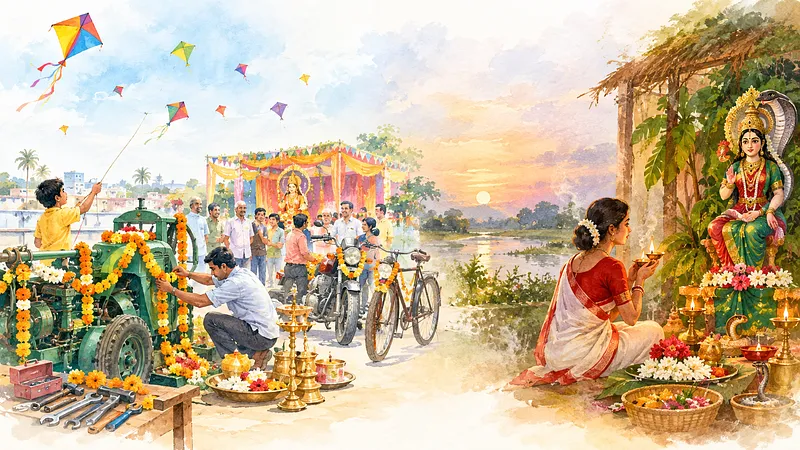
Since the dawn of Hindu civilization, the conduct of life has been anchored in three interlinked quartets: the four varṇas, the four āśramas, and the four puruṣārthas. While modern observers might view the minute prescriptions of Dharma—such as waking during brāhmamuhūrta, the rigorous maintenance of śauca (purity), and the specificities of nityapūjā—as burdensome relics of antiquity, an evolutionary and anthropological lens reveals them as a sophisticated toolkit for communal survival. Scholars of religion have noted for decades that "strict" religions possess a remarkable tendency to succeed, often outperforming less demanding counterparts. This article analyzes how the costly bodily practices and formulaic rituals of Hindu Dharma function as mechanisms for filtering free riders, signaling commitment, and ensuring the intergenerational transmission of belief, i.e., āstikyabuddhi.
A few key concepts that need to be understood are evolutionary psychology and its connection with orthopraxy. Evolutionary psychology studies how natural selection shaped human cognition, emotion, and behavior — asking why certain mental tendencies exist because they solved ancestral problems. Orthopraxy (from Greek orthos + praxis, "correct practice") is a religious/cultural orientation that centers right action and ritual over right belief. Evolutionary psychology suggests that ritualized behavior isn't arbitrary — it solves deep social problems. The main problem we try to explore here is the problem of continuity of a civilization.
The Filter of Strictness: Solving the Free Rider Problem
A fundamental challenge for any cooperative community is the "free rider problem". When individuals contribute food, labor, or mutual aid to a common good, they create a target for those who wish to extract benefits without paying the costs. Religious communities, particularly those centered around the gṛhastha (householder) āśrama, offer extraordinary social and spiritual benefits, making them prime targets for such exploitation.
In his "strict church model," economist Lawrence Iannaccone argues that high-cost demands—dietary restrictions, dress codes, and time-intensive rituals—act as screening devices. These high-cost demands are applied to ensure that anyone from the out-group doesn’t enjoy the same benefits as those in the in-group.
In sociology and social psychology, an in-group is a social group one identifies with, belongs to, and feels loyalty toward, while an out-group is any group one does not belong to or identify with, often viewed as "them" or in opposition to one’s in-group. In the traditional Indic context, there is no “opposition” between in-groups and out-groups but merely a sense of separation based on certain criteria. This is seen in the context of varṇa (vocational grouping), kula (ancestral grouping), āśrama (marital status-based grouping), sampradāya/maṭha (spirituo-religious traditional lineage-based grouping), gotra (exogamous grouping), grāma (geographical grouping), liṅga (gender based grouping), and jāti (birth-based grouping). Though the traditional outlook is that no group is inferior or superior to another, it must be noted here that historically individuals or parties with vested interests may have used the separation to establish a sense of superiority in their local socioculturoeconomic hierarchies.
Within the Hindu tradition, the householder is extolled as the support for all other states of life, just as all creatures subsist by deriving support from air. Because the gṛhastha carries the weight of supporting the brahmacārī, vānaprastha, and sannyāsī, the entry costs must be high enough to filter out the uncommitted or the unqualified. Commitment, essentially śraddhā, has remained a major parameter determining membership in any in-group in the Hindu civilization.
|
Ritual Category |
Costly Requirement |
Sociological Function |
|---|---|---|
|
Cleanliness (śauca) |
Daily morning sweeping, mopping, and use of natural cleaners like gomūtra. |
Continuous behavioral constraint; identifies committed members. |
|
Temporal Discipline |
Waking during brāhmamuhūrta (96-48 minutes before sunrise). |
High-cost time investment that signals alignment with sacred order. |
|
Dietary Orthopraxy |
Specific mantras before eating and exclusion of impure foods. |
Daily ritualized boundary maintenance between in-group and out-group. |
By demanding that members adhere to these rigorous daily routines, the Hindu community ensures that those remaining within the group have effectively "paid a deposit," filtering out free riders at the door.
Costly Signaling and Communal Solidarity
The longevity of a community is often directly correlated with the number of costly requirements it imposes. Anthropologists Richard Sosis and Eric Bressler found that religious communes with high-cost rituals lasted significantly longer than secular ones. This is because religious rituals are often anchored to supernatural claims that cannot be empirically disproven, providing a more stable foundation for sacrifice than secular utopian ideals.
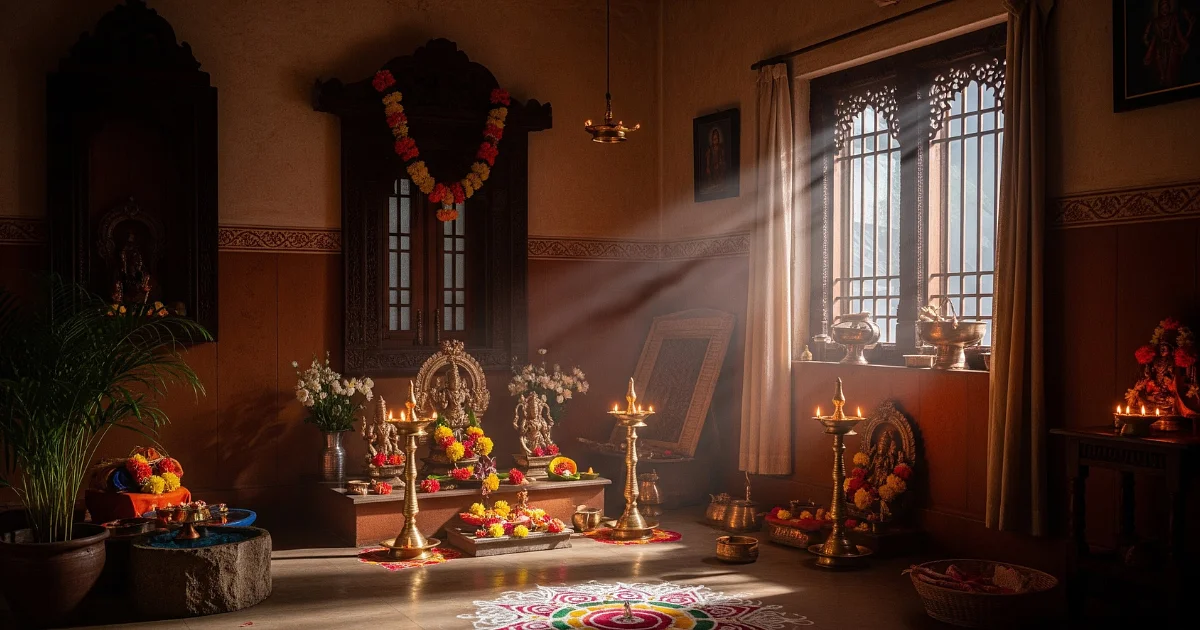
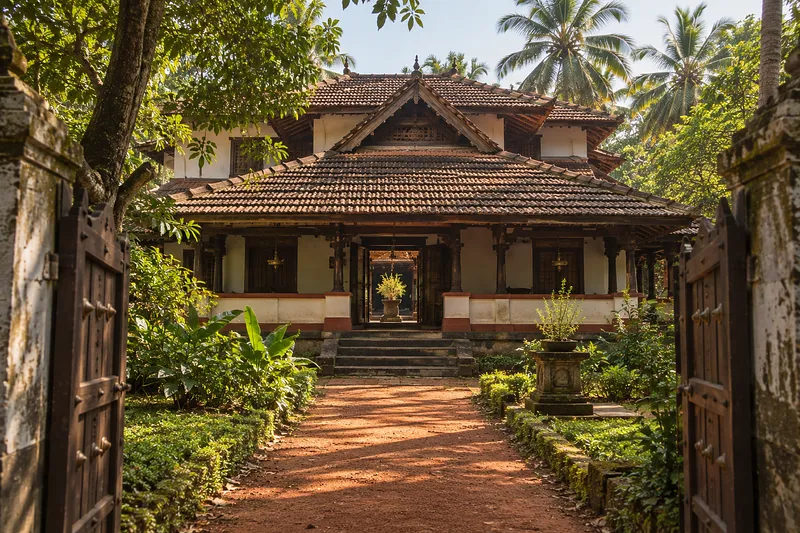
In the Hindu context, the house is not merely a shelter but a center for Dharma and a "spiritual energy" thriving center. The employment of Vāstu Śāstra in architecture—requiring specific orientations for ventilation and sunlight—serves as a physical manifestation of costly signaling. For instance, the pūjā maṇḍiram must be placed in the North East ("īśānyāṃ devatāgehaṃ" viśvakarmaprakāśa 2|91), and devatāmūrtis must be placed on elevated platforms called pīṭhas/pīṭhikās as observed in traditional households. Such requirements are not "casual"; they dictate the very structure of one's living environment, ensuring that the commitment to Dharma is visible and constant.
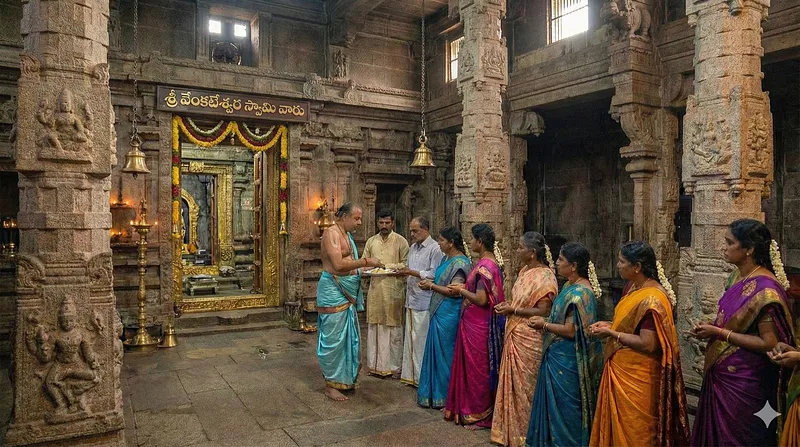
Furthermore, extreme rituals, such as those seen in the Taipūsam festival, where bhaktas fast and make kāvādi offerings (including extreme skin and bodily piercings) dedicated to Muruga (Skanda/Kārtikeya) on the full moon of the Tamil month of Tai (Jan-Feb) to mark his victory over evil using a Vel given by Mā Pārvatī, have been shown to forge intense solidarity. Even less dramatic rituals, like the nityapūjā (daily worship) performed with bāhya-, śārīra-, and ābhyantara-śuci (external, bodily, and mental purity), act as ongoing generators of group strength. The behavior must be expensive enough to be reliable and specific enough to be recognizable as a sign of belonging.
Credibility Enhancing Displays (CREDs)
While strictness explains how a group filters its current membership, it does not fully explain how belief is transmitted to the next generation. Anthropologist Joseph Henrich argues that humans have evolved a heuristic to solve the problem of what to believe: we learn not from what people say, but from what they are visibly willing to pay for. These are "Credibility Enhancing Displays" (CREDs).
A Hindu child raised in a dhārmika household is "bathed" in CREDs from birth. When a child watches their parents wake before dawn, perform elaborate pūjā even when exhausted, or decline certain foods at a dinner party for thirty years, they receive strong evidence that the underlying belief system is sincere. Talk is cheap; actions that cost something are not. The transmission of nitya (daily) and naimittika (occasional) rites—such as the prohibition of certain activities during Malamāsa (special months)—demonstrates a commitment to a cosmic order that transcends personal convenience.
Conversely, "anti-CREDs"—actions that signal hypocrisy or lack of commitment—have been shown to predict disaffiliation from religious institutions. Therefore, the historical success of Hinduism is partially due to the high density of sincere, costly practice within the gṛhastha unit, which serves as the primary engine for cultural evolution.
Created Kinship and the Moral Force of Dharma
One of the most powerful "social technologies" in religious history is the creation of fictive or "constructed" kinship. In sociology, fictive kinship refers to social bonds or family-like connections that are not established through biological descent (consanguineal), legal marriage (affinal), or breastfeeding (nursery). This is essentially extending the moral force of familial obligation beyond biological relatives. In the Hindu tradition, the householder, as a part of following the pañcamahāyajña, is obligated to treat the atithi (guest) with the same sanctity as a divinity, providing seat, water, and food before eating themselves.
The saṃskāras (rites of passage) further institutionalize these relationships. For example, the Gṛhapraveśa (house entry) ritual and the Varalakṣmīvrata are not private events but communal recognitions of a household’s status within the sacred order. This "spirit of ritual" (described as anuṣṭhāna or satra) stands in stark contrast to modern individualism; it is an act performed before the Universe and witnessed by the community, gods, and ancestors.
By redirecting familial machinery toward the community—through practices like tulasīpūjā and honoring guests—the tradition makes a group of individuals behave like a family. This institutionalized kinship outlives individuals and ensures that obligations remain morally binding across centuries of displacement or hostility.
Institutional Longevity and the Role of Smṛti
The persistence of Hindu traditions is not accidental but the result of a "spiritual ecosystem" supported by state and socio-cultural institutions. The spirit of smṛti is not merely to provide a list of "dos and don'ts" but to explain the nature of things that form the basis for formulating policy. Historically, dhārmika states recognized that the prosperity of society was a byproduct of human fulfillment (puruṣārtha) rather than an isolated economic theory.
The maintenance of sharp boundaries—such as identifying a bahiṣṭha or an apostate (one who renounces the creed) or managing the complexities of varṇa and āśrama—ensures the integrity of the in-group. Even rituals that seem restrictive, such as the 32 sevā-aparādhas (offenses) to be avoided during worship (e.g., entering without cleaning teeth or wearing inappropriate colors) in the Gauḍīyavaiṣṇava sampradāya, serve to maintain the "high commitment" nature of the group.
Conclusion: The Evolutionary Success of Orthopraxy
The combination of demanding costs, vivid CREDs, and institutionalized kinship has allowed Hindu Dharma to persist across millennia. The "detailed architecture" of daily life—from the śloka chanted upon waking to the mantras recited before bhojana (meals)—functions as a sophisticated mechanism for social cohesion. While these rituals may appear theatrical or unnecessary from an outside perspective, they are, in technical terms, high-cost behavioral constraints with continuous enforcement.
In conclusion, the growth and resilience of Hinduism can be understood as an intentional ethnography, "accidental ethnography" of success. By prioritizing orthopraxy (correct action) over mere orthodoxy (correct belief), the tradition created a robust system that filters out the uncommitted, builds deep solidarity, and ensures that the next generation inherits a worldview that has been "proven" through the lived sacrifice of their ancestors. This is the ancient way that continues to provide identity and meaning even in a modernizing world.
Further Reading
-
Iannaccone, L. R. (1994). Why Strict Churches Are Strong. American Journal of Sociology, 99(5), 1180–1211. https://doi.org/10.1086/230409
-
Sosis, R., & Bressler, E. R. (2003). Cooperation and Commune Longevity: A Test of the Costly Signaling Theory of Religion. Cross-Cultural Research, 37(2), 211–239. https://doi.org/10.1177/1069397103037002003
-
Henrich, J. (2009). The Evolution of Costly Displays, Cooperation and Religion: Credibility Enhancing Displays and Their Implications for Cultural Evolution. Evolution and Human Behavior, 30(4), 244–260. https://doi.org/10.1016/j.evolhumbehav.2009.03.005
-
Turpin, H., & Willard, A. K. (2022). Anti-CREDs and Catholic disaffiliation in Ireland. Religion, Brain & Behavior, 12(1–2), 167–182. https://doi.org/10.1080/2153599X.2021.1882604
-
Xygalatas, D., Mitkidis, P., Fischer, R., Reddish, P., Skewes, J., Geertz, A. W., Roepstorff, A., & Bulbulia, J. (2011). Extreme Rituals Promote Prosociality. Psychological Science, 24(8), 1602–1605. https://doi.org/10.1177/0956797612472910
.png)
.png)