There is something wonderfully distinctive about festivals in Bengal. A festival is rarely just a religious ceremony. It becomes a part of everyday life- a day of food, family, music, decoration, neighbourhood gatherings, childhood memories, and traditions passed from one generation to the next.
One such beautiful example is the way many Bengalis celebrate Viśvakarma Pūjā during the day and Manasā Pūjā at night. What begins as a vibrant celebration of work, machines, tools, and craftsmanship during the day gradually transforms into an intimate and devotional evening dedicated to Goddess Manasā.
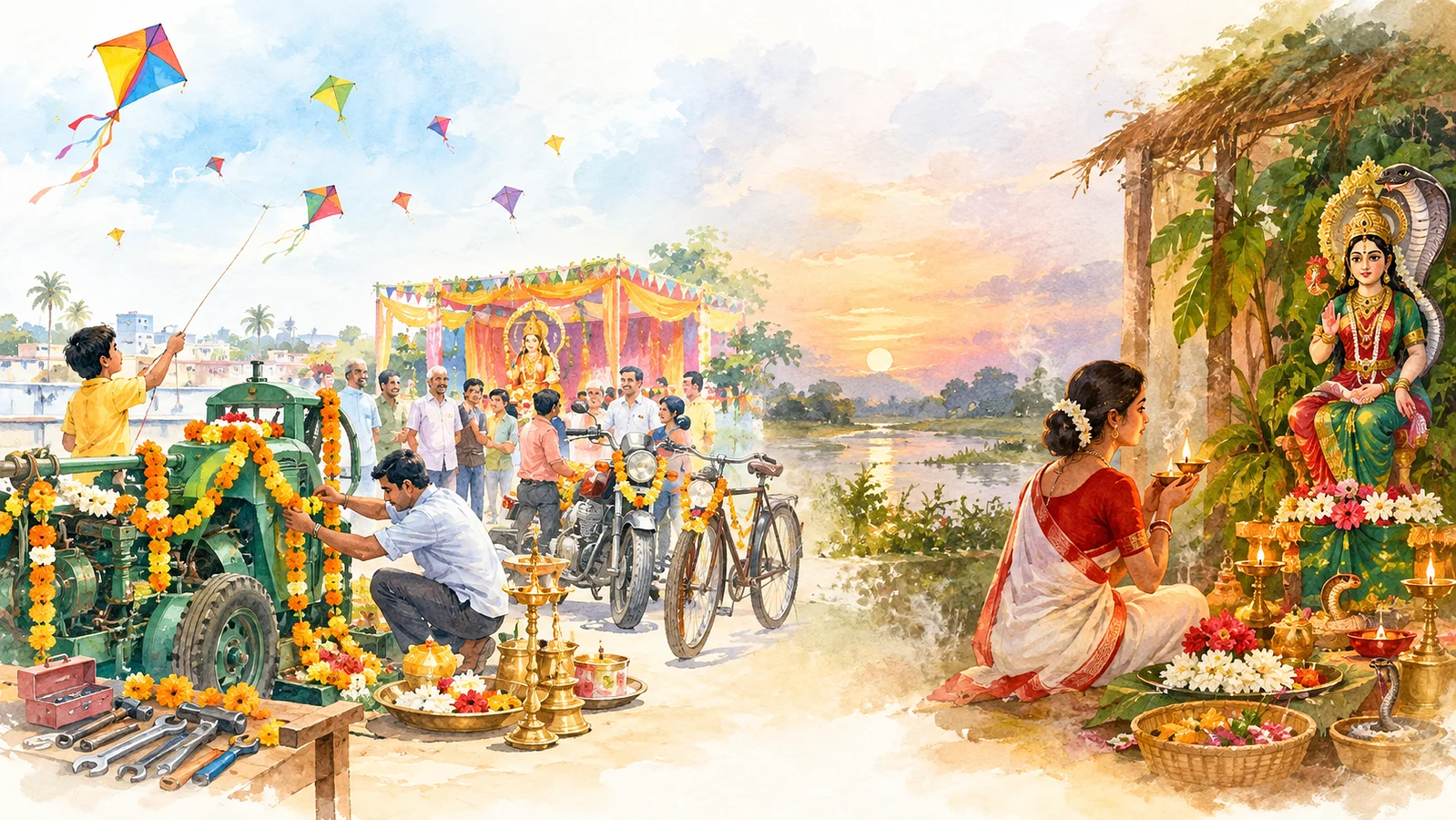
For those who have grown up with this tradition, the transition feels completely natural. The colourful kites in the sky, machines decorated for pūjā, festive music, and community gatherings of the daytime slowly give way to lamps, flowers, offerings, prayers, and folk traditions after sunset.
It is almost as if the celebration carries us from the world of work into the world of faith and nature.
The Morning Begins with Viśvakarma Pūjā
Viśvakarma Pūjā is one of the most eagerly anticipated festivals in Bengal, particularly among workers, artisans, mechanics, factory workers, engineers, craftsmen, business owners, and anyone whose livelihood is connected with tools, machines, or skilled work. Lord Viśvakarma is traditionally regarded as the divine architect and craftsman. On this day, the machines and tools that are an important part of people's daily lives are given special attention.
Factories, workshops, garages, printing presses, construction sites, offices, and even small neighbourhood businesses are cleaned and decorated. Machines are washed, tools are arranged neatly, and colourful flowers and garlands are used to decorate the workplace. In many places, the machinery itself becomes part of the pūjā. Vehicles, bicycles, motorcycles, sewing machines, agricultural equipment, and other tools of the trade may be worshipped as well.
For many people, this is more than simply following a ritual. It is a moment to pause and acknowledge the importance of their work and livelihood. We use our tools every day without giving much thought to them. Viśvakarma Pūjā creates a moment of gratitude for the skills we have, the work we do, the people who work alongside us, and the means through which we earn our livelihood.

A Festival Full of Colour and Community
Walk through Bengal on Viśvakarma Pūjā and the atmosphere can feel completely different from an ordinary day. Workplaces and local pūjā committees create colourful decorations. Loudspeakers fill the surroundings with music. Friends and colleagues gather together, and streets become livelier than usual.
In industrial areas, Viśvakarma Pūjā can become a particularly large community celebration. Elaborate pandals are created, idols of Lord Viśvakarma are installed, and people come together for the pūjā and bhoga.
There is also a lighter, more playful side to the festival. Kites are one of the most recognisable sights associated with Viśvakarma Pūjā in Bengal. The sky becomes a canvas filled with colourful kites of different shapes and sizes. Children and adults alike look forward to spending time on rooftops, flying kites, competing with friends, and enjoying the festive atmosphere. For many Bengalis, the memory of Viśvakarma Pūjā is inseparable from the sound of a kite reel spinning, the excitement of watching a kite rise higher, and the occasional cry of celebration when someone manages to cut another kite.
Food, of course, is another essential part of the celebration. After the pūjā, bhoga and festive meals bring people together. Colleagues share food, families sit down together, and neighbours visit one another. Like so many Bengali festivals, the religious celebration naturally becomes a social one too.

As the afternoon passes and the sun begins to set, the character of the day slowly changes. The decorations and celebrations of Viśvakarma Pūjā may continue, but in many Bengali homes and communities, preparations begin for another important observance- Manasā Pūjā.
This transition from Viśvakarma Pūjā to Manasā Pūjā is one of the most interesting aspects of the Bengali festive calendar. Goddess Manasā is traditionally associated with snakes and is widely worshipped in Bengal and other parts of eastern India. Her worship is deeply connected with Bengal's folk traditions and with communities whose lives were historically closely linked to agriculture, rivers, ponds, forests, and the natural environment.
While Viśvakarma Pūjā is strongly connected with human work and craftsmanship, Manasā Pūjā reflects another aspect of life- the relationship between human beings and nature.
Manasā Pūjā: A Night of Faith and Folk Tradition
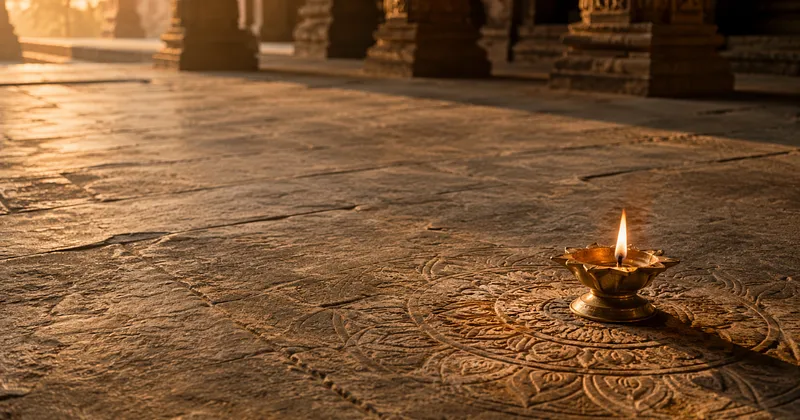
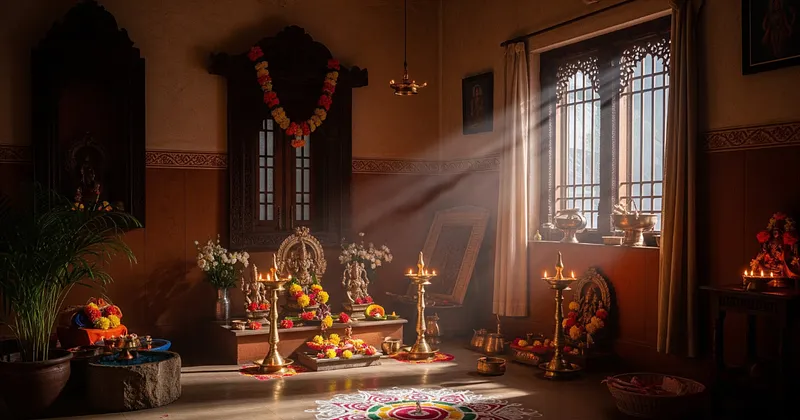
As darkness settles in, the festive mood becomes more intimate. The arrangements for Manasā Pūjā are made, flowers and offerings are prepared, and lamps are lit. Families gather together for the evening rituals.
The worship of Manasā has a particularly strong place in Bengali folk culture. Stories about Goddess Manasā have been preserved through generations through oral traditions, songs, and literature. One of the most important cultural traditions connected with the goddess is the Maṅgala-kāvya tradition, particularly the Manasāmaṅgala, which tells stories associated with Manasā and her devotees.
These stories are not simply religious narratives. They also offer glimpses into the social and cultural life of earlier Bengal, its rivers, villages, traders, farmers, family relationships, beliefs, and understanding of nature.
In many rural and traditional communities, Manasā Pūjā has therefore been much more than a single night's ritual. It has been a way of keeping local stories, customs, and collective memories alive.

The Importance of Manasā Pūjā in Bengal
To understand the importance of Manasā Pūjā, it is useful to remember Bengal's landscape. Historically, large parts of Bengal were shaped by rivers, wetlands, ponds, agricultural fields, and monsoon rains. People lived close to Nature, and encounters with snakes were a real concern, particularly during the rainy season.
The worship of Manasā can be understood within this cultural setting. People sought the goddess's protection and prayed for the safety and wellbeing of their families. Over time, these beliefs became part of Bengal's rich folk-religious traditions.
Even today, the rituals may differ from one region or family to another. Some households observe elaborate ceremonies, while others follow simpler customs passed down within the family. This variation itself is an important part of Bengali culture. There isn't always one single way of celebrating a festival.
Two pūjās, Two Worlds
What makes this day particularly fascinating is the contrast between the two celebrations.
Viśvakarma Pūjā is associated with creation, craftsmanship, work, and human ingenuity. It honours the tools and machines through which people build, repair, create, and earn their livelihoods. Manasā Pūjā, on the other hand, is deeply connected with nature, protection, fertility, and traditional folk beliefs.
One looks at what human beings create with their hands. The other reminds us of the natural world that has always surrounded and shaped human life. And yet, these two celebrations can and do exist side by side.
Perhaps that is one of the most beautiful characteristics of Bengali culture: it does not always separate different aspects of life. Work and worship, modernity and tradition, human creativity and nature can all find a place within the same celebration.
More Than Rituals- A Collection of Memories
For someone who has grown up in Bengal, these festivals often bring back memories that go far beyond the actual pūjā. It may be the memory of waking up early to the sound of preparations. It may be watching adults clean and decorate machines at home or at work. It may be the excitement of buying or making a kite.
It may be the joy of sitting on a rooftop with cousins and friends, looking at the sky filled with colourful kites. It may be the fragrance of bhoga being prepared in the afternoon. And later, as evening arrives, it may be the glow of lamps, the sound of bells and conch shells, and the quiet atmosphere of Manasā Pūjā. These small moments are what transform a religious festival into a cultural memory.
Keeping the Tradition Alive
Modern life has changed the way people celebrate many traditional festivals. Workplaces are different, families are often spread across cities, and younger generations may not always follow every traditional ritual exactly as their elders did. Yet traditions survive when they continue to have meaning.
Viśvakarma Pūjā continues to remind people to value their work, skills, tools, and livelihoods. Manasā Pūjā continues to preserve stories and folk traditions that connect people with Bengal's rural and natural heritage.
The form of celebration may change, but the memories and emotions surrounding these festivals continue to be passed down. Parents tell children about how they celebrated when they were young. Grandparents share stories. Families prepare traditional offerings. Communities come together.
That is how culture survives- Not only through books and historical records, but through ordinary people continuing to celebrate.
From Machines to Nature, From Day to Night
Perhaps the most poetic way to look at this Bengali tradition is through the journey of the day itself. The morning begins with the world of work. Machines are cleaned. Tools are decorated. Lord Viśvakarma is worshipped. People celebrate their skills, livelihood, and creativity.
The afternoon brings food, laughter, friends, kites, and community.
Then the sun sets.
The noise gradually becomes quieter. Lamps are lit. The mood becomes more reflective. Preparations for Manasā Pūjā begin, bringing with them Bengal's ancient folk traditions and its deep connection with nature.
From machines to nature, from work to worship, from the brightness of the day to the quiet devotion of the night this transition captures something deeply Bengali. It reminds us that life is made up of many different worlds, and our traditions often find a way to bring them together.
For Bengalis, Viśvakarma Pūjā and Manasā Pūjā are therefore not simply two separate occasions. Together, they form a beautiful day-to-night cultural journey, one that celebrates what we create, what sustains us, and what we continue to believe in.
And perhaps that is why, year after year, when the sky fills with kites during the day and lamps begin to glow after sunset, Bengal feels a little closer to its roots.
The machines are worshipped by day. The goddess is worshipped by night. And between the two, a whole piece of Bengal's living culture comes alive.
.png)
.png)