Ancient Statecraft for Modern Leaders
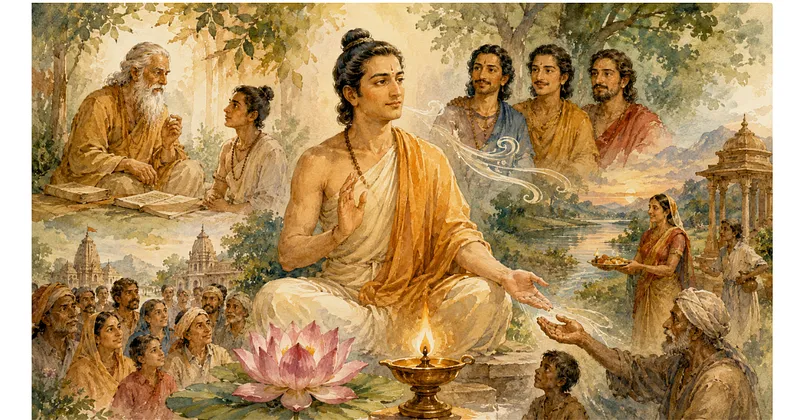
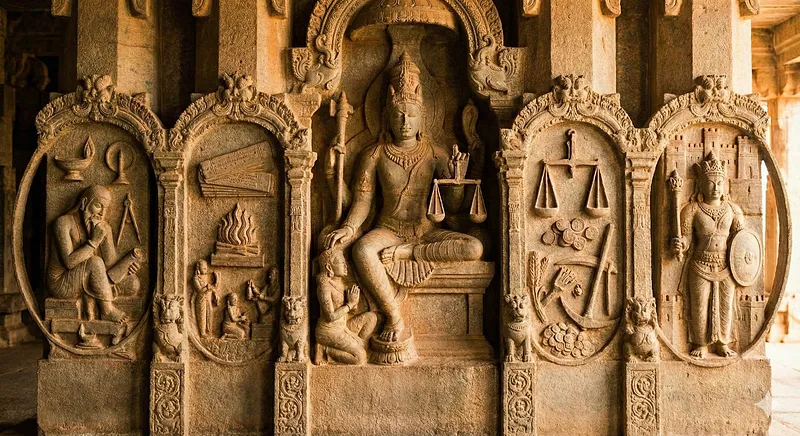
In an age where leadership is often measured by quarterly profits and market dominance, the ancient Saṃskṛta text Kāmandaka Nītisāra offers a radical counterproposition: that the highest mark of a leader is not power, but compassion. Written in the classical period of Indian political philosophy, Kāmandaka's work distills timeless principles of governance that speak directly to contemporary questions about ethical leadership, the protection of the vulnerable, and the true source of a ruler's authority.
The third sarga (chapter) of this text contains three verses (6-8) that form a coherent meditation on ānṛśaṁsya—non-cruelty or compassion—as the foundation of legitimate rule. These verses are not mere moral platitudes; they are pragmatic warnings about the consequences of leadership that prioritizes self-interest over the welfare of the weak.
The Three Pillars of Compassionate Leadership
1. Compassion as Supreme Dharma (Verse 6)
The text opens with an unequivocal declaration:
आनृशंस्यं परो धर्मः सर्वप्राणभृतां मतः ।
तस्माद् राजाऽऽनृशंस्येन पालयेत् कृपणं जनम् ॥ ६ ॥ānṛśaṁsyaṁ paro dharmaḥ sarvaprāṇabhṛtāṁ mataḥ |
tasmād rājā''nṛśaṁsyena pālayet kṛpaṇaṁ janam || 6 ||
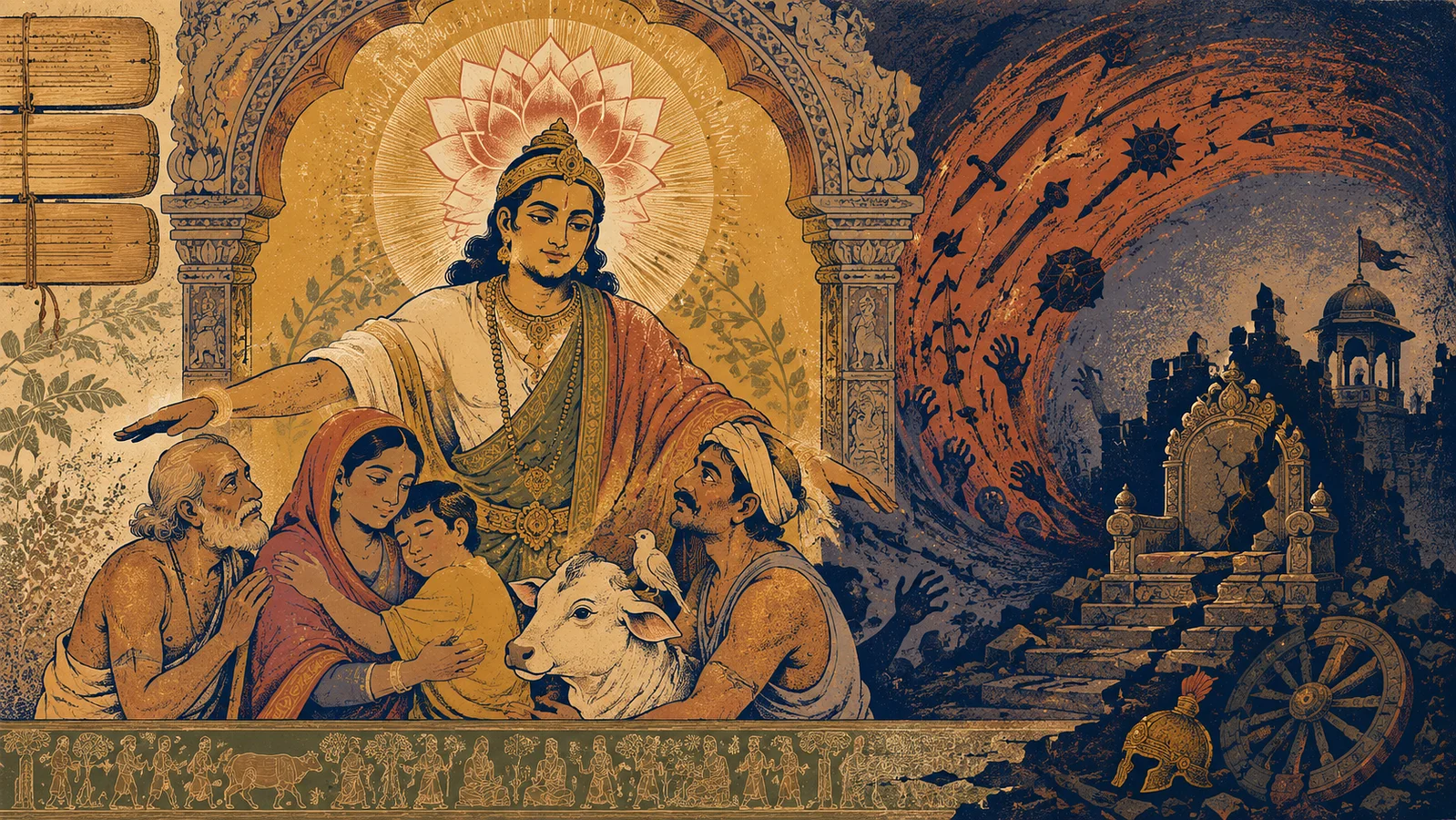
Compassion is considered the highest dharma by all living beings. Therefore, a king must rule his people with compassion, protecting the weak and helpless.
The term ānṛśaṁsya is particularly significant. Derived from the negation of nṛśaṁsa (cruel, violent), it represents not merely the absence of cruelty but an active orientation toward mercy and concern for others' welfare. The Jayamaṅgalā commentary notes that even though compassion may not appear "outwardly great," it is regarded as the supreme dharma precisely because genuine concern for others' welfare is rare.
Leadership Insight: True leadership is defined not by what one takes, but by what one protects. The verse establishes that protecting the vulnerable (kṛpaṇa janam—the weak and helpless) is not ancillary to governance but its central purpose. Modern organizations often speak of "stakeholder responsibility," but Kāmandaka goes further: the measure of a leader's dharma is their treatment of those with the least power.
The Upādhyāyanirapekṣā commentary adds a crucial nuance: this compassion is for subjects and the distressed, not for wrongdoers, where justice and firmness are required. Compassion, therefore, is not weakness or indiscriminate tolerance. It is the discriminating virtue that uplifts the oppressed while maintaining justice against those who harm others.
2. The Danger of Self-Serving Oppression (Verse 7)
The second verse shifts from prescription to warning:
न हि स्वसुखमन्विच्छन् पीडयेत्कृपणं नृपः ।
कृपणः पीड्यमानो हि मन्युना हन्ति पार्थिवम् ॥ ७ ॥na hi svasukhamanvicchan pīḍayetkṛpaṇaṁ nṛpaḥ |
kṛpaṇaḥ pīḍyamāno hi manyunā hanti pārthivam || 7 ||
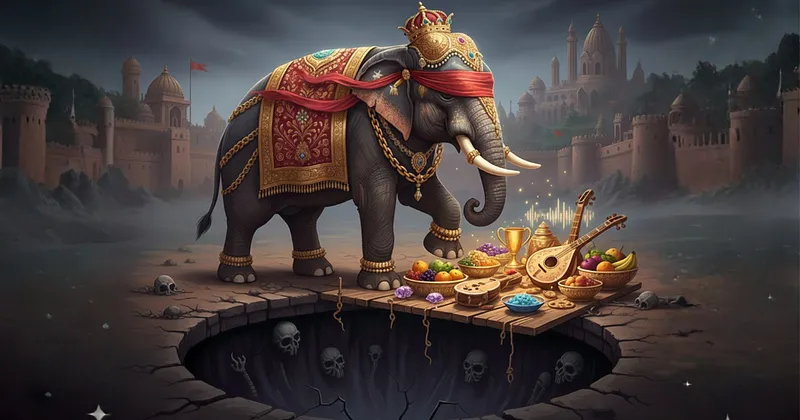
A king should not oppress the weak out of desire for his own comfort. For when the helpless are tormented, their suffering turns into anger, and that anger can destroy the ruler himself.
This verse articulates what we might call the "boomerang principle" of injustice: oppression does not merely wrong the victim—it ultimately destroys the oppressor. The commentary explains that manyu (wrath, anger) born from the suffering of the helpless has a peculiar destructive power that "rebounds upon the one who caused it."
Leadership Insight: The verse identifies a fundamental leadership pathology: the exploitation of those without power for personal gain or comfort (svasukhama nvicchan—seeking one's own pleasure). History is replete with examples of regimes, corporations, and institutions that collapsed not from external enemies but from the accumulated grievances of those they oppressed.
The Upādhyāyanirapekṣā commentary draws a vivid analogy: just as a person might exploit religious offerings for personal benefit, a ruler might exploit the poor for advantage. But such actions carry consequences. The "cries, curses, and anger" of the oppressed—though they may seem impotent in the moment—accumulate into a force that brings down even powerful rulers.
In modern terms, this speaks to everything from labor exploitation leading to union movements, to customer abuse leading to brand collapse, to political oppression leading to revolutions. The powerless are never truly powerless; their collective suffering generates a destructive energy that eventually finds its target.
3. Nobility of Character vs. Nobility of Birth (Verse 8)
The third verse poses a rhetorical question that cuts to the heart of leadership character:
को हि नाम कुले जातः सुखलेशोपलोभितः ।
अल्पसाराणि भूतानि पीडयेदविचारयन् ॥ ८ ॥ko hi nāma kule jātaḥ sukhaleśopaloblitaḥ |
alpasārāṇi bhūtāni pīḍayedavicārayan || 8 ||
Who, being born in a noble family, would be tempted by a little pleasure and, without reflection, torment weak and fragile beings?
The verse employs sarcasm to powerful effect. The expected answer to "who would do such a thing?" is "no one truly noble." The verse thus distinguishes between nobility of birth (kule jātaḥ) and nobility of character. Birth may confer position, but character determines whether that position is used wisely or wickedly.
Leadership Insight: The verse identifies two compounding failures: being "tempted by a little pleasure" (sukhaleśopaloblitaḥ) and acting "without reflection" (avicārayan). Modern leadership failures often share this pattern—short-term thinking combined with absence of ethical deliberation.
The Jayamaṅgalā commentary makes an important distinction: if a weak person commits an offense, proportionate punishment may be necessary as part of justice. The prohibition is not against all exercise of authority over the weak, but against cruel or disproportionate exercise of power, especially for selfish gain.
The Upādhyāyanirapekṣā commentary concludes with a stark judgment: one who oppresses the weak, "even if born in a good family, ceases to be truly noble." In other words, leadership positions may be inherited or appointed, but moral authority must be earned through conduct.
Contemporary Applications
Corporate Leadership
These verses speak directly to modern debates about corporate responsibility. When executives prioritize short-term stock prices over employee welfare, or when companies externalize costs onto vulnerable communities, they are engaging in precisely the behavior Kāmandaka warns against. The verse's prediction—that such oppression ultimately destroys the ruler—finds validation in corporate collapses following labor scandals, environmental disasters, and consumer backlash.
The principle of ānṛśaṁsya suggests that true corporate leadership measures success not by profit margins alone but by the well-being of the most vulnerable stakeholders: low-wage workers, communities affected by operations, and customers with limited choices.
Political Governance
In democratic societies, "the weak and helpless" include not only those in poverty but also marginalized communities, refugees, and those without political voice. The verses warn that policies which exploit these groups for political advantage—whether through scapegoating, disenfranchisement, or neglect—carry inherent dangers to the polity itself.
The concept of manyu—the anger of the oppressed—manifests in political upheavals, protests, and the eventual rejection of leaders who fail in their protective duty. Electoral defeats often represent the accumulated manyu of those who felt abandoned or exploited.
Institutional Leadership
Universities, hospitals, non-profits, and other institutions often face the temptation to prioritize their own institutional interests over the vulnerable populations they serve. When universities exploit adjunct labor, when hospitals prioritize profitable procedures over community health, or when non-profits become vehicles for executive enrichment, they embody the warning of verse 7.
The Synthesis: Compassion as Pragmatic Wisdom
What makes Kāmandaka's teaching remarkable is its refusal to separate ethics from efficacy. These verses do not merely say "be compassionate because it is right," but rather "be compassionate because it is wise; because oppressing the weak ultimately destroys you; because nobility of character determines the legitimacy of your authority."
This is compassion not as sentiment but as statecraft—a recognition that sustainable leadership requires the genuine welfare of those under one's authority, especially the most vulnerable. The protection of the weak is not philanthropy or public relations; it is the foundation of a leader's own security and legitimacy.
The commentaries emphasize that this compassion must be rightly directed: it should uplift the distressed while maintaining justice against wrongdoers. This is leadership that is both strong and merciful—firm in establishing justice, gentle in protecting the vulnerable.
Conclusion: The Mirror of Leadership
Kāmandaka Nītisāra holds up a mirror to all who would lead. It asks not about our credentials, our strategic plans, or our quarterly results. It asks instead: How do you treat those who cannot fight back? Do you exploit the weak for your own comfort? Do you act without reflection, tempted by small pleasures to inflict suffering on fragile beings?
These questions are as relevant in a boardroom as in a throne room, as pertinent to a mayor as to a monarch. The verses teach that compassion (ānṛśaṁsya) is not merely one virtue among many, but paro dharmaḥ—the highest dharma, the supreme principle that determines whether power becomes tyranny or leadership.
In the end, the ancient text offers a simple but profound test of leadership: Are the weak and helpless safer, more protected, and better cared for under your authority? If not, no matter your birth, your credentials, or your power, you have failed the essential test of legitimate rule. And history suggests that such failure, as Kāmandaka warns, eventually brings its own reckoning.