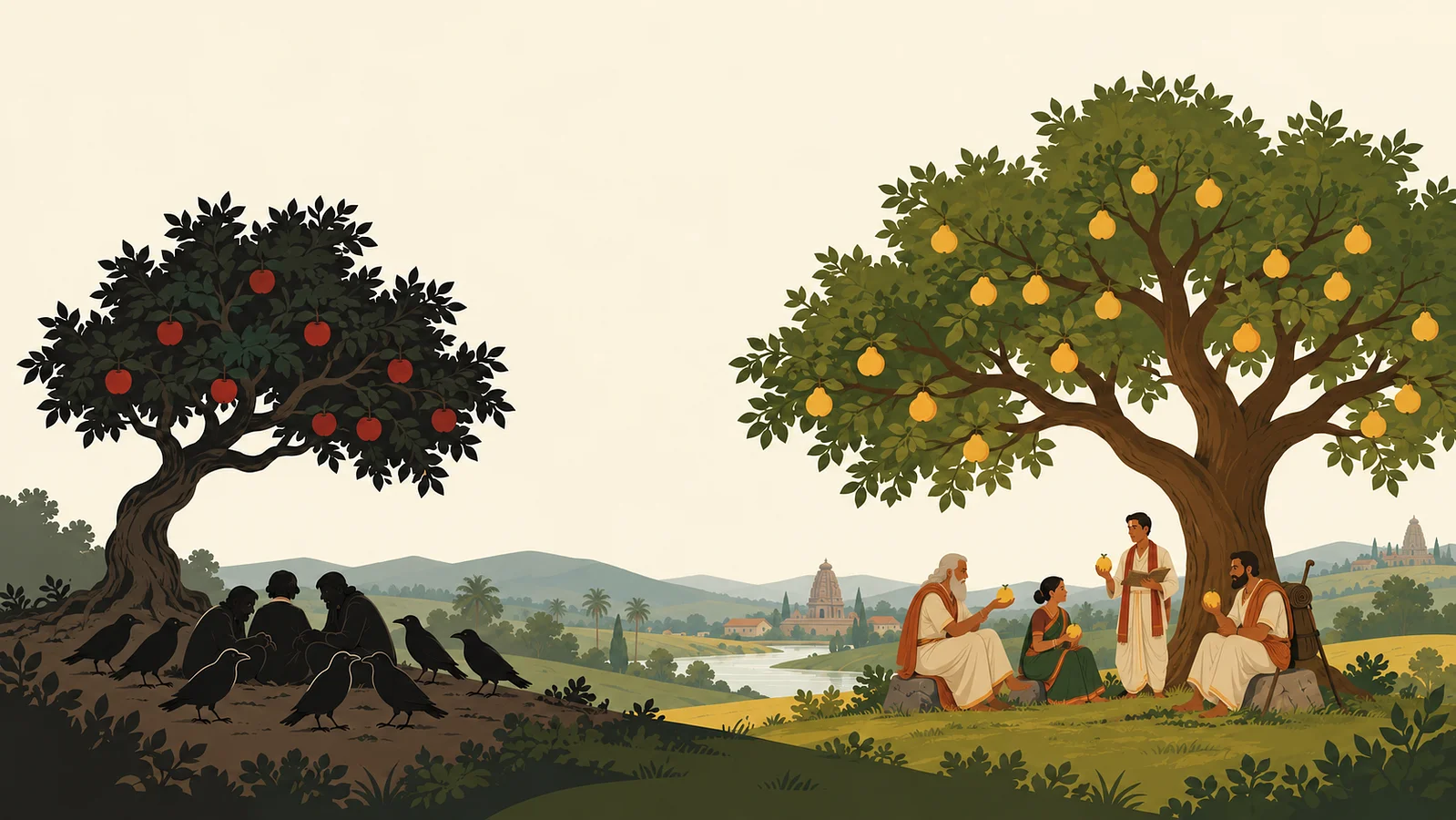
A Verse About Who Sits at the Table
Ask who benefits from a person's wealth, and you learn a good deal about the person. A short verse in the Kāmandakīya Nītisāra, the classical Saṃskṛta manual of statecraft, makes that its whole argument.
असद्भिरसतामेव भुज्यन्ते धनसम्पदः । फलं किम्पाकवृक्षस्य ध्वाङ्क्षा भक्षन्ति नेतरे ॥ १४ ॥
asadbhir asatām eva bhujyante dhanasampadaḥ | phalaṃ kimpākavṛkṣasya dhvāṅkṣā bhakṣanti netare || 14 ||
The riches of the wicked are enjoyed only by the wicked, as the fruit of the kimpāka tree is eaten by crows and by no one else.
The verse does not claim that bad people stay poor, nor that money corrupts the good. Its claim is narrower and more unsettling. Wealth carries the character of the person who holds it, and it draws to itself people who share that character.
Money, in this view, does not sit idle in a vault. It gathers company.
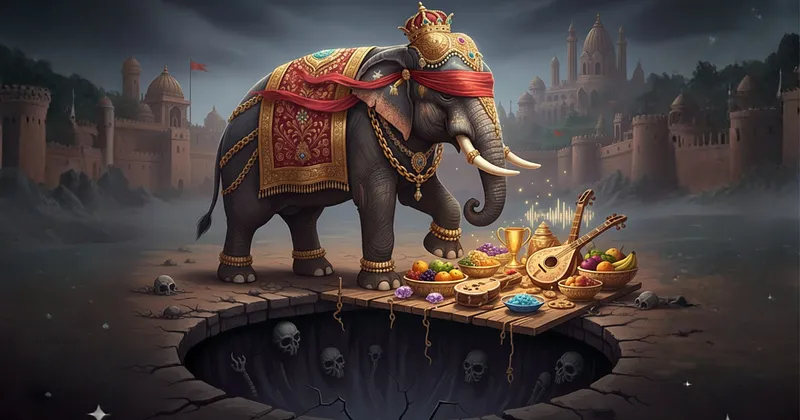
The Fruit No One Else Will Touch
The Upādhyāya-Nirapekṣā commentary reads the verse by contrast. Among the good, wealth finds proper use and reaches proper hands. Among the bad, it travels round a closed ring.
The kimpāka carries the argument. The commentator identifies it with the mahākāla, a plant whose fruit is...