.png)
The ritual way of life delineated the nature of the sacred cosmos for millennia across cultures. This experience nourished soul and enriched the notion of sacrality. Thus, within us, an ever-nourishing fount of Ritual Self was enshrined, which grew in its strength and influence, thus sheltering civilizations from the vicissitudes of life. Those civilizations' cultures, which are now reduced to only historical references, stories about their ritual world can at best be inferred from books written by scholars or through relics and artefacts adorning the museums built by colonizers.
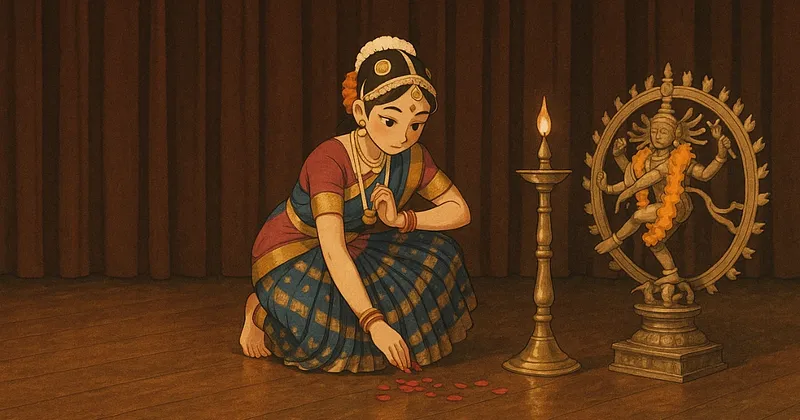
One may say with abundant confidence that it is in Bhārata that one witnessed a robust and most comprehensive expression of this Ritual Self. The notion that “ living is a process of enacting sacred ritual” permeated all spheres of life. It is this dictum that made an otherwise mundane life replete with meaning. Thus, conscious enactment of ritual becomes a conduit for meaning and purpose, what Sanātana Dharma usually referred to as Puruṣārtha: Dharma, Artha, Kāma, Mokṣa.
There is no stream of spirituality, adhyātmika cintana, emerging out of Indian soil that doesn’t engage with this central Idea of puruṣārtha. Ritual action not only infuses meaning and purpose through these four motives of life, but it also guards them from ever assailing corrupt forces. It is due to this reason, despite the onslaught of several adversities upon the ritual landscape, India still expresses the stamp of Ritual Self; however, we must admit that attestation of this ritual self doesn’t hold the same vitality anymore, as opposed to its golden dawns of the past.
Decline in the vitality of the ritual sphere can be ascribed to several factors – emergence of religious traditions which displaced the Puruṣārtha framework in favour of a deep plunge into psychological analysis of Suffering and sorrow. This disengagement with ritual basis left the society more vulnerable to invading theological forces that espoused iconoclasm, further resulting in resource constraints in implementing large-scale ritual life. It is to be noted that the ritual sphere was very resource-intensive and would by itself nourish several layers of the economy. These constraints further resulted in depletion of strength in ritual praxis. Eventually, rendering our minds defenceless for mental colonization. This disintegration was amplified by forces of modernity, skewed notions of technological development and progress.
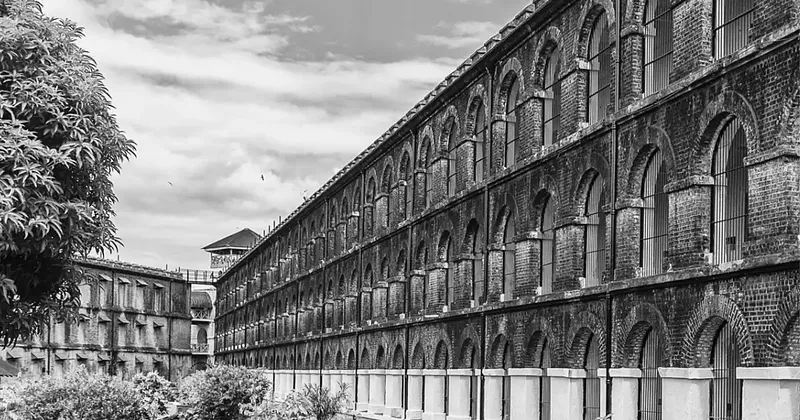
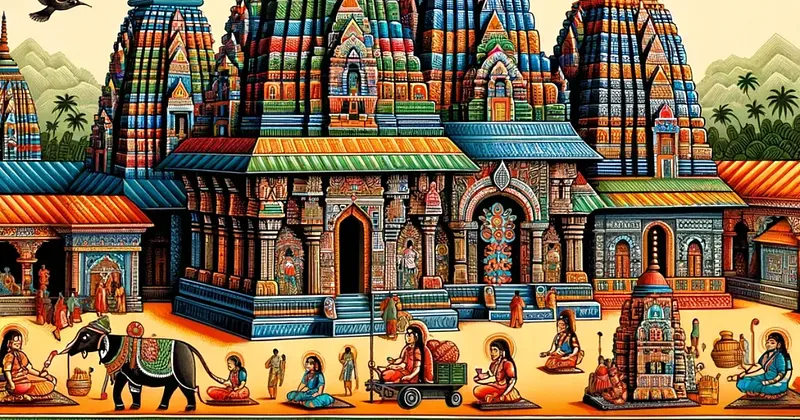
In the current time, when we take a deep dive into the collective Psyche of India, this ritual landscape appears like a dilapidated archaeological site. Walls without a roof, gorgeous pillars standing alone. Shrines that were once vibrant are now covered by the dust of time. One can only walk across the aisles of this vast space and imagine the past grandeur. Despite this depressing scenario, one can still observe thin streams of ritual currents in Indian society. Later developments of deity-oriented āgamika rituals, temples, and festivals took the role of a great anchor to withstand the onslaught of adverse tidal waves. Many institutions retreated from surface action and silently held the space for ritual continuation for centuries. It is with great admiration and gratitude that we must bow to such institutions and saints who braved the disruptive forces and nourished the Ritual self. This should be regarded as a sacrifice of superlative order.
Ancient paurāṇika texts, such as Kālikā Purāṇa, tell us that several hundreds of Yajñas were born from the body of Yajña- Varāha, who was vanquished by Lord Śiva in the form of Śarabha.
From the converging point of eyebrows and nose, known as bṛha, the Jyotiṣṭoma yajña was born. From the converging point of jaws and the ear, Vahniṣṭoma yajña was birthed. There were yajña such as Rājasūya, Vājapeya, for prosperity. There were yajñas such as Parameṣṭhī, Mayeṣṭi for Bhoga, i.e., for partaking the prosperity. There were Saṃskāra yajña that initiated the individual into various stages of life, there were Prāyaścitta yajña for atonement of sins, and there were Abhicāra yajña for causing harm to the enemies. This list goes on and on, giving us insight that a detailed ritual scaffolding was conceptualized for almost all events, processes and circumstances of life. Benefits of such yajñas were meant for the whole society and were not limited to Individuals or families. Collective good and individual good were seamlessly integrated in such ritual conceptualization.
Now, when we look back at this ancient civilization and recount its accomplishments in the fields of science, architecture, vāṇijya – trade, expansion of kingdoms, great educational institutions, sphere of art and aesthetics, the role of such comprehensive ritual scaffolding in enabling such feats, repeated across several dynasties and across several centuries, can be easily inferred. Although a rationalist might be skeptical about such an overarching correlation, for a ritualist, such a correlation is not a matter of logic but arises from an inbuilt rationale within the ritual system. Thus, the birthing of great talent or talented individuals who accomplish great feats in diverse spheres is deeply connected to the ritual health of the society. Such allusions are abundantly visible in our stories narrated in itihāsas and purāṇas. Thus, the ritual process not only infuses meaning and purpose into the living process via puruṣārtha, but it was firmly believed to harness energies from the Divine spheres, which would enter human play and accomplish great feats.
One may argue the logical fallacy that such inferences are embedded in by pointing to great feats of modernity and modern societies where such rituals are not enacted. For a ritualist, such a world view has very little relevance, for he or she is acutely aware that cosmic truth is not a logical entity, nor is the statement of logic the final word in the process of mental development. Ritual takes place as an act of fulfilling one's role in the scheme of cosmogeny, where perceptible and imperceptible forces are perpetually at play.
Our itihāsa and purāṇa provide insight into the role of rituals in enabling the manifestation of uplifting forces that serve larger goals of welfare and well-being of all beings across lokas. They also allude to rituals framed by corrupt forces that help manifest disintegrating forces into the play of life. That is how we see abundant examples of āsurī individuals deploying rituals for inflicting perversion of puruṣārtha, thus disturbing the very fabric of meaning and purpose of life. Countless stories across itihāsa and purāṇa emphasize this archetypal motif of asuras' first attack will be on the ongoing rituals and then ushering in rituals that serve the purpose of their dominance. So one may find it possible to conceptualise Rituals which enable saṃskāra, refinement of life and rituals which inflict vikāra, perversion of life.
Adorning ritual lens to view its effect on life process might seem symbolic for a modern-day reader, but now with dark truth from the world of Epstein files is out in the open, indulgence in rituals that lead to perversion should be seen as more than mere symbolism. It would be imprudent to wear just the lens of rationality and logic and relegate such dark phenomena as nothing but the debauchery of elites, especially when the ramifications of their actions have ushered in the disintegration of Annamaya (material), Prāṇamaya ( life force) and Manomaya (emotional and mental) kośa’s of the collective existence.
It should make one curious that when Rituals which are aimed at Saṃskaraṇa are being increasingly rendered redundant by the emergence of technocracy, at the same time, we are witnessing the unravelling of ritual indulgence unfurling devious forces in the form of powerful people, corporations and ideologies. In such a distressing scenario, it would only make sense for the Indian mind with a greater ritual quotient to reclaim its vantage point in an otherwise ever-declining trend of dharma as per the yuga dharma of Kali.