A List of What to Leave Behind
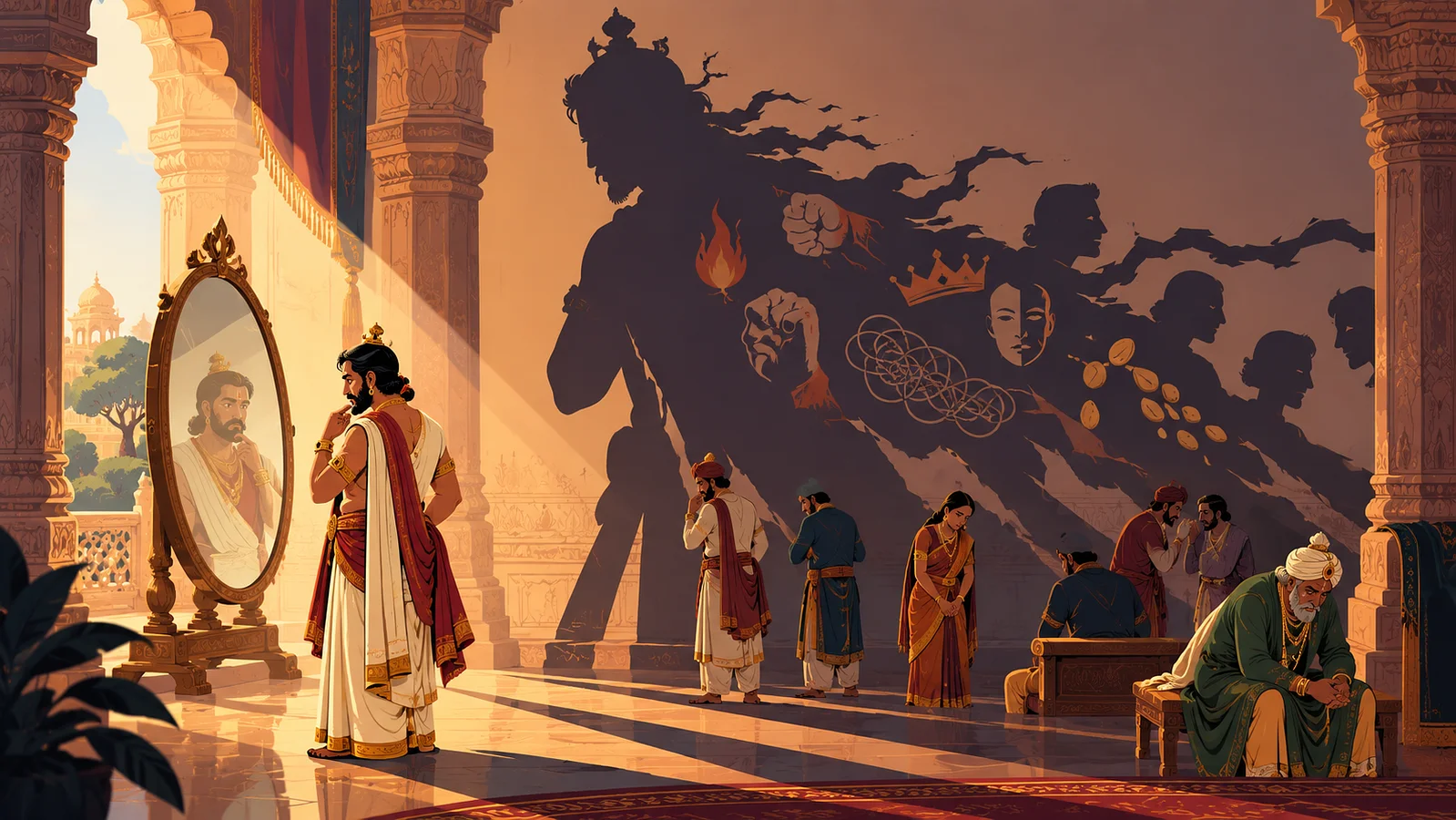
After two verses of qualities to acquire, verse 17 (in the 4th sarga) changes method. It names eleven faults a ruler must be rid of.
क्रोधलोभभयद्रोहस्तम्भचापलवर्जितः । परोपतापपैशुन्यमात्सर्येर्ष्यानृतातिगः ॥ १७ ॥
krodhalobhabhayadrohastambhacāpalavarjitaḥ | paropatāpapaiśunyamātsaryerṣyānṛtātigaḥ || 17 ||
He should be free from anger, greed, fear, malice, pride and rashness, and beyond cruelty to others, slander, envy, jealousy and falsehood.
The two lines use two different verbs. The first six faults he must be varjita, free of. The last five he must be atiga, one who has gone beyond. The first group are passions that arise within a person, and the second are the ways those passions reach other people.
The Eleven, Defined
The Jayamaṅgalā defines each fault, and its qualifications repay attention. The third column is the author's sketch of how each fault tends to show in a leader today.
|
Fault |
Jayamaṅgalā's gloss |
How it shows today |
|
krodha |
anger in the wrong place |
a rebuke that falls on whoever is nearest, not on whoever erred |
|
lobha |
greed for what lies outside justice |
targets pursued by any means available |
|
bhaya |
f... |