Read Part 1 here.
Where Creativity Shines Respectfully: Smite and Smite 2
Many global franchises and companies fear that involving cultural experts will curb creativity. The Smite franchise provides an apt counterexample. The game incorporates divine figures from various pantheons—Hindu, Greek, Norse, Chinese—and adapts them into fast-paced, stylized gameplay. Despite occasional criticism from religious groups, Smite’s portrayal of Hindu deities retains broadly accurate iconography and recognizable attributes, demonstrating that imagination and fidelity can reinforce each other. Crucially, the game avoids reducing divine beings to superficial “skins,” instead weaving them into meaningful narrative and mechanical systems. As Smite 2 expands its roster with a modernized engine, it possesses a rare opportunity: to set a new standard for culturally rooted mythological adaptation, one where reverence, playability, and visual innovation are harmonized. For this, collaboration with cultural experts is indispensable. It is how global studios can avoid replicating the orientalist pitfalls of earlier titles while unlocking deeper, more resonant storytelling possibilities, while never offending religious sentiments.
Ghost of Tsushima: A Case Study
Few recent games illustrate the dialectic of cultural representation better than Ghost of Tsushima. The game is recognized for its respectful representation of Japanese culture, history, and traditions, enhancing immersion and player engagement. While it is celebrated globally for its combat sequences, visuals, cultural and narrative sophistication, the game also ignited a nuanced debate on representation. Critics noted that the Western studio, despite its extensive research, sometimes veered into stereotyping or simplified binaries of “good” and “bad” Asians. Others raised concerns about cultural appropriation, questioning whether non-Japanese developers could authentically portray 13th-century Japan. Yet simultaneously, the game received Famitsu’s perfect 40/40 rating, signalling strong approval from Japanese critics themselves. Ghost of Tsushima, therefore, stands as a liminal moment—showing that cross-cultural representation can succeed, but only when creators proceed with diligence, humility, and respect.
Assassin’s Creed: Shadows and Politics
Assassin’s Creed: Shadows demonstrates how culturally sensitive topics can quickly escalate. The inclusion of Yasuke, a historical African samurai, triggered backlash from segments of Japanese audiences who viewed the character as historically implausible, despite the existence of the real Yasuke. Further controversy arose when the game allowed players to destroy artifacts inside Japanese shrines—prompting the Japanese Prime Minister to emphasize that defacing religious sites is “an insult to the nation itself,” and that respecting culture and religion “is fundamental”. This is a quintessential scenario in which culture consulting’s role becomes obvious. Sacred architecture, ritual spaces, and religious symbolism demand careful navigation. Studios often underestimate how deeply communities feel about them. Consultation—early, thoughtful, and iterative—can prevent such missteps long before they are released to the public at large.
Black Myth: Wukong — How Cultural Depth Drives Success
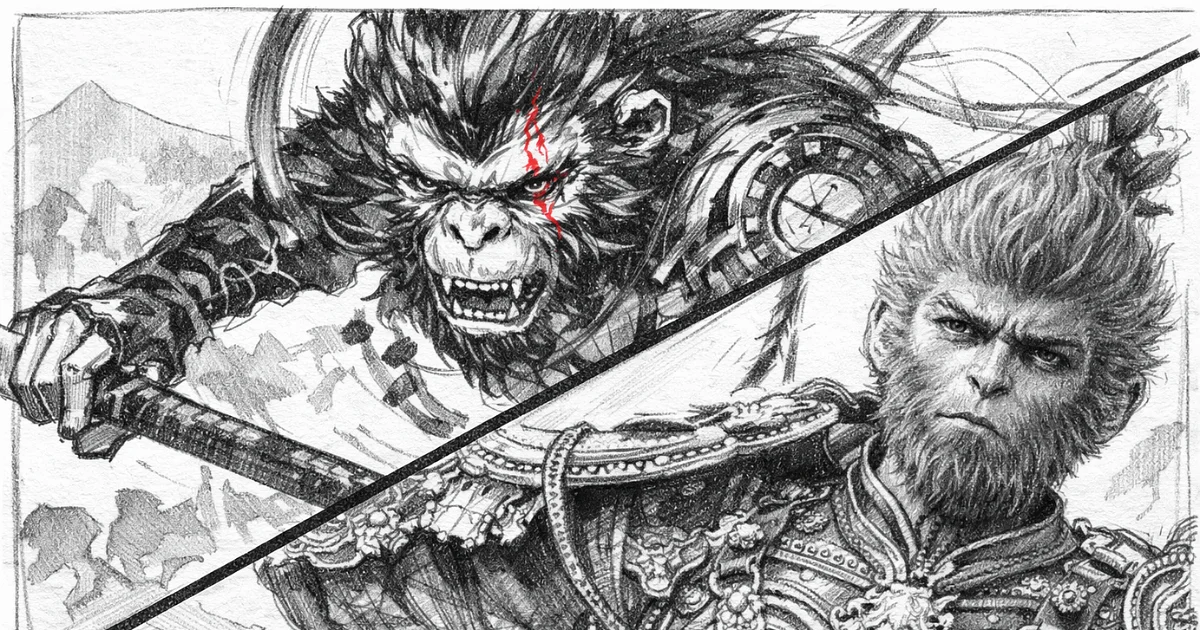
If the above controversies illustrate where failures occur due to the lack of cultural research, Black Myth: Wukong shows what becomes possible when adaptation is guided by meticulous, scholarly attention and cultural confidence. The game draws deeply from China's rich traditional literature, particularly the classic Journey to the West, by translating the text’s narrative and imagination into its gameplay, characters, and worlds. The game integrates traditional narratives, promotes Chinese cultural identity, and compares favorably to other Chinese mythology-based games, enhancing cultural appreciation through imagological representation and immersive gameplay.
Black Myth’s landscapes, enemies, and quests are rooted in centuries of folklore and philosophical thought, allowing cultural identity to emerge not ornamentally, but as the very scaffolding of the experience. The game also excels as world-building pedagogy: in-game texts and journals reveal the origins of mythic beings, retelling their stories for a global audience without diluting cultural context. This ensures that even unfamiliar players encounter Chinese myth as something coherent and alive — an active cosmology rather than a collection of aesthetic references. In fact, the game educated many young Chinese people in their own mythology. Black Myth: Wukong blends reverence and respect with innovation, leveraging technology to reintroduce traditional culture in a contemporary form that feels both fresh, timeless, and exciting.
The game was met with an extraordinary commercial response. On launch, the game reached 2.2 million concurrent players on Steam, signalling not only domestic pride but a flourishing international appetite for Chinese mythological storytelling. In the current moment where representation is scrutinized more critically than ever, Black Myth: Wukong demonstrates that authenticity is itself a global market strategy and shows the way forward for the Indian gaming industry.