Introduction
Śrī Padmanabhaswamy Temple in Thiruvananthapuram stands as a symbol of cultural, spiritual, and governance evolution. Historically, temples in India functioned as centers of learning and economic activity, guided by dhārmika principles. For over seven centuries, the temple was managed by Ettara Yogam, an independent body, ensuring the separation of state and temple affairs. This governance model upheld accountability and autonomy, even allowing commoners to seek justice against rulers. The 18th century marked a major shift when Mārtaṇḍa Varma consolidated power, rebuilt the temple after a fire, and declared himself Padmanabha Dasa, initiating state involvement. British influence later transformed temples into revenue sources, though Padmanābhasvāmi remained under royal supervision. Post-independence, a covenant allowed Travancore’s last ruler to oversee the temple, but administrative lapses after 1991 led to legal disputes. In 2020, the Supreme Court reaffirmed the Travancore family’s trusteeship while instituting an oversight committee to balance tradition with transparency. Future governance must prioritize dharma, independence, and expertise, ensuring preservation of rituals, wealth, and sanctity for generations to come.
Antiquity, Power Transitions, and Dharma
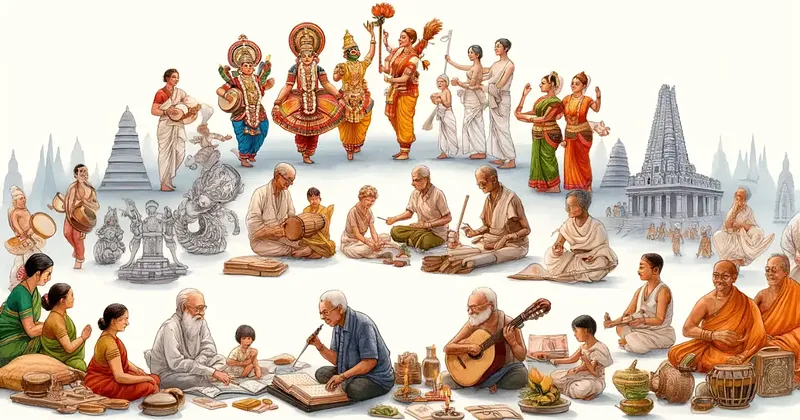
This case study examines the evolution of governance at the Śrī Padmanabhaswamy Temple in Thiruvananthapuram through a dhārmika lens. Temples in India historically served as cultural and economic hubs—centers of knowledge, art, and intellectual exchange. They were nurtured by rulers devoted to dharma, yet often targeted by those seeking power or strategic advantage.
I have an entangled relationship with God’s own city—Thiruvananthapuram. Growing up in the same neighborhood as my maternal great-grandmother, I was nurtured by the warmth of my grand uncles and aunts, elaborating deep history, antiquity, anecdotes, and views about the temple. My connection grew stronger, and the bond with Śrī Padmanābha became unbreakable. With this background of my personal relationship with the city and temple, this article is an attempt to lay bare centuries of power transitions, the strife with adharma, and to control with dhārmika wrists.
Historical References
The earliest reference to Śrī Padmanābha appears in a ten-verse canto by Vaiṣṇava saint Nam'māḻvār, describing the Lord’s supreme authority and the serene village of Ananthapuram. The most traditional dating of the saint states he was born days after the Ascension of Lord Kṛṣṇa to Vaikuṇṭha at the end of Mahābhārata, aka the earliest inhabitants of Kaliyuga.
A later Vaiṣṇava saint of Yamunācarya, 10 CE, during his pilgrimage visit to Śrī Padmanābhasvāmi, immersed in devotion and the beauty of the Lord, loses track of time and misses the date for the Astānga Yoga Rahasyam lesson from Kurukur Kavalappan.
When Rāmānuja was streamlining the temple rituals of all divya deśams in the south, and was headed to Sri Padmanabha Temple, he was supposedly carried back by Garuḍa to his base in Thirukurungudi. He then received clear instructions from the Lord that HE preferred the traditional Tantric rituals over Pañcarātra and would not want a reform.
Sthalapurāṇa
Local lore elaborates on the initial consecration of the deity by Śrī Vilvamanlathu svāmī. Lord Kṛṣṇa visited the mystic svāmī every day as a little boy. One day, the mischievous boy was admonished by the svāmī. And the boy vanished into the cave, with a voice that he could now only see HIM in Ananthankadu—present in Thiruvananthapuram. The svāmī followed the light and arrived at Thiruvananthapuram. Here, he obtained the view of the reclining lord on Ādiśeṣa and consecrated a shorter version of the mystic vision as the mūlavigraham using Illupa tree wood. The present sanctum houses an 18-foot Padmanābha’s garbhagruha viewed through three doors. The sanyāsīs of this paramparā and the tantris together uphold the traditional paramparā of the temple.
Ettara Yogam and Kṣatriya Take Over
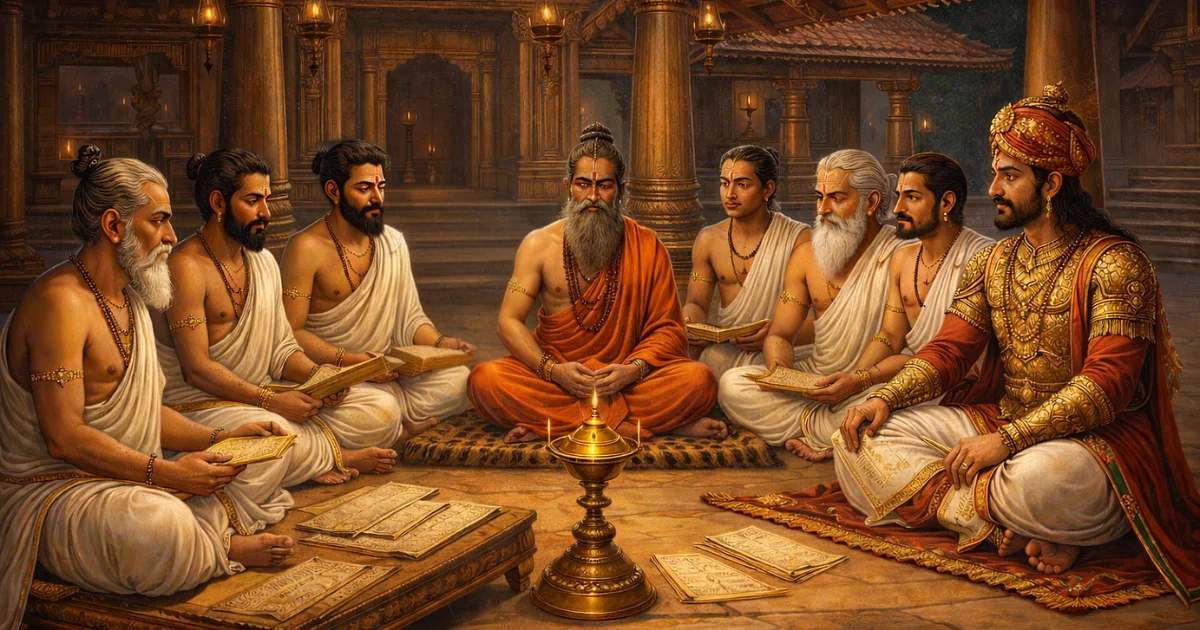
For over seven centuries, before the rise of the Venad/Travancore kingdom in the 1720’s, an independent body—Ettara Yogam comprising six brāhmaṇa families and a Nair Chiefton—held independent and autonomous control over the temple. This structure of accountability ensured the temple was governed independently of the state.
The brāhmaṇa families’ roots can be traced to Tulu Nadu—Koopakkara, Vanchiyoor, Kollur, Muttavila, Karuva, Neythasseri, and Srikaryathu Potty, and each had one vote in the committee/sabha/yogam. The position was a hereditary trusteeship. The daily rituals and pooja traditions were presided over by the Punshpanjali Swamiyar, who was a sanyāsī in the Vilvamangalam lineage with no voting rights in the yogam. A Nair chieftain, Azhakath Kurup, served as a security chief and also had voting rights in the yogam. The king had half a vote, clearly showing the separation of state and religion within the temple. So free that a common man seeks justice against the king.
Documented history shows the kingdom borrowed money from the temple treasury at least thrice. The temple’s treasure operated independently of the state. It loaned money to the state, as a separate financial institution with its own books to maintain. Everything was accounted for and repaid. The temple viewed all men alike—king and commoner.
Temple treasure and its donations from devotees were considered the treasure of the deity. Properties that yielded for regular maintenance of the temple, such as fields, were managed by Nair chieftains called Ettuveetil Pillamar; each of them governed one of the eight districts of the kingdom. They did not have a say in temple affairs.
Over time, the feudal power struggle between the bloodline Ettuveetil Pillamar and the sons of the adopted daughters of the Kolathagiri royal family of Kannur intensified. The adoptions were done to ensure the continuity of the matrilineal lineage and not for matrimony. With the rise of ruthlessly powerful Mārtaṇḍa Varma in 1728, Ettuveetil Pillamar were vanquished, their women given away to fishermen; the kingdom expanded, power was snatched away from Ettara Yogam, and several brāhmaṇas were killed, while the others fled.
The Ettara Yogam, for 700 years, leaned on the moral compass, dharma, for its governance. Critical feedback from the community and families kept motives in check. The six + one structure brought in a spectrum of independent opinion and flavor. This helped retain the dhārmika framework.
Travancore Takeover and State Involvement
Mārtaṇḍa Varma’s rise with absolute brute power was the turning point in the temple’s history. At the peak of his reign, a devastating temple fire destroyed the Illupa mūlavigraham. Mārtaṇḍa Varma declared himself “Padmanabha Dasa” during the Thirupadi daanam event that followed the remorseful and guilt-stricken king rebuilding the temple. The damaged Illupa mūlavigraham was replaced by a Kaḍuśarkarā Yogam. After dismantling the existing temple institution, as the wealthy and powerful sponsor, he took over the temple’s affairs and administration. The Tharananalloor tantris from the Kannur area were appointed as Tantris.
This was the first time the state involved itself in temple administration.
Within nearly 50 years of Mārtaṇḍa Varma’s rule, the Travancore kingdom became a vassal state to the British. Without a king, it was ruled by queens regents for nearly nineteen years. Colonel Monroe took over as the Diwan, and to augment the taxes and revenue, the queens brought all temples under state control. While for over a century and a half all temples remained under the government’s revenue department, Śrī Padmanabhaswamy Temple was administered directly by the kings. While the other temples of Kerala became a revenue source for the state, this temple still remained a public place and not a family property.
Accession to the Indian Union and Temple Administration
With Travancore-Cochin state joining the Indian union, there was one thing the devoted King Bala Rama Varma would not agree to: he would not take an oath as a “Raja Pramukh” like the other 700+ kingdoms that acceded to the union did. He was “Padmanabha Dasa” and would remain so. To resolve this and the conflict surrounding temple administration, it was agreed that the last ruler of Travancore could control and supervise the temple through an Executive Officer appointed by him, along with three Hindu advisors. All other temples were controlled by the Devasom board.
The State continued to pay annual money to the temple for the upkeep. The governance continued with this structure until the death of the titular king in 1991, per the covenants.
In 1991, from this point on, there was no “ruler,” only “descendants” of Travancore. Special covenants expired, and the privy purse was abolished. But traditions had to be kept, as precedents of state-controlled temples in neighboring states underwent significant dhārmika violations, looting of property, and an increase in vigraha theft. Śrī Padmanabhaswamy Temple was no exception; the post-1991 temple administration used power to siphon treasures and neglected the traditional, age-old rituals.
2020 Supreme Court Intervention
Post 1991, a series of mismanagement in religious, financial, administrative, and siphoning of the traditional treasure of the temple was observed. On behalf of a devotee, Adv. T P Sundararajan IPS, in 2007, Adv. TK Ananda Padmanabhan filed lawsuits requesting regulation in governance, accounting, and sealing of treasures in vaults. Based on this, the treasures were accounted for, and the vaults were sealed. This led to the 2020 Hon’ble Supreme Court verdict. The Supreme Court appointed Adv. Gopal Subramaniam as the Amicus Curiae on the case. Former Solicitor General Adv. Gopal Subramaniam took it upon himself to list the mismanagement issues raised and worked with the palace and administrators to resolve them. It was his comprehensive investigation that led to the discovery of the damage to the mūlavigraham in 2017. The Hon’ble Supreme Court in 2020 ordered an Administrative Committee overseen by an Advisory Committee appointed by the CJ Kerala HC for governance of the temple, after which the trusteeship remained with the Travancore “Padmanabha Dasa”.
The court-appointed committee ensures that democratically elected representatives of secular dispensation are not overly represented, while its presence still retains the democratic balance. The Trustee and his nominees are given significant importance to uphold the traditions that began 250 years ago. It, however, does not consider a complete alienation of state and temple affairs. The state government still supports the temple with funds for maintenance and security with ~250 police men and provides one member to represent them, as does the Central government. Governance is tilted towards the trustees, from appointed chartered accountants to the executive officer to members of the committee.
Now and Beyond
An ideal committee must prioritize dharma, independence, and transparency. Committees should comprise individuals with deep scriptural knowledge and no vested interests, ensuring preservation of the deity’s sanctity, wealth, and rituals for future generations. The temple’s vitality depends on both responsible administration and active community engagement. Much work needs to be accomplished by the current committee to ensure mūlavigraham is restored with sanctity; over-staffing and careless attitude toward devotees are curbed; corrupt practices are punished; and the temple returns to being a cultural hub.