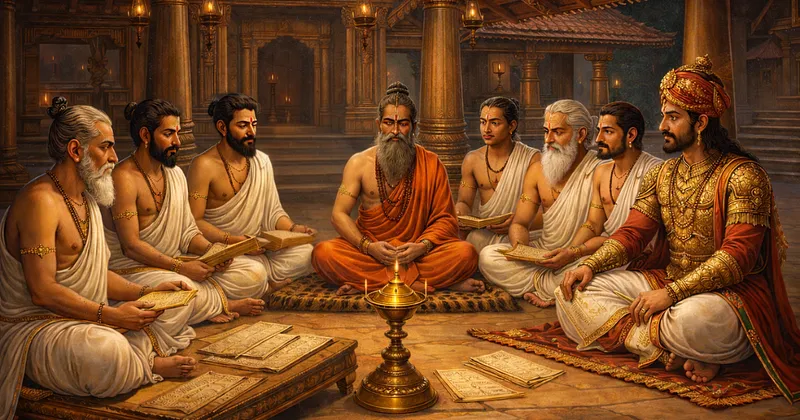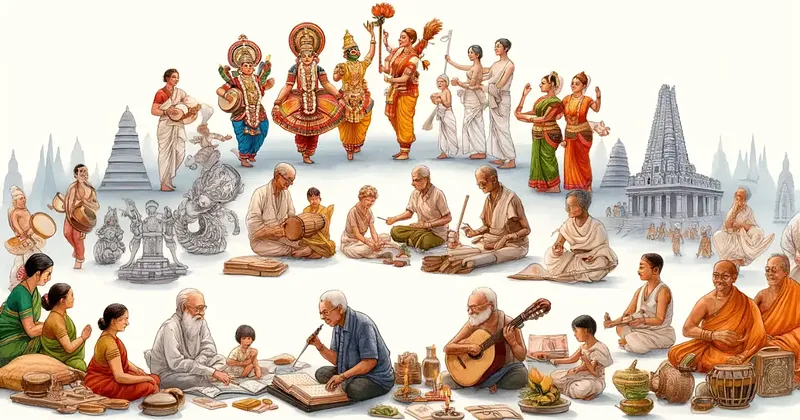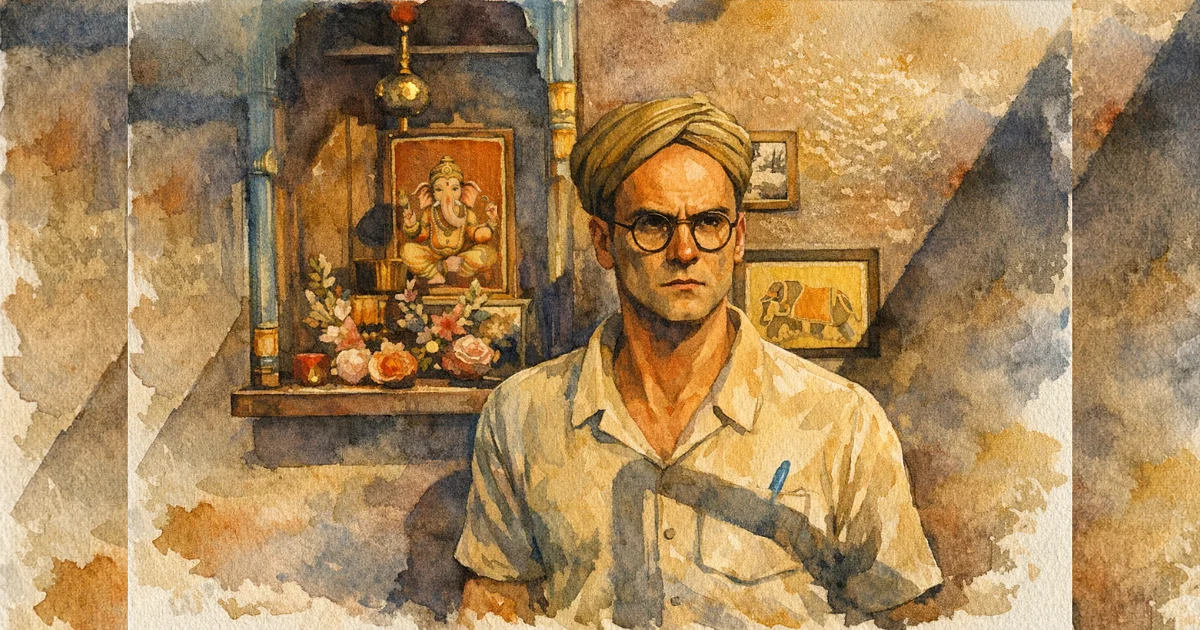
As global media expands into cultural terrains far from its centers of production, creative industries confront a paradox: the world has become more interconnected than ever, yet audiences have become far less forgiving of inaccurate or superficial representation. Culture is more than an aesthetic layer, and a system of memory, meaning, and lived identity—one that demands understanding rather than appropriation or commodification. The emerging discipline of culture consulting positions itself at precisely this intersection, bridging creativity with cultural literacy in a manner that ensures that stories, worlds, and characters are not merely engaging but resonant and respectful.
The foundational premise is simple: as media — from video games and comics to movies and TV shows — continues to globalize rapidly and as markets expand into new frontiers, the risks of misrepresentation multiply manifold. Cultural missteps can reduce living cities, rites, people, and traditions into clichés—flattened into ‘lost translations’. Culture consulting counters this by embedding deep research, insider context, and sensitivity into the creative process so that design choices are not accidental, but intentional. This ethos—that authenticity is not a limitation but an augmenter of creativity—is increasingly fundamental to global storytelling across mediums.
To see why, one needs only to map the recent successes and failures of pop culture, where cultural resonance can drive new heights of success and a lackadaisical attitude can lead to the worst of backlash. This phenomenon is pronounced in film and television — where topical controversies often ebb and flow — and especially in video games, where worldbuilding demands an even finer cultural granularity.
One of the clearest examples of cultural failure in gaming comes from Hitman 2’s Mumbai mission, titled ‘Chasing a Ghost,” which depicted stereotypical “exotic” slums and featured holy men as targets. This type of design, without adequate cultural insight, reinforces orientalist tropes. Some players also brought attention to the problematic reinforcement of the image of India as slum-ridden, in the style of “Slumdog Millionaire”. Further, the level is cast in a “diseased yellow filter,” reminiscent of how Western cinema depicts Mexico, reducing a complex metropolis into the visual grammar of poverty, chaos, and exoticism. As Roy notes in his academic critique, this becomes a “techno-orientalist commodity,” where NPCs react to Agent 47 “as if a white man is a miracle of nature” and even shop signage like “Chaye Dukan” appears as a plain, literal translation—reminiscent of “lazy design” and cultural inattention. Roy writes, “Like any other Literary text which fetishizes the ‘other’, Hitman 2 also becomes such a ‘digital/ludic’ text which manages to define the ‘Indian’ in its own myopic way. The discourse propagated thus reinforces the idea of ‘India’ or the ‘Orient’ as the literal plaything of the West.”
A cursory exploration reveals that a similar aesthetic problem also now appears in contemporary AI image-generation models, which are anything but objective. They consistently reproduce the same “yellow-tinted” visual shorthand that once defined Western cinematic orientalism. When prompted to generate images of Indian streets or cities, many models default to a jaundiced, dusty palette and dirty, overcrowded streets— a visual that is not always realistic, but rather, reflective of the training data the models are fed. This reflects a deeper structural issue: AI systems inherit the biases of the images that dominate the global visual archive, and when those archives are saturated with stereotyped depictions, the models reproduce and reinforce them. Over time, these outputs become part of the dataset itself, creating a loop in which the machine continually reinscribes the same reductive, outdated, and subtly racist framing of Indian spaces. Instead of learning cultural nuance, the model amplifies this subtle prejudice. This is precisely why culturally informed oversight—and datasets curated with anthropological sensitivity—are becoming indispensable in creative industries, especially as they rely increasingly on generative AI.These failures are more than simply aesthetic discrepancies; they are failures of research and inattention to detail. They reveal what happens when global IPs attempt to recreate culturally rich geographies without proper grounding and consultation. However, what is possible now offers a sparkly silver lining: hiring a Cultural Research Agent allows creators to model games after real, vibrant locations, capture linguistic nuance, reflect ethnic diversity, and depict cultural strands with a fidelity that was all relatively inaccessible (or ridiculously expensive) before. This also lays the groundwork — preparing the canvas for building more and more creativity atop an authentic substrate. This is precisely the sort of depth and authenticity that contemporary audiences expect: not postcard exoticism or the regurgitation of stale tropes.
Uncharted: The Lost Legacy is often celebrated for its enjoyable gameplay and striking environments—but culturally, it sits at a transitional moment. The game integrates Hindu mythology with creativity and respect: temples, ruins, and intriguing iconography provide engrossing puzzle mechanics, creating what players experienced as an immersive and respectful world. The game offers authenticity grounded in solid cultural research whose cultural elements felt natural, not forced. However, on the flipside, the game’s Indian cityscapes were outsourced to a Malaysian vendor, resulting in certain inaccuracies and missed nuances, especially in deity depictions and region-specific detail. In 2017, this was perhaps acceptable—good enough for global audiences. But what passed then would now face sharper scrutiny because the cultural expectations of 2025 audiences are significantly more sophisticated. Modern players want accuracy at the levels of architecture, ritual, regional identity, linguistic markers, and historical detail. This shift is the strongest argument for culture consulting, which not only embellishes stories and aesthetics but also adds value in meaningful ways.
Culture consulting enables creators to move beyond exoticism or stereotype and instead craft narratives that are globally consumable yet locally respected. Forbes’ guidelines reinforce this: deep research, localization (not mere translation), insider engagement, and respect for sensitivities form the bedrock of culturally sound storytelling. In a world where a misplaced artifact or a caricatured deity can ignite global backlash, the stakes are no longer merely artistic—they are economic, reputational, and political. Culture consulting, therefore, is not an afterthought but a strategy: a way to ensure that worldbuilding becomes a dialogue rather than an imposition, and that global narratives enter cultural landscapes as guests rather than conquerors.
When developers engage deeply with living traditions and local cultures, their work achieves not just representation but resonance. Cultural research does not constrain creativity; it enriches it. It transforms imagined worlds into meaningful environments where players do not merely traverse landscapes—they understand and are immersed in them.
In an era where global audiences are simultaneously diverse, discerning, and deeply protective of their cultural identity and sensitive to that of others’, this is not an optional step in the birthing of media: it is the future. While shallow creativity often backfires, cultural literacy is what protects brands. To this end, culture consulting is the bridge that allows modern storytellers to move from surface to depth, from depiction to understanding, from representation to connection. It ensures that as creators build vast digital worlds, they honour the real worlds from which they draw—and in doing so, tell stories that endure.
To see further analysis of more examples from the gaming industry, read a detailed overview of how culture consulting can shape brand strategy and access more resources and references, see Part 2 of this article here. References:
- https://www.forbes.com/sites/erikkain/2024/05/19/ghost-of-tsushima-is-already-flooded-with-negative-reviews-on-steam/
- https://screenrant.com/ghost-of-yotei-explains-jin-change/
- https://news.cgtn.com/news/2024-08-26/VHJhbnNjcmlwdDgwNDY5/index.html
- https://weheartmusic.typepad.com/blog/2025/03/assassins-creed-shadows-the-controversy.html
- https://en.wikipedia.org/wiki/Uncharted:_The_Lost_Legacy
- https://wiki.smite2.com/
- Roy, Samya Brata. “Hitman 2 and Its Spectre of Mumbai: A City Lost in Translation.” In Literary Cultures and Digital Humanities in India, edited by Nishat Zaidi and A. Sean Pue. 1st ed., Routledge India, December 2022