Read Part One, Two, Three, Four, Five
Introduction
A Civilizational Invitation
A yātrā in Bhārata is an invitation.
To step into the layered stories of the world's oldest living civilization,
To immerse in wonder at the treasures that open up,
To allow one's consciousness to expand in communion with this ancient land.
A yātrā pushes our imagined boundaries. Civilizationally, it is designed to transform and elevate. When we come out on the other side, we are no longer the same.
In this series of evocative photo essays, join Shubham Pal on his journey across Bhārata—through its hallowed millennia-old history, monuments, kṣetras, art and craftsmanship, regional delicacies passed down through generations, and relish with joy his encounters with the large-heartedness of her people and culture.
Come, learn of Bhārata with a yātrī who has chosen to traverse the lesser-known paths.
Author's Introduction & Context Setting
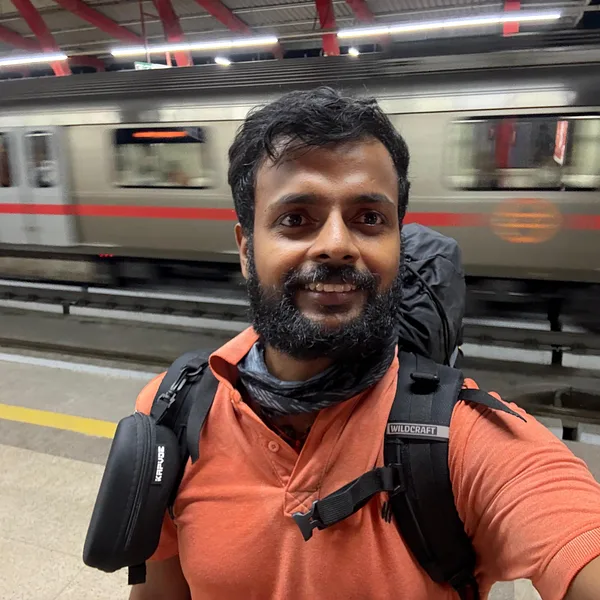
I am Shubham Pal, originally from Varanasi and currently living in Delhi, where I work as an Electrical Engineer. For months, one question stayed with me: How well do I really know Bharat? I had read about its history, traditions, and diversity, but I wanted to experience them firsthand rather than through books or social media. I wanted to meet people from different communities, learn about their crafts, taste local food, understand their way of life, and experience the land at the pace of a bicycle.
Like many young professionals, I had both professional and family responsibilities. Funding a months-long expedition meant that leaving my job was not an option. Fortunately, my job allowed me to work remotely, making it possible to pursue this dream without stepping away from my career or neglecting my responsibilities at home. Carrying my laptop throughout the journey, I balanced my office work with the expedition.
Maintaining both commitments was the most challenging part of the journey. Most days began early in the morning with long hours of cycling, often lasting until evening or sometimes until nights. After reaching my destination and finding a place to stay, I would open my laptop and complete my office work, frequently working late into the night. Most nights, I slept for only four to five hours before beginning the next day's ride. The journey tested not only my physical endurance but also my discipline, resilience, and ability to balance adventure with my professional and family responsibilities.
My interest in Indian Knowledge Systems (IKS) also shaped this journey. I have always been fascinated by the idea that knowledge is not confined to classrooms but is gained through observation, travel, dialogue, and lived experience. I wanted to understand Bharat by experiencing it directly—through its landscapes, its people, its traditions, and its living culture.
This photo essay series is a reflection of that journey. Beginning with Gujarat and continuing along India's coastline, these photo essays showcase the story of the places I visited, the people I met, and the lessons I learned. For me, this expedition was an attempt to understand Bharat not as a tourist, but as a learner. Every kilometre became a lesson, every conversation a classroom, and every village a chapter in understanding the country I call home.
Photo Essay Part Six
2nd January 2026
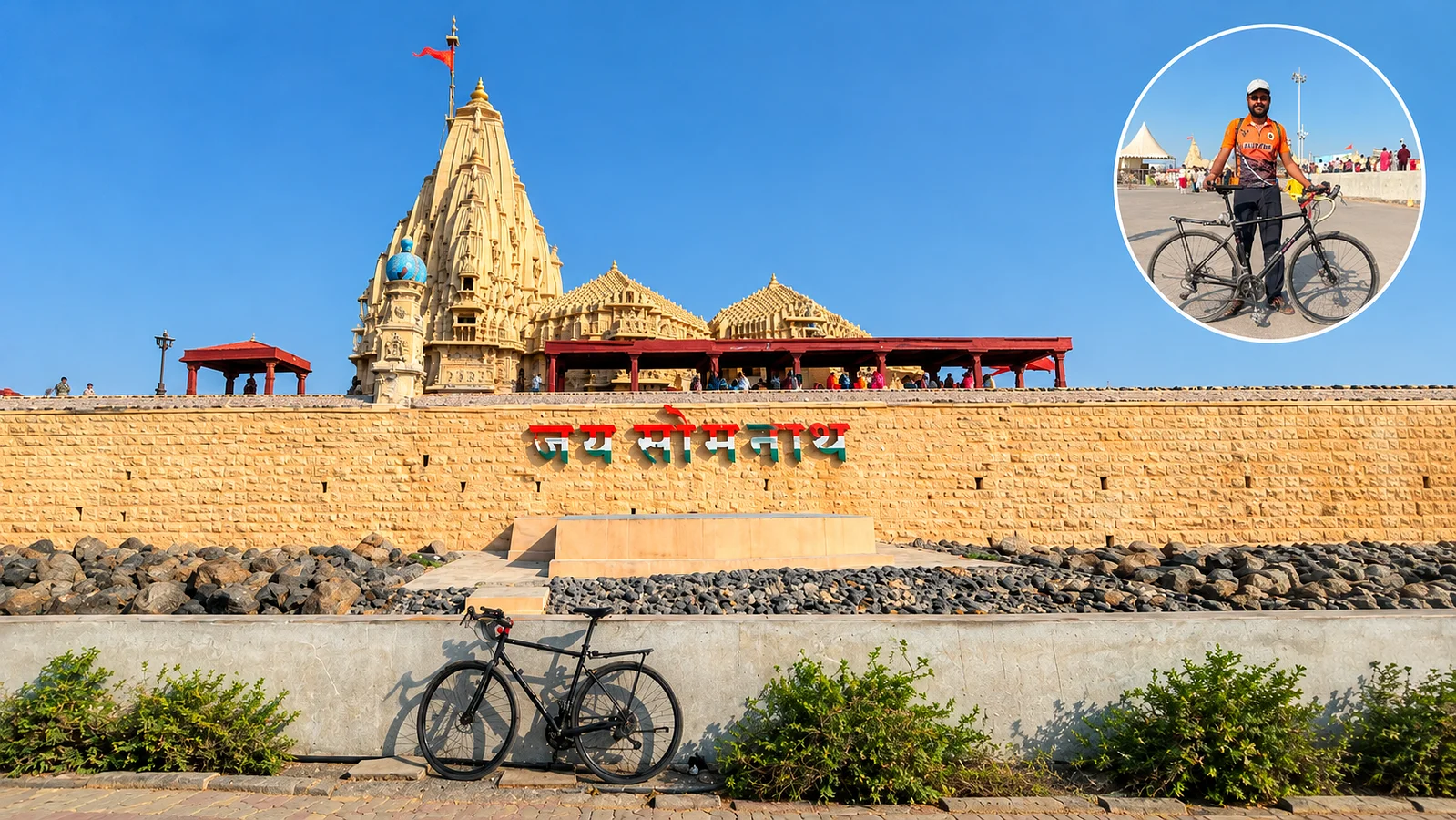
I woke up early with a sense of excitement and gratitude. It was finally time to visit the Somnath Temple, the first of the twelve sacred Jyotirlingas.
As I entered the temple and stood before Lord Mahadev, I felt an overwhelming sense of peace. After offering my prayers, I didn't want to leave immediately. I simply sat there, taking in the spiritual atmosphere and appreciating the significance of the place.
Outside the temple, I found a quiet spot overlooking the Arabian Sea. I sat there for a long time, listening to the rhythmic sound of the waves crashing against the rocks. The combination of the temple bells, the sea breeze, and the sound of the ocean created a feeling that is difficult to describe in words.
It was one of those rare moments when time seemed to slow down. There was no rush to ride, no destination to chase—just me, the sea, and the divine presence of Somnath. It became one of the most peaceful and memorable experiences of my entire journey.


3rd January 2026
On 3rd January, I left Veraval and continued my coastal journey towards Diu, covering around 67 kilometers.
Along the way, near Kodinar, I visited Mul Dwarka, a place believed to have an ancient connection with Lord Krishna. The temple is said to be around 5,000 years old, and standing there gave me a deep sense of history and spirituality. It was fascinating to visit a place where mythology, faith, and history come together.
After spending some time at the temple, I continued riding along the beautiful coastal roads towards Diu. The peaceful journey, combined with another sacred stop, made the day both relaxing and memorable.
By evening, I reached Diu, eager to explore this unique island town and continue my adventure along India's coastline.


4th January 2026
On 4th January, I left Diu and continued my journey towards Tulsi Shyam, covering around 60 kilometers.
Before heading inland, I visited the Gangeshwar Mahadev Temple, a unique temple where the waves of the Arabian Sea wash over the Shivlings during high tide. The peaceful surroundings and the sound of the sea made it a truly special place to begin the day.
From there, I visited the INS Khukri Memorial and the nearby War Memorial. The memorial honors the brave officers and sailors of INS Khukri, which sank during the 1971 Indo-Pak War. As I stood there reading about their courage and sacrifice, I was deeply moved.
It made me realize something I had often heard but never truly felt until that moment—freedom is not free; it is earned through the sacrifices of countless brave men and women. Their courage allows millions of us to live our lives in peace, travel freely, and chase our dreams. Standing before the memorial filled me with immense respect and gratitude for the heroes who gave everything for our nation.
With those thoughts in my mind, I continued cycling towards Tulsi Shyam, carrying not only my luggage but also a renewed appreciation for the sacrifices that make journeys like mine possible.


5th January 2026
After several days of riding, I decided to spend the day at the Tulsi Shyam Temple Ashram, embracing the calm and simplicity of the place.
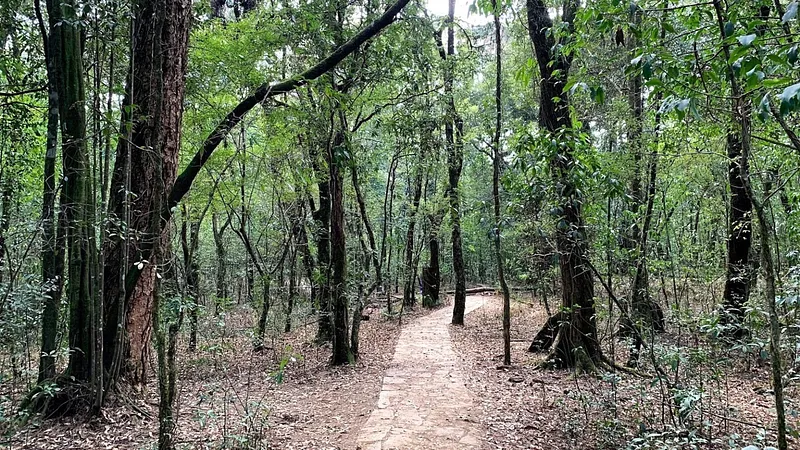
The temple is surrounded by forests, and I was delighted to see deer and peacocks roaming freely. Watching these beautiful animals in their natural habitat made the surroundings feel even more peaceful and alive.
I also visited the famous hot water spring near the temple and later explored the Rukmini Temple. There was nothing extraordinary planned for the day—no long ride, no rush to reach another destination.
Instead, I spent my time simply observing life around me. The peaceful rhythm of the ashram, the devotion of the pilgrims, the beauty of nature, and the simplicity with which people lived made me pause and appreciate the little things. Sometimes, the greatest experiences of a journey come not from covering more kilometers, but from slowing down and truly being present in the moment.
It was a quiet day, but one that left a lasting impression on me.


(All photographs from author's personal collection.)
To be continued...
Read Part One, Two, Three, Four, Five
.png)
%20(1).png)
%20(3).png)