Note: Read Articles One, Two, Three and Five Here.
IX. The Four Upavedas: Applied Knowledge and Human Flourishing
A. Āyurveda — Medicine and Embodied Well-being
.png)
Āyurveda, the science of life (āyur = life, veda = knowledge), is described as having eight parts: sūtra (fundamental principles), śārīra (anatomy and embryology), aindriya (diagnostics through the senses), cikitsā (therapeutics), nidāna (aetiology), vimāna (standards of measurement), vikalpa (pharmaceutical preparation), and siddhi (successful treatment). The transmission lineage runs from Brahmā to Prajāpati, to the Aśvins, Dhanvantari, Indra, Bharadvāja, Ātreya, and Agniveśa, and was consolidated by the great Caraka. A parallel five-part treatise was composed by Suśruta, and Vāgbhaṭa and others also produced important works. Kāmaśāstra, the science of love and desire, is noted to be included within Āyurveda (since Suśruta's vājīkaraṇa section — the science of aphrodisiacs and sexual health — is part of the Āyurvaidika corpus), and Vātsyāyana's famous Kāmasūtra, consisting of five chapters, is the primary independent treatise on this subject. Its stated purpose — interestingly — is to generate dispassion toward sense-pleasures by demonstrating that even their most systematic pursuit terminates in sorrow.
B. Dhanurveda — Martial Science
Dhanurveda, the science of the bow and of martial discipline more broadly, was composed by Viśvāmitra in four chapters (pādas): Dīkṣāpāda (initiation), Saṃgrahapāda (acquisition), Siddhipāda (mastery), and Prayogapāda (application). The text classifies weapons into four types: mukta (discharged weapons, such as the cakra), amukta (non-discharged weapons, such as the sword), muktāmukta (weapons both discharged and not discharged, such as the spear), and yantramuktā (machine-discharged weapons, such as arrows). The pāda-by-pāda description covers initiation and consecration, the teacher-student relationship, the repeated practice of mastered weapons, the worship of deities for weapon-siddhi, and the dharma of the kṣatriya as protection of the people from wrongdoers and enemies. The purpose of Dhanurveda is thus not merely military training; it is the fulfilment of kṣātra-dharma.
C. Gāndharvaveda — Music and the Performing Arts
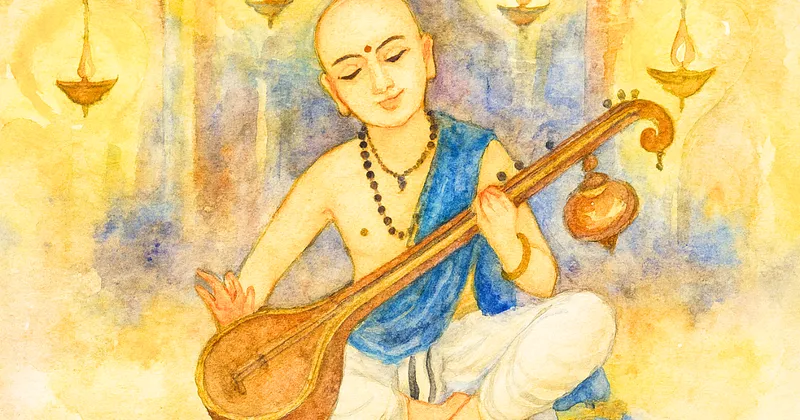
Gāndharvaveda, the science of music and the performing arts, was composed by Bharata — author of the Nāṭyaśāstra — and encompasses song (gīta), instrumental music (vādya), and dance (nṛtya), along with their many subdivisions and elaborations. Śrī Madhusūdana Sarasvatī states its purpose in remarkably elevated terms: the worship of deities (devatārādhana) and the attainment of states such as nirvikalpaka-samādhi. This is not a casual remark. It reflects the deeply integrated view that aesthetic experience — when cultivated with discipline and directed toward the divine — can become a vehicle for the highest spiritual states. Music is not merely entertainment in this framework; it is a refined discipline of attention, emotion, and consciousness.
D. Arthaśāstra — Polity and Practical Sciences
Arthaśāstra, the science of artha (worldly prosperity and practical intelligence), is described as extremely wide-ranging. It includes nītiśāstra (law, governance, and ethics), aśvaśāstra (the science of horses), śilpaśāstra (architecture and craft), sūpakāraśāstra (culinary arts), and catuḥṣaṣṭi-kalāśāstra (the sixty-four arts or skills). These were composed by many sages across many traditions. Śrī Madhusūdana Sarasvatī notes that their purpose is primarily laukika — worldly and practical — but this is not a dismissal. The knowledge landscape must include the disciplines that organize and sustain human society, protect life and culture, and refine practical competence. Without Arthaśāstra's practical dimensions, the knowledge system would be abstract and incomplete.
E. The Sixty-Four Kalās: The Cultivated Skills of a Knowledge Civilization
.png)
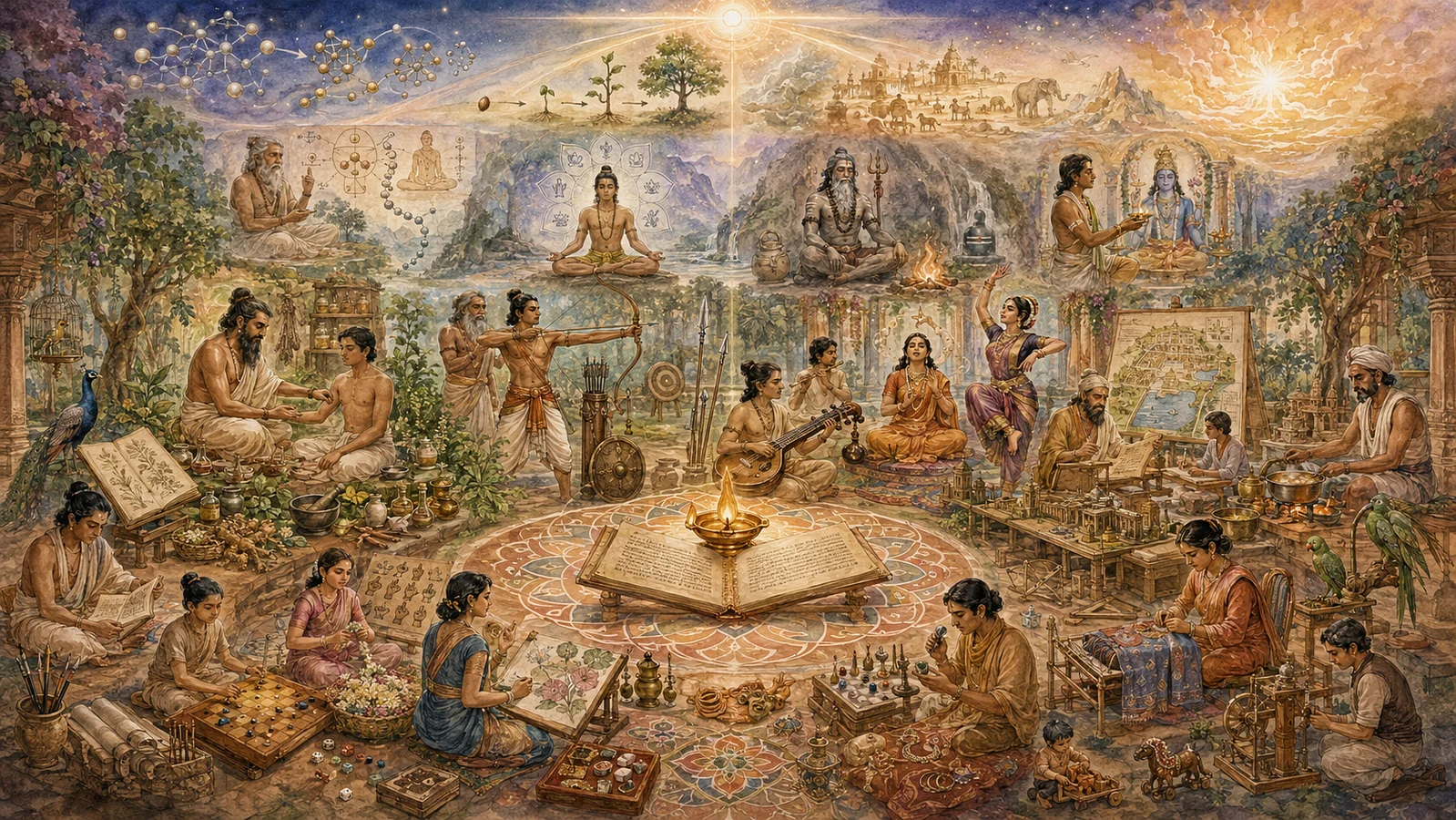
The Arthaśāstra section explicitly includes catuḥṣaṣṭi-kalāśāstra — the science of the sixty-four kalās — as one of its branches. These sixty-four arts, enumerated in the Śaivāgamas and related texts, represent the most granular and socially concrete layer of the knowledge landscape. The word kalā in this context does not mean art in the narrow modern sense of fine art alone; it means cultivated skill — a disciplined capacity that has its own method, its own standards of excellence, and its own place in the ordered life of a person and a civilization. Where the eighteen vidyās provide the architectural framework of knowledge, the sixty-four kalās fill that framework with the texture of daily refinement: performance, design, domestic life, technical craft, linguistic ingenuity, play, and social grace.
sūpakāraśāstraṃ catuḥṣaṣṭikalāśāstraṃ ceti | tāś catuḥṣaṣṭi-kalāḥ śaivāgamoktāḥ | nānāmunibhiḥ praṇītam |
(‘The culinary science and the science of the sixty-four kalās — these sixty-four kalās are those declared in the Śaivāgamas; composed by various sages.’)
The sixty-four kalās are:
1. gītam — singing; cultivation of voice and melodic refinement.
2. vādyam — instrumental music; playing of any instrument.
3. nṛtyam — dance as embodied rhythm and expressive movement.
4. nāṭyam — drama, theatrical enactment, gesture, and representation.
5. ālekhyam — drawing, painting, and visual inscription.
6. viśeṣakacchedyam — decorative cutting and patterned design in leaves, paper, or related materials.
7. taṇḍula-kusuma-bali-vikārāḥ — arrangements using rice, flowers, and ritual offerings; rangoli-like decorative composition.
8. puṣpāstaraṇam — flower-spreading and floral arrangement of beds, floors, and sacred spaces.
9. daśana-vasanāṅga-rāgāḥ — colouring or beautifying teeth, garments, and bodily limbs.
10. maṇi-bhūmikā-karma — jeweled floor and decorative surface work.
11. śayana-racanam — arrangement and decoration of beds and resting spaces.
12. udaka-vādyam — music produced using water vessels; hydraulic percussion.
13. udaka-ghāta — playful or rhythmic water-striking; water games.
14. adbhuta-darśana-veditā — knowledge of creating or recognizing wondrous visual displays.
15. mālā-grathana-kalpaḥ — garland-making and floral composition.
16. śekharāpīḍa-yojanam — arranging head ornaments and crest decorations.
17. nepathya-yogaḥ — costume, backstage preparation, and stagecraft.
18. karṇapatra-bhaṅgāḥ — fashioning ear-ornaments and leaf-like ear designs.
19. gandha-yuktiḥ — preparation and blending of fragrances and perfumes.
20. bhūṣaṇa-yojanam — arrangement and combining of ornaments.
21. indrajālam — conjuring, illusion, and wonder-making.
22. kaucumāra-yogaḥ — cosmetic and bodily refinement techniques; arts of personal beautification.
23. hasta-lāghavam — sleight of hand and manual dexterity.
24. vicitra-śāka-pūpa-bhakta-vikāra-kriyāḥ — creative preparation of vegetables, cakes, and cooked foods.
25. pānaka-rasa-rāgāsava-yojanam — preparation of drinks, syrups, flavoured waters, and fermented mixtures.
26. sūcī-vāya-karma — needlework, stitching, and textile craftsmanship.
27. sūtra-krīḍā — string games and string-based skill; cat's cradle and related play.
28. vīṇā-ḍamaruka-vādyāni — playing the vīṇā, ḍamaru, and related musical instruments.
29. prahelikā-pratimālāḥ — riddles and linked verbal puzzles; linguistic wit.
30. durvañcaka-yogaḥ — difficult tricks, deceptive puzzles, or playful stratagems.
31. pustaka-vācanam — book reading, recitation, and literary performance.
32. nāṭakākhyāyikā-darśanam — understanding and appreciation of drama and narrative performance.
33. kāvya-samasýā-pūraṇam — completion of poetic challenges or given half-verses; improvisational poetry.
34. paṭṭikā-vetra-bāṇa-vikalpāḥ — crafting with boards, cane, and arrows; basketry and related work.
35. tarku-karmāṇi — spindle work and related textile craft.
36. takṣaṇam — carving, carpentry, and precision cutting work.
37. vāstu-vidyā — architecture, spatial design, and knowledge of dwelling.
38. rūpya-ratna-parīkṣā — testing and assaying silver, gems, and valuables.
39. dhātu-vādaḥ — knowledge of metals and their properties and treatment.
40. maṇi-rāga-jñānam — knowledge of colouring and treating gems.
41. ākara-jñānam — knowledge of mines and sources of minerals.
42. vṛkṣāyurveda-yogaḥ — botanical and arboricultural techniques; plant medicine and cultivation.
43. meṣa-kukkuta-lāvaka-yuddha-vidhiḥ — rules and skill of ram, cock, and quail contests.
44. śuka-sārikā-pralāpanam — training parrots and mynah birds to speak; art of teaching animal mimicry.
45. utsādanam — cleaning, rubbing, and cosmetic treatment of the body.
46. keśa-mārjana-kauśalam — hair care, dressing, and grooming skill.
47. akṣara-muṣṭikā-kathanam — communicating letters and words through hand signs or finger codes.
48. mlecchita-kavi-kalpāḥ — foreign, secret, or coded forms of expression; cryptic communication.
49. deśa-bhāṣā-jñānam — knowledge of regional and vernacular languages.
50. puṣpa-śakaṭikā-nimitta-jñānam — knowledge of omens or signs connected with flower arrangements and carts.
51. yantra-mātṛkā — knowledge of mechanical devices, diagrams, and instruments.
52. dhāraṇa-mātṛkā — mnemonic devices and techniques of retention and recollection.
53. mansī-kāvya-kriyā and asaṃvācya-sampāṭya-vikalpāḥ — silent communication, mental composition, and poetic improvisation.
54. chalitaka-yogaḥ — techniques of disguise, trickery, and playful deception.
55. abhidhāna-kośa-cchando-jñānam — knowledge of lexicons, dictionaries, and poetic metres.
56. kriyā-vikalpāḥ — alternative procedures and practical improvisations.
57. lalitā-vikalpāḥ — graceful arts and refined aesthetic variations.
58. vastra-gopanāni — concealment and tasteful arrangement of garments.
59. dyūta-viśeṣaḥ — special knowledge of games of dice and chance.
60. ākarṣa-krīḍā — attraction games and magnetic or playful drawing techniques.
61. bāla-krīḍanakani — children's toys, games, and playful arts.
62. vaikṣepikī vidyā — knowledge connected with training, discipline, and guidance.
63. vaijayikī vidyā — knowledge connected with victory and success in endeavour.
64. vaitālikī vidyā — knowledge of bardic, heraldic, and panegyric arts; royal proclamation and praise.
These sixty-four kalās span an extraordinary range: from the high performative arts of gītam, vādyam, nṛtyam, and nāṭyam, through domestic and culinary refinements such as śayana-racanam, pānaka-rasa-yojanam, and the preparation of food; to technical and architectural knowledge such as takṣaṇam, vāstu-vidyā, yantra-mātṛkā, dhātu-vādaḥ, and ākara-jñānam; to linguistic and intellectual skills such as deśa-bhāṣā-jñānam, abhidhāna-kośa-cchando-jñānam, kāvya-samasyā-pūraṇam, and mnemonic arts; to playful and strategic competences such as indrajālam, hasta-lāghavam, prahelikā, dyūta-viśeṣaḥ, and chalitaka-yogaḥ. The inclusion of coded communication (mlecchita-kavi-kalpāḥ, akṣara-muṣṭikā-kathanam), botanical medicine (vṛkṣāyurveda-yogaḥ), animal training (śuka-sārikā-pralāpanam), and children’s games (bāla-krīḍanakani) shows that the tradition recognized skill at every level of life — from the ceremonial to the playful, from the technical to the devotional. The kalās thus function as the micro-disciplines of civilization: not abstract doctrines but embodied competences, which, taken together, make a human being graceful, capable, adaptable, and fully alive to the world.
It is significant that the kalās appear within the Arthaśāstra frame and not within the purely ritual or philosophical portions of the knowledge map. This placement reflects the Indic understanding that practical and aesthetic intelligence is itself a form of vidyā. Gāndharvavedas elevates music and performance to the level of devarādhana and even samādhi; similarly, the kalās elevate craft, skill, and social refinement to the level of organized knowledge worthy of systematic transmission. Śrī Madhusūdana Sarasvatī’s brief reference to catuḥṣaṣṭi-kalāśāstra as a branch of Arthaśāstra is therefore not a footnote. It is a recognition that a complete knowledge civilization cannot be constituted by philosophers, ritualists, and grammarians alone. It also requires musicians, painters, architects, physicians, gardeners, poets, cooks, craftsmen, teachers of language, designers of ornament, and masters of play — each trained in a kalā that has its own rigour, its own transmission, and its own contribution to the fullness of human life.
X. The Major Philosophical Systems: Sāṅkhya, Yoga, Pāśupata, and Vaiṣṇava
.png)
A. Sāṅkhya
Sāṅkhya, composed by Kapila in six chapters beginning with 'Now, the complete removal of the three kinds of sorrow is the ultimate human goal (puruṣārtha),' systematically describes the twenty-five tattvas (principles of reality). Chapter one describes the objects of the senses; chapter two the workings of pradhāna (primordial matter); chapter three dispassion toward sense-objects; chapter four instructive stories of detachment (including the story of Piṅgalā and Kurava); chapter five the refutation of opposing views; and chapter six a summary of the whole. The purpose of Sāṅkhya is the discriminating knowledge of prakṛti and puruṣa — nature and the pure witness — as the means of liberation from the three-fold suffering.
B. Yoga
Yoga, composed by Patañjali in four pādas beginning with 'Now, the instruction in yoga,' builds upon Sāṅkhya metaphysics and provides a practical discipline of mental restraint. Chapter one describes samādhi and its means: abhyāsa (repeated practice) and vairāgya (dispassion). Chapter two describes the eight limbs of yoga — yama, niyama, āsana, prāṇāyāma, pratyāhāra, dhāraṇā, dhyāna, and samādhi — for the purpose of mental discipline. Chapter three describes the yogic powers (vibhūtis) that arise from advanced practice. Chapter four describes kaivalya — absolute freedom. The purpose of Yoga is the attainment of nididhyāsana (sustained contemplation) through the restraint of contrary mental fluctuations.
C. Pāśupata
The Pāśupata system, composed by Paśupati (Śiva) himself in five chapters, aims at the liberation of the paśu (the bound being, the individual soul) from bondage through the grace of the pati (the Lord, Śiva). Its five chapters cover kārya (effect), kāraṇa (cause), yoga (the means of union), vidhi (the ritual rules, including the practice of bathing with ash three times daily), and duḥkhānta (the end of sorrow, i.e., liberation). The phrase kārya-kāraṇa-yoga-vidhi-duḥkhāntā is used to describe the system's structure. The Pāśupata system is thus at once metaphysical (distinguishing the effect from its cause), yogic (prescribing contemplative union), ritual (requiring specific practices), and mokṣa oriented (promising liberation from all sorrow).
D. Pāñcarātra Vaiṣṇava
The Vaiṣṇava or Pāñcarātra system, composed by Nārada and others in five sections, presents a cosmology and mokṣa centered on Lord Vāsudeva as the supreme cause of all. The four vyūhas (cosmic emanations or aspects) are: Vāsudeva (the supreme Lord), Saṃkarṣaṇa (the cosmic jīva), Pradyumna (the cosmic mind), and Aniruddha (the cosmic ego or ahaṃkāra). All these are declared to be non-different from Lord Vāsudeva and are his partial manifestations. The purpose of the Pāñcarātra system is to worship Vāsudeva through mind, speech, and body, thereby attaining fulfillment. As Śrī Madhusūdana Sarasvatī states, the devotee who offers mind, speech, and body in the worship of Bhagavān Vāsudeva becomes kṛtakṛtya — fully accomplished.
XI. The Three Metaphysical Orientations: Ārambhavāda, Pariṇāmavāda, and Vivartavāda
After the detailed survey of individual vidyās and systems, Śrī Madhusūdana Sarasvatī provides the most philosophically ambitious section of the Prasthānabheda: a reduction of all the diverse śāstrīya orientations to three fundamental metaphysical positions, corresponding to three different accounts of how the world comes to exist.
A. Ārambhavāda — The Theory of New Origination
The Ārambhavāda holds that the effect is genuinely new — not pre-existent in the cause — and comes into being from the conjunction of pre-existing paramāṇus. The four types of paramāṇus (earth, water, fire, air) combine into binary composites (dvyaṇukas) and then progressively build up to the full universe. The effect (the universe) is thus a genuinely new production that did not previously exist. This is the first prasthāna, attributed to the Tārkikas (Nyāya-Vaiśeṣikas) and the Mīmāṃsakas.
B. Pariṇāmavāda — The Theory of Transformation
The Pariṇāmavāda holds that the effect pre-exists in the cause in subtle form and becomes manifest through a process of transformation (pariṇāma). The sattva-rajas-tamas-constituted pradhāna (primordial nature) transforms into mahat, ahamkāra, the tanmātras, and so on, progressively producing the entire universe. Even before the manifest transformation, the effect exists subtly in the cause. This is the second prasthāna, attributed to Sāṅkhya, Patañjali's Yoga, and the Pāśupata tradition. The Vaiṣṇavas hold a version of this view as well — that the universe is a genuine transformation of Brahman (brahma-pariṇāma).
C. Vivartavāda — The Theory of Apparent Manifestation
The Vivartavāda — the Advaita position — holds that neither Ārambha nor genuine Pariṇāma describes the nature of the world correctly. The self-luminous, non-dual, blissful Brahman appears as the universe through the power of its own māyā — not through a real transformation, but through an apparent one, a superimposition (adhyāsa) that dissolves in the light of brahmajñāna. The 'world' of multiplicity and change is thus not ultimately real in the way that Brahman is real; it is a vivarta — an appearance that is neither the same as nor wholly different from its ground. This is the third prasthāna, attributed to the Brahmavādins — the Advaitins.
svaprakāśa-paramānanda-dvitīyaṃ brahma svamāyāvaśān-mithyaiva jagad-ākāreṇa kalpata iti tṛtīyaḥ pakṣo brahmavādīnām |
'The self-luminous, non-dual, supreme bliss, Brahman, appears illusorily as the universe by the power of its own māyā — this is the third view, that of the Brahmavādins.' This is the philosophical summit at which the Prasthānabheda arrives. All the diverse prasthānas ultimately converge here — not because the other views are simply false, but because they represent stages in the progressive disclosure of a truth that only Vivartavāda fully grasps.

.png)