In 1875, a barefoot village boy was plucked from obscurity and crowned Maharaja of Baroda. His only inheritance was fate, his only tool became education. What followed was a bold experiment in tutoring a child into a monarch and a ruler who turned private lessons into a revolution in public schooling.
A Boy Chosen by Fate
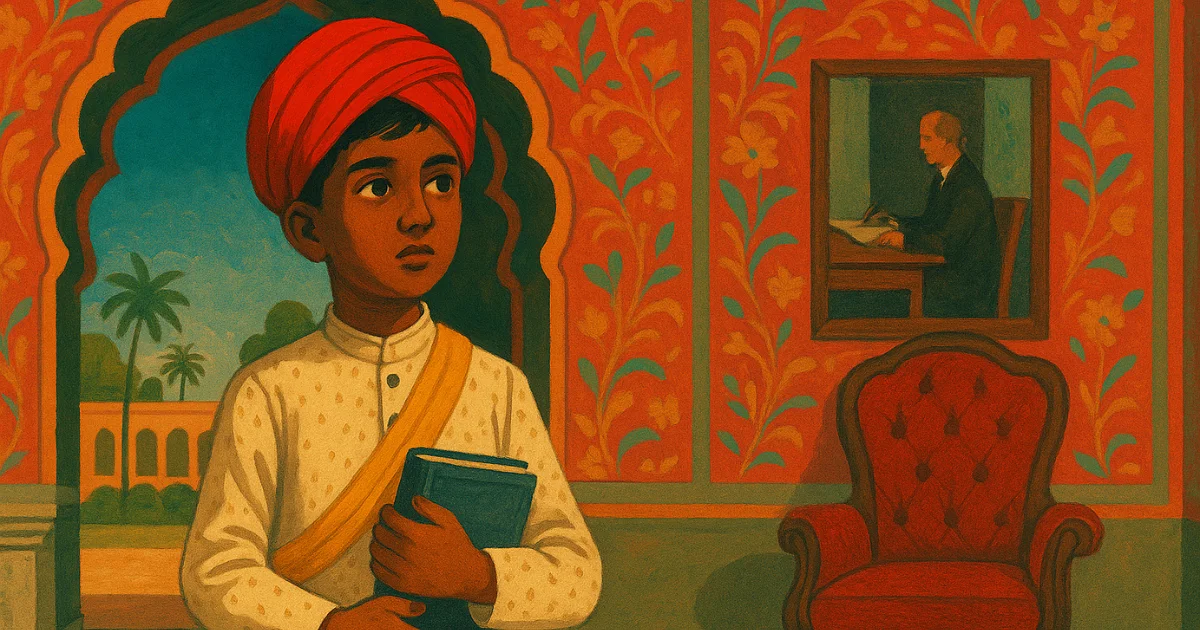
In 1875, a boy from a Maratha farming family was led through the gates of the Baroda palace. His name was Gopalrao, son of Kashirao Patil, a cultivator from the village of Kavlana. He was twelve years old, barefoot and wide-eyed, with no more knowledge of letters and numbers than any child in his village. That he would soon be renamed Sayajirao Gaekwad III and declared ruler of one of India’s most important princely states was the sort of improbable turn that historians like to call providence and common people call fate.
Baroda needed a king. Malharrao Gaekwad, the reigning monarch, had been deposed by the British for misrule. The throne stood empty, and the British insisted that a successor be found, but one who would be pliable, manageable, and young enough to be molded. The dowager queen, Jamnabai, was charged with adopting an heir. Adoption in royal households was both a ritual and a political act. It was a way of continuing dynastic legitimacy, but it was also, in the age of empire, subject to the approval of the colonial state.
When Kashirao appeared at the palace with his three sons, the story took on the quality of myth. The queen mother tested the boys with questions. The youngest fidgeted, the eldest hesitated. But Gopalrao, the middle son, stood firm and declared, “I have come to rule Baroda.” The confidence in his voice impressed both the Rajamata and the Resident. Within days, the boy who had herded cattle and swam in village rivers was adopted into the Gaekwad family and coroneted Maharaja Sayajirao III.
How Do You Educate a King?
The ceremony was dramatic, but the problem it created was equally dramatic. How do you educate a boy who is to rule over millions? What kind of pedagogy shapes a monarch who must straddle tradition, colonial oversight, and the stirrings of modern reform?
Sayajirao was a blank slate. He had never been to school. He could not read or write. His speech carried the rustic idiom of his village. Yet in a matter of years, he would be expected to preside over one of the wealthiest states of India, to converse with British viceroys, to legislate for his people, and to maintain dignity before rival princes. The stakes were high, not only for Baroda but for the colonial state itself. An uneducated ruler could embarrass the Raj. A rebellious one could threaten it. The education of Sayajirao would have to balance both.
The Baroda court and the British Resident devised a plan. The boy would be placed under the supervision of T. Madhava Rao, the Diwan of Baroda, and F. A. H. Elliot, a young Irish officer of the Indian Civil Service. Madhava Rao was already a legend in administrative circles, known for his ability to steady a faltering state. Elliot was less known but possessed the energy of youth and a willingness to immerse himself in pedagogy. Together, they became architects of a royal education that was unlike any other.
The Palace School
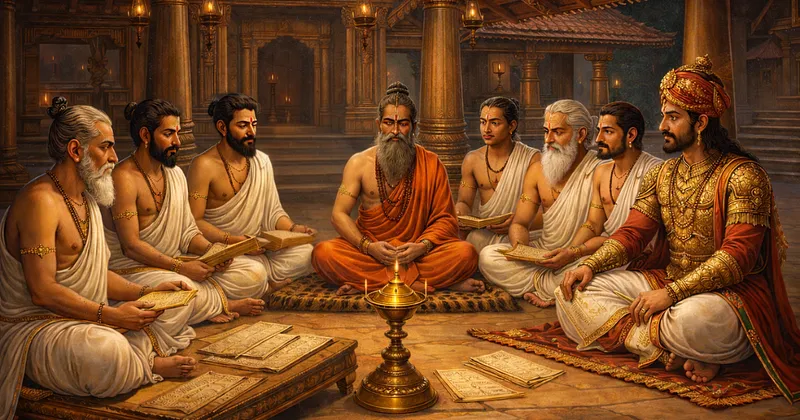
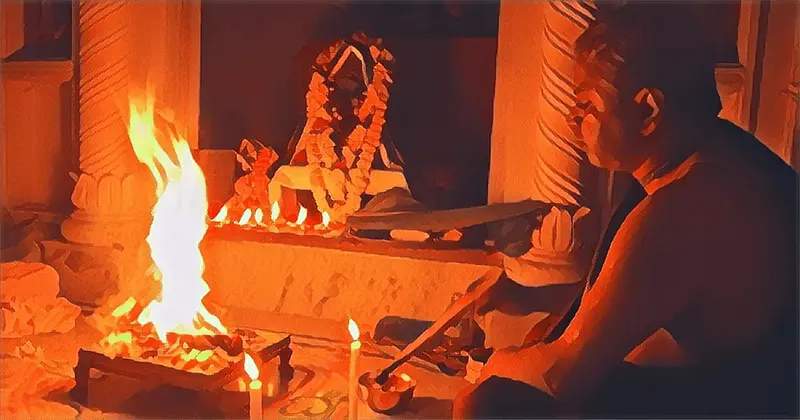
The first step was literacy. On June 7, 1875, a Sarasvati puja was performed to mark the beginning of Sayajirao’s education. The top floor of the palace was converted into a classroom, and two tutors, Keshavrao Baburao Pandit and Vyankatrao (Vyankatesh) Joshi, known affectionately as Bhau Master, began lessons in Marathi and arithmetic. A few days later, Ratanram was brought in to teach Gujarati.
The regimen was strict. Sayajirao studied for six or seven hours a day. After that came physical training in horse-riding, sword-fighting, and swimming. By evening, under the watchful eye of Jamnabai, he revised his lessons before dinner. Even holidays were carefully planned. Once every fortnight, the boys were taken hunting, both as recreation and as a way to instill martial skills.
Elliot soon took charge. He was not content with rote teaching. He learned Marathi himself so that he could teach English better. He joined his pupils in indigenous games, breaking down the barriers of fear. He believed that respect was earned, not imposed. Slowly, a bond of trust formed between the boy and his mentor.
Within six months, Sayajirao could read and write Marathi, recite multiplication tables, and compose short essays. Elliot noted that progress was slow, but he also observed a deep persistence in the boy. He was not quick in mathematics, but he was hardworking, and he had an earnest desire to learn. These, Elliot believed, were more important qualities than brilliance.
A Curriculum in GovernanceMadhava Rao understood that a king could not be educated like an ordinary student. Literacy was necessary, but the true goal was to prepare him for governance. Beginning in 1877, a series of lectures was organized for the young Maharaja. Eminent judges, administrators, and reformers came to the palace to speak on law, revenue, police administration, and statecraft.
Justice J. N. Gadgil spoke on jurisprudence. Karsethji Rustomji explained land reforms. Vinayakrao Kirtane lectured on the police and prisons. In all, more than 150 lectures were delivered, later compiled in a volume titled Lectures on Administration. Madhava Rao himself delivered forty-six lectures, covering topics as diverse as crowd management, the importance of justice, and the duties of a ruler toward his people.
The advice was often pragmatic. The Maharaja was told to keep close relations with the British Resident, to read newspapers, to appoint only capable officials, and to dispense justice without favoritism. He was reminded that revenues must be protected, that corruption must be checked, and that the welfare of subjects was the true measure of a king. The pedagogy was not abstract. It was a curriculum in governance, designed to shape not just knowledge but judgment.
Rajkumar Colleges and the British VisionSayajirao was not alone in being subjected to such experiments. Across India, the British were developing institutions to educate the sons of royalty. The most famous was Mayo College in Ajmer, established in 1875, the same year that Sayajirao began his lessons. Modelled on Eton and Harrow, it was meant to be a school for princes, combining English public school discipline with selective exposure to Indian culture.
Rajkumar Colleges were also founded in Rajkot, Indore, and Raipur. Their purpose was clear: to produce a class of Anglicized princes who could dine with viceroys and converse in English, but who would remain loyal to the Empire. Education here was a political technology. It sought to secure the allegiance of rulers who governed millions but owed their legitimacy to colonial sanction.
In this sense, Sayajirao’s education was part of a larger pattern. But there was a crucial difference. Many princes emerged from these schools as imitative aristocrats, more interested in polo than policy. Sayajirao, shaped by his unique combination of village origins, palace schooling, and individual mentorship, emerged as a reformer.
The First SpeechIn 1877, two years after his adoption, Sayajirao was invited to inaugurate a public park in Baroda. It was to be his first speech. Elliot and Bhau Master prepared him carefully. The boy worked hard, rehearsing lines and drafting notes. On the day of the event, in front of the Rajmata, officials, and citizens, he stood up and spoke without consulting his paper.
“Gentlemen,” he began, “all of us enjoy clean air, greenery, and flowers. But this city is densely populated. Most people are not affluent enough to have their own gardens. I wish for them to spend some happy time here with their families. That is why, other than a bungalow, I offer this entire park to my beloved citizens of Baroda.”
It was a simple speech, but it was significant. A boy from a village had learned not only to address an audience but to imagine himself as custodian of public welfare. His teachers wept with pride, his father wiped away tears, and Jamnabai nodded with satisfaction.
From Student to MonarchBy 1881, after six years of training, Sayajirao was deemed ready to rule. At eighteen, he assumed control of Baroda. His education had been rigorous, but what mattered was how he would apply it. Here, the contrast with other princes became stark. While many treated education as an ornament, Sayajirao used it as a foundation for reform.
In 1906, he made Baroda the first state in India to legislate compulsory primary education. At a time when schooling was still a privilege for the few, this was revolutionary. He opened schools for girls, established libraries, and founded technical institutes. The Baroda Central Library, India’s first public library, was his creation. The Maharaja Sayajirao University of Baroda grew out of his vision of universal access to higher education.
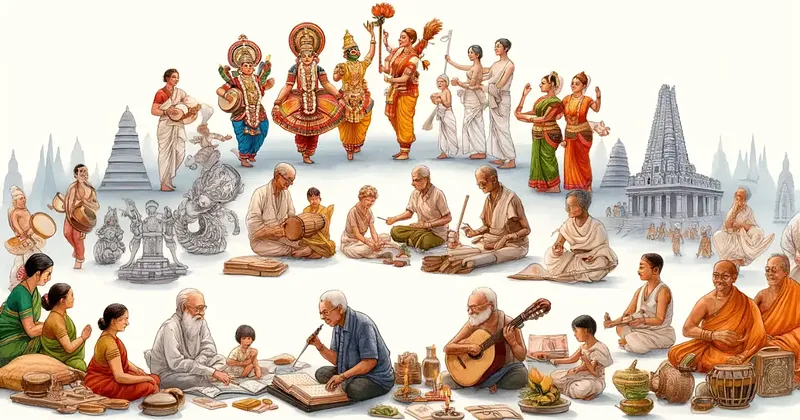
He did not stop at institutions. He supported individuals who would shape India’s future. B. R. Ambedkar, then a student, received funding from Sayajirao to study abroad. Vitthal Ramji Shinde, a pioneer against untouchability, found encouragement in Baroda. Musicians, painters, and writers thrived under his patronage. The Gayan Shala, established in 1886, became a center for classical music and later evolved into the Faculty of Performing Arts at the university.
Even his symbols of luxury were turned toward public good. Rolls-Royce cars in his possession were converted into mobile libraries, carrying books to villages. It was a striking image: the most exclusive automobile in the world repurposed to democratize knowledge.
Building a Modern StateSayajirao’s reforms went far beyond education. He modernized infrastructure with zeal. The Baroda railways expanded, connecting the state to trade centers. The Ajwa Sarovar dam secured water supply and reduced famine vulnerability. Sayaji Baug, also known as Kamati Baug, opened green space to the public, complete with a zoo, museum, and planetarium.
In 1908, he founded the Bank of Baroda, an institution that still stands today. Judicial reforms included a ban on child marriage, the legalization of divorce, and measures against untouchability. Agricultural research was encouraged, with commissioners sent abroad to study farming techniques. Architecture bore his stamp as well, from hospitals to colleges, many buildings blending Indian forms with European styles.
Under his reign, Baroda became a blueprint for modernity. It was a princely state that did not merely mimic the Empire but tried to offer an alternative vision of welfare and reform.
Pedagogy and PoliticsWhat explains this trajectory? The answer lies in education. Sayajirao’s private tutoring under Elliot and Madhava Rao instilled in him habits of discipline, curiosity, and responsibility. His exposure to both Western liberal thought and Indian reform movements sharpened his sense of justice. He was a monarch shaped not by privilege alone but by a pedagogy that emphasized duty.
The lectures on administration may have been designed to keep him loyal to the Empire, but they had another effect. They made him aware of the machinery of the state, and they gave him the tools to use it for his people. His village origins perhaps helped him imagine reforms not as elite indulgences but as public necessities.
The Legacy of Elite SchoolsThe Rajkumar Colleges, Mayo College, and later institutions like Doon School carried forward the experiment of elite education in India. They produced leaders, administrators, and politicians, but they also reproduced exclusivity. The paradox of such institutions is that they nurture leadership while reinforcing hierarchy.
Sayajirao’s story complicates that narrative. His education was elite, but his reforms were populist. He represents a rare case of an individual whose private tutoring led to universal policies. He shows how pedagogy can ripple outward, from palace chambers to village schools, from personal mentorship to systemic change.
Reflections for EducatorsWhat does Sayajirao’s story tell us today? It tells us that education is never neutral. It shapes political imagination as much as it transmits knowledge. It raises questions worth asking: Can the careful education of one individual transform society? What is the relationship between elite schooling and mass education? And how do we ensure that institutions meant to shape leaders also serve the broader public good?
For teachers, policymakers, and historians of education, the lessons are clear. Pedagogy is not only about what is taught but also about what is imagined. Sayajirao’s teachers imagined a king who would be loyal and efficient. What they produced was a reformer who democratized learning.
From Palace to PeopleToday, when we walk through Vadodara’s gardens, libraries, and museums, we encounter the legacy of Sayajirao Gaekwad III. His name is etched not just in stone but in the institutions that continue to serve the public. From a boy who once herded cattle, he became a monarch who herded reforms. His story shows that the true measure of education lies not in titles or degrees but in the ability to use learning for the welfare of others.
The boy who once declared, “I have come to rule Baroda,” kept his word. He ruled, but he also reimagined what rule meant. In his reign, education ceased to be the privilege of a few and became the right of many. That, perhaps, is the greatest legacy of the pedagogy of a prince.