.png)
Note: Read Part 1 Here
Cultural Differences In The Moral And Ethical Domains
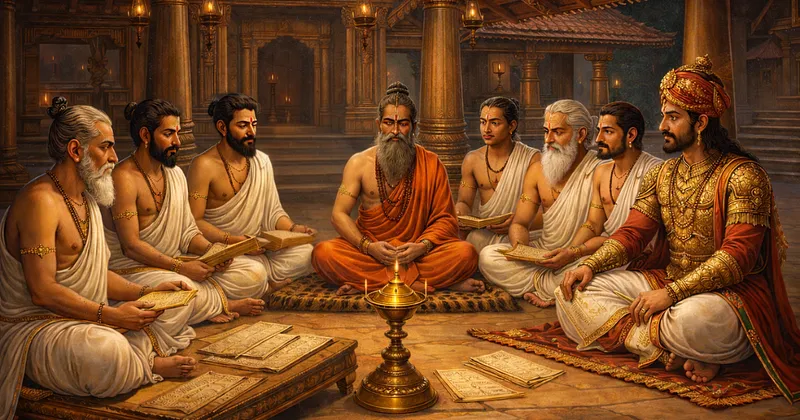
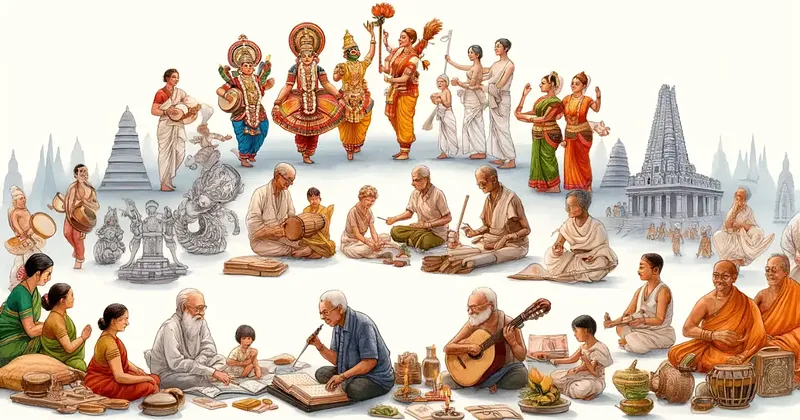
Almost all ethical issues and philosophies seem to come from a Western perspective. There are significant cultural differences in the understanding of the ethical and moral domains. India is a 5000-year-old civilization with an extraordinary body of literature in both Saṃskṛta— and vernacular languages, encompassing nearly all aspects of the material and spiritual realms. It is remarkable that a civilization that has produced some of the most profound philosophical systems, or darśanas, such as Nyāya, Vaiśeṣika, Yoga, Sāṃkhya, Mīmāṃsā, and Vedānta, could somehow not have addressed ethics, morals, or the pursuit of a good life. We had our great insights. However, not only does the West remain unaware of Indian thought, but the average Indian also exhibits a significant ignorance of this rich heritage. This phenomenon exemplifies a colonial consciousness; that is, our lenses remain strictly Western to study ourselves.
This part of the essay draws upon the remarkable four-decade work of Dr. S. N. Balagangadhara, or Balu, as he is fondly called, a philosopher-academic at the University of Ghent, Belgium. He founded the Comparative Science of Cultures Program, which continues to yield significant insights. While we cannot explore his thesis in detail here, it is important to note that, when focusing solely on the ethical domain, Balu argues that Western morality may not be applicable to Eastern contexts and vice versa. Consequently, moral laws determined by one culture cannot be universally applied to all cultures across time. Thus, the fundamental assumption of Western normative ethics that 'moral laws are universalisable' may be wrong.
Cultural Differences In Morality: The Notions Of Agency and Action
The Western world has always dominated ethics as a domain of study, ignoring that other cultures may have their own perspectives too. Greco-Roman philosophers such as Socrates and Plato set the trajectory, with thoughts evolving in Europe according to historical developments. Thus, we have Christian theology, Protestant Reformation ideas, the Enlightenment, modernism, and postmodernism as the backgrounds that dominate thoughts and ideas. India is nowhere in the picture, as we only discuss philosophers like Descartes, Kant, Schopenhauer, Nietzsche, Hume, Locke, Voltaire, or Rousseau and talk about Continental or Analytical philosophy.
The fundamental categories that organize the moral domain of any culture stem from the culture itself. This is evident in the notions of agency in the West and Indian culture. Very briefly, the concept of an ‘agent’ in Western culture posits that within each individual lies an inner core (the actual self or the agent) that exists as separate and distinct from everything else. In contrast, Indian cultural philosophy emphasizes that the actions performed by an organism, as assessed by another being, define the agent. Thus, for example, in Indian culture, an agent can be a good father and a good son but be a bad husband at the same time. In Western culture, when performing an immoral act, an individual might say, "This is not me; I am something else."
To get a better perspective of this part of the essay and to clarify the concepts, it is advisable to read the essay “Selfless Morality and the Moral Self” by Dr. S. N. Balagangadhara. The link has been provided in the references section. Before going further, it is useful to read what S. N. Balagangadhara writes to fully understand this:
The basic conception of self in the Western culture can be very briefly outlined thus: in each human being, there obtains an inner core which is separable and different from everything else. In such a culture, when one speaks of “finding oneself” one means that one should look inside oneself, get in touch with an inner self that is there inside oneself, and peel everything away that surround this core. To such a self, even its own actions can appear strange.
The Western culture allows each of us a self: a self waiting to be discovered within each one of us; something which can grow and actualize itself; that which either realizes its true potential or fails to do so etc. Such a self plays many roles: it guarantees identity when philosophers ask questions about self-identity; it acquires an identity when psychologists attempt to describe the processes and mechanisms by means of which a human organism builds an identity; it is the agent of the moral thinkers when they talk of moral agency etc. Such a versatile self has various properties. One of them is its reflexivity: the self is aware of itself as a self, or it has self-consciousness. … self-consciousness typifies the uniqueness of human beings, and that this distinguishes Man from the rest of Nature…Western notions of the ethical are simply incomprehensible in the absence of precisely such a concept of self.
…(In Indian culture) a distinction is not made between an agent who performs the action and the actions that the agent performs. An agent is constituted by the actions which an organism performs, or an agent is the actions performed and nothing more. And this appears to me to be the concept of ‘self’ that is present in Indian culture.
In order to better appreciate what is being said, let the letters ‘X’ and ‘Y’ stand for two biological organisms. In this case, the ‘self’ of X is nothing other than the actions that it performs. Even here, the nature and the character of the actions that X performs depends very much upon how Y construes them. There is another way of putting this: Y construes X’s ‘self’ in the same way X construes Y’s ‘self’. Y is very crucial for the construction of X’s ‘self’, because in the absence of Y the actions that X performs are meaningless. That is, Y is required so that X’s actions may be seen as some specific type of action or the other. If we were to restrict ourselves to X in order to talk about its ‘self’, so that we may contrast this notion with that of the West, we could say that its ‘self’ consists of a bundle of meaningless actions. Because of this, the ‘self’ of X crucially depends upon continuously being so recognized by Y.
There is nothing spooky or mysterious about this: you are a son, a father, a friend, etc. only to the extent you are so recognized. And you can only be thus recognized when you perform those actions which are appropriate to the “station” of a son, father, friend, etc. The presence of these gestalts in the culture of the community not only imposes restrictions upon the way Y can construct X’s ‘self’, and thus reducing the possible arbitrariness involved in such a construct, but it also enables X to challenge Y within limits.
In one culture, human organisms are endowed with selves in whose nature it is to be different from one another. A human organism builds an identity (in the psychological sense) for such a self; the latter, in its turn, is what makes such an endowed organism unique. This means that the self can be individuated, and the criteria for it are precisely its possessions: at the minimum, for example, the body of a human organism belongs to the self whose body it is. In the other culture, the ‘self’ is a meaningless bundle of actions created by human organisms. The psychological identity of such a ‘self’ is a construction of the ‘other’. A human organism which builds such a ‘self’ is conscious, to be sure, but it lacks that “self-consciousness” which is supposed to typify human beings. The dividing line between such a sentient or conscious ‘self’ and other sentient ‘selves’, where it is drawn at all, is of very little moral significance. That creatures other than human beings, under such a view, end up having ‘selves’ is not only not a problem, but also a recognized consequence.
Taking the example of an onion, in Western culture, peeling away the outer layers reveals the 'true' agent standing independently at the core. The entire task of a human being, or even psychoanalysis by various methods, is to discover this 'true' agent. However, in Indian culture, this peeling process leads to emptiness. As Balu says, these conceptions may not be explicitly framed in the writings, but understanding both Western and Indian ethics requires this conception of agency. These differing perspectives profoundly influence the moral frameworks in both Western and Indian cultures.
Again, very briefly, there are no elaborate theories on ethics or morals in Indian culture. Contextual appropriateness and not context-free rules, based on dharma, serve as the foundational basis for moral action, and stories play an enormous role in illustrating it. Thus, the same action can become moral or immoral, depending on its context. Indian culture possesses the world's largest collection of stories, often considered more significant than established ethical conduct rules. It is as crucial a pedagogical tool to illustrate dharma and ethical behaviour as anything else for learning and teaching in Indian culture.
The metaphysical concepts of a culture significantly influence its ethical values. Indian culture is deeply rooted in beliefs such as the existence of reincarnation, the principle of karma, and the notion of a primary Consciousness (Brahman), with the attainment of mokṣa being the ultimate goal. In contrast, Western metaphysics focuses on a singular life devoid of karma, the idea of multiple selves, and a predominant emphasis on the material world, resulting in distinct ethical frameworks.
While Western philosophy seeks universal ethical laws, this perspective may not be applicable to Indian cultural contexts. It is not surprising that many Indians experience confusion, as we remain a vibrant and living culture, conscious of our roots while simultaneously absorbing Western values. In Western contexts, ethical theories concentrate on agents, actions, and their consequences, whereas Indian ethics place greater importance on the contextual appropriateness of actions and advocate for actions performed without desire.
Another distinction is that in Indian culture, humans, sentient beings, and non-sentient matter are regarded as equal, with no hierarchical relationships. 'Harmony' is the keyword for humans in relation to the rest of the non-human world. In contrast, Western culture, whether religious or secular, tends to prioritise humans over animals, plants, and inanimate objects. Nature, material and non-material, is at the service of humans placed at the apex of the pyramid. India exemplifies the clash between the values of living traditions and modernity, and nowhere is the confusion more evident than when we understand our ethical values using Western frameworks.
Western Ethics and Indian Ethics: Colonial Consciousness
Learning never finishes in any field, including morality, because the universe is complex. Western culture, obsessed with moral discussions, however, never questioned the idea that learning to be moral can have a terminus. This is the major problem in trying to search for universal moral laws applicable to all cultures across time.
In summary, the most fundamental category of "moral judgement" in Indian traditions is "appropriateness." Actions lack meaning without contextual interpretations. As expressed in various Indian traditions, performing an act devoid of desire is regarded as the highest form of appropriate action. This perspective transcends the dichotomy of good and evil.
What makes one better than the other? Western culture dismisses the ideas of Indian culture when it comes to ethics or moral behaviour. Despite Western culture being obsessed with morality and ethical theories across centuries, it becomes the author of deeds that should genuinely chill anyone’s blood, as Balu suggests: the crusades, inquisitions, witch hunts, colonisation, world wars, nuclear bombs, the genocide of American Indians, Nazism, and the transformation of a continent and its cultures into slavery. Huge goodwill is required to believe that these cultures are not intrinsically evil. Indian culture also includes a history of torture, wars, and cruelties, but these are trivial in comparison, both in magnitude and scale, to the acts committed by the West. Consequently, when viewed through the lens of Western 'ethics', Indian traditions may seem morally reprehensible. Conversely, against the backdrop of Indian traditions, the West appears immoral.
Indian traditions such as Advaita, Buddhism, Jainism, Shaivism, and Vaishnavism have made important contributions to knowledge in many areas, including ethics and the arts. However, many Indians are unaware of these contributions and often accept foreign perspectives on India uncritically. While Western culture claims its views are the standard for humanity, this marginalises Indian ideas for specialised studies. The irony is that many Indian intellectuals and academics accept this idea.
Termination Of Pregnancy
Let us briefly look at the issue of abortion and the perspectives of each culture on this. The issue of abortion is a complex cocktail of politics, society, law, medicine, ethics, morals, religion, and human rights in the Western world. There are two entangled lives here, and a clash sets up between the autonomy of a mother who has a voice and a silent, dependent fetus. The crux of the issue is a contradiction between the two fundamental properties of a liberal life: the freedom to choose (for the mother) and the right to live (for the fetus).
There are numerous voices in this contentious debate. Political ideologies and religious ideas contribute their perspectives. Socio-cultural factors also play a significant role, particularly in Western countries. In the US, it is not unusual to find unwed mothers, but in India, conceptions occurring out of wedlock remain relatively uncommon, although their incidence may gradually rise in the future.
The Roe v. Wade case was notable in the US, establishing 24 weeks as the legal limit for termination. The ruling reflected a pragmatic perspective, devoid of any moral, ethical, or religious considerations. After 24 weeks, the fetus’s right to life was deemed paramount. Before 24 weeks, the mother’s autonomy to make choices was regarded as significant. However, advocating for either the freedom to choose or the right to life throughout all stages of pregnancy presents a potential conflict.
The so-called right wing adopts a pro-life stance, asserting a ‘no right to abort’ position. The so-called left wing, on the other hand, supports a pro-choice view and the right to have an abortion. Catholics maintain a stringent anti-abortion position, whereas Protestants exhibit a more varied attitude toward the issue, ranging from opposition to complete support. In a predominantly Catholic Ireland, an Indian dentist was refused an abortion in 2012 on religious grounds, and she died due to sepsis. The case led to a huge debate with later modifications to the law.
In an essay, “Abortion: Is It Possible To Be Both ‘Pro-Life’ And ‘Pro-Choice'?”, the famous scientist-author, Carl Sagan, asks, "When does 'personhood' emerge in a fetus?" Is it at conception, birth, or at some point in between? The criteria of the Supreme Court are on ‘survivability’ and lung maturity to take breaths outside the womb. Sagan agrees to 24 weeks, but on the basis of research that shows well-formed fetal brain waves, like a ‘proper person’. He asks pertinently, why should only breathing justify legal protection? If a fetus can think and feel but cannot breathe, would it be all right to abort it? Second, with better technology, a fetus might survive a much younger gestation. Technology shifts survivability criteria to lower ages. Sagan says, "A morality that depends on and changes with technology is a fragile morality; for some, it is also an unacceptable morality."
Regarding the Indian scenario, the MTP Act of 1971 originally set a 20-week limit for pregnancy termination to safeguard maternal health. It was thought that terminations after 20 weeks of gestation were not safe for the mother. Recent amendments have extended this limit to 24 weeks for cases of severe fetal anomalies, reflecting advancements in medical procedures that have improved the safety of abortion even at later stages. This change offers a wider timeframe for addressing serious fetal issues, reducing the pressure on a previously limited window.
Nitin Sridhar's detailed essay (Abortion: A Dharmic Perspective) illustrates that Indians and their dhārmika texts have also grappled with these issues. In ancient India, abortion was permitted up to 16 weeks based on various philosophical concepts. While the specifics are not detailed here, significant Indian metaphysical concepts such as the singular Self, individual jīva, karma, rebirth, dharma, adharma, and prāyaścitta are pertinent. Abortions done after 16 weeks were against the law, and those done before 16 weeks required a prāyaścitta. Abortion was Adharma, as it obstructed a jīva from experiencing physical birth, which is viewed as an entitlement derived from prārabdha karma.
The jīva associates with the fetus at conception but enters the hṛdaya around the fourth month of pregnancy. Therefore, an abortion after 16 weeks is regarded as equivalent to killing a person, leading to legal penalties. Before the 16th week, jīva is prevented from fully identifying with the fetus. Abortions performed before this period necessitate a 12-year prāyaścitta, which is a voluntary act of penance. Termination of pregnancy is only permissible without adharma if it is intended to save the mother's life.
Concluding Remarks
The ethical, moral, legal, medical, and social aspects of fetal medicine are complex and will grow in the future. Some ethicists question whether a society can be considered healthy if it rejects any abnormality beyond its norms. They argue that the treatment of the disabled, the elderly, the sick, and even seemingly useless animals judges a society's maturity. Indian culture, on the other hand, has a much higher acceptance of circumstances related to the concept of karma. Paraphrasing Sri Aurobindo in The Foundations of Indian Culture on karma:
Indian culture perceives a "Self" within us that transcends the ego and recognises all human possibilities…karma and reincarnation are misunderstood as a doctrinal negation of present life. In reality, both concepts significantly enhance the value of effort and action. The nature of our present actions shapes our immediate experiences and influences our future. Furthermore, the belief that our current sufferings stem from our past actions provides a sense of calm that the Western intellect often struggles to comprehend.
The question arises, "Why is my child abnormal, or why is there so much evil in the world?" Indian metaphysics perhaps has better answers with its consideration of multiple births and collective and individual karma. A single-life metaphysics of the West may struggle to find answers, viewing the beginning of life as a clean slate.
Today, Indians have a remarkable readiness to accept Western discourses for application to Indian culture. Our colonial consciousness prevents most Indian intellectuals from wearing Indian lenses to evaluate many of these tricky issues. Ethics is complex since we are primarily at the level of human reasoning.
Indian traditions and their ṛṣis have enunciated principles and ideas from supra-rational reasoning based on intuitions. They also showed us how to develop these higher states through yoga and meditation. However, very few people are willing to subject themselves to higher states of consciousness in order to understand what appropriate action means at a rational level. Finally, the question remains: can we evolve sustainable contemporary narratives and laws on fetal medicine, among other issues, based on the eternal principles enunciated in Indian traditions? Or have we travelled too far on a ship of modernity that looks at tradition only with disdain?
Selected References and Further Readings
-
Gates EA: Ethical considerations in prenatal diagnosis, In Fetal Medicine [Special Issue]. West J Med (1993)
-
Ethical considerations in prenatal genomic testing Ruth Horn, Alison Hall, Anneke Lucassen (Best Practice & Research Clinical Obstetrics & Gynaecology 97 (2024)
-
Ethical challenges in fetal surgery Anna Smajdor (J Med Ethics 2011)
-
Ethical issues in prenatal genetic diagnosis. Guidance for clinical practice. Report of the Joint Committee on Genomics in Medicine. London: RCP, RCPath and BSGM (2022)
-
Legal and ethical issues in fetal surgery Bernard M. Dickens, Rebecca J. Cook International Journal of Gynecology and Obstetrics (2011)
-
Ethical issues associated with prenatal screening using noninvasive prenatal testing for sex chromosome aneuploidy Molly Johnston et al (Prenatal Diagnosis. 2023).
-
“Selfless Morality and the Moral Self” in Cultures Differ Differently: Selected Essays of S.N. Balagangadhara (2022) edited by Jakob De Roover, Sarika Rao. Also available at https://www.hipkapi.com/2011/03/05/comparative-anthropology-and-moral-domains-an-essay-on-selfless-morality-and-the-moral-self-s-n-balagangadhara/
-
What does it mean to be ‘Indian’? by Sarika Rao S.N. Balagangadhara (2012)
-
Abortion: Is It Possible To Be Both “Pro-Life” And “Pro-Choice”? by Carl Sagan and Ann Druyan (1990)
-
Abortion, a Dharmic Perspective by Nithin Sridhar (2021)
-
Renewing Eternity: Traditional Perspectives for the Modern Hindu by Margatham (2025)
-
The Crisis of the Modern World by René Guénon (1923)