Assām Edition
4 - 7 Apr 2026
CompletedOverview
For many across India, Assām remains distant, a name commonly associated with tea gardens, mist-laden hills, and the far edge of the map.
Yet Assām is not peripheral. It is civilizational.
This is a land where sacred geography and history converge with unusual intensity, where rivers shape ritual, where kingdoms guarded dharma, and where monastic traditions continue unbroken. At its heart flows the magnificent Brahmaputra River, vast, unpredictable, life-giving. Unlike most rivers of Bhārata, the Brahmaputra is addressed in the masculine. It is not merely water; it is axis, memory, and movement. Entire ecosystems, craft traditions, and monastic cultures have grown from its rhythm.
The ancient city of Prāgjyotiṣa got lost in time only to be reestablished as the Ahom Kingdom, in 1228 in the Brahmaputra Valley by Sukāphā, a Tai prince. The Ahom kingdom stood for six long centuries facing several attempts of Mughal invasion. The Ahom kings didn't just preserve their kingdom, they also sowed seeds of an uncompromising culture. The culture that had its roots in Tai origins but blended subtly with the local customs and traditions.The Ahoms left a rich civilization on the banks of river Brahmāputra.
Assām features a unique blend of three paraṃparās namely the Śākta, Śaiva and Vaiṣṇava. The Kāmākhyā Devī Temple is the centre of the Śākta paraṃparā in the state; one of the most powerful Śaktipīṭhas of Bhārata. Yet Kāmākhyā is not solitary. The Nilācal Hill holds the Daśa Mahāvidyā temples, a rare Tāntrika sacred circuit where esoteric streams of Śākta worship have endured for centuries.
Assām is equally a land of Śiva.
The Śaiva paraṃparā practiced in major Śiva temples such as the Mahāmṛtyuñjaya Mandira of Nāgaõn and temples in Sivasāgar and in Guvahāṭi. Across Sivasāgar rises the majestic Śivaḍol Temple complex, the tallest Śiva temple in Northeast India, flanked by Viṣṇu and Devī shrines. Built under Ahom patronage in the 18th century, it stands as testimony to a dynasty that harmonised Tai heritage with sānskṛtika dharma. For nearly six hundred years, the Ahom rulers shaped Assām’s political and sacred landscape. They defended the region from repeated invasions, patronized temples, codified administration, and nurtured an architectural vocabulary uniquely their own. Structures such as Talātal Ghar and Rang Ghar reveal a rare synthesis of kingship, cosmology, and cultural vitality.
If Śakti and Śiva anchor one dimension of Assām’s sacred life, Vaiṣṇava bhakti animates another.
The Ekaśaraṇa Dharma, a neo-Vaiṣṇava tradition initiated by Śrīmanta Śaṅkaradeva, has flourished in the state carrying the legacy of bhakti till date through nāma-saṅkīrtana and satras. On the river island of Mājulī- one of the world’s largest inhabited river islands, the monastic centres are not relics of the past; they are living universities of devotion, music, dance, theatre, manuscript preservation, and disciplined community life.
Here, Sattriyā dance continues as an offering. Bhaona theatre narrates sacred epics. Manuscripts are cared for as inheritance. Mājulī also shelters rare and lesser-known art traditions, including intricate carvings on agarwood (sāñcī) inspired by the Rāmāyaṇa and Mahābhārata - devotional craftsmanship shaped by the river.
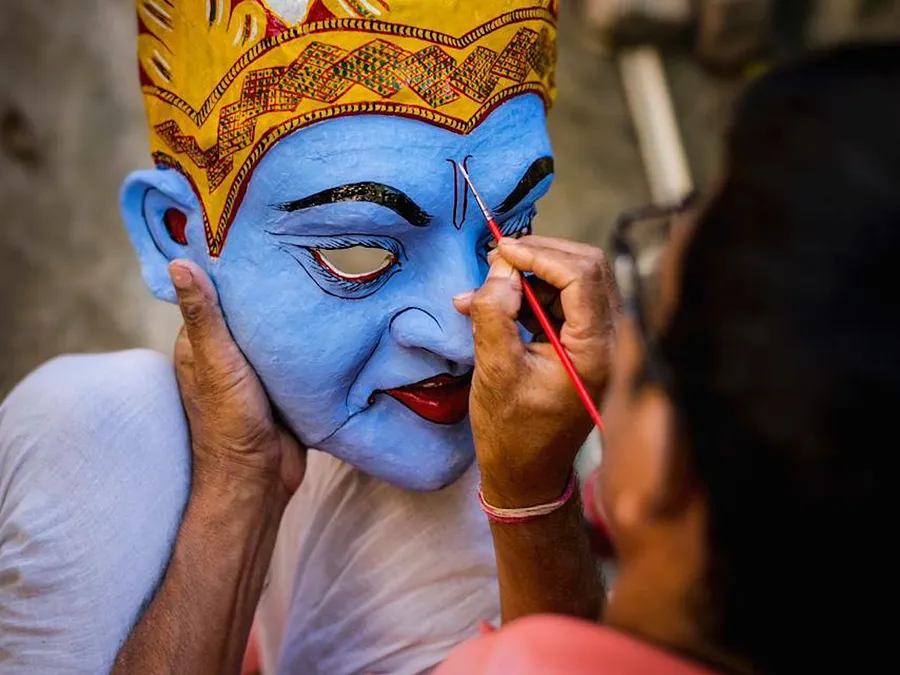
The Brahmaputra does not merely sustain agriculture; it nurtures artistry. Water hyacinth weaving, pottery traditions shaped without the wheel, bamboo craft, and mask-making in monasteries such as Sāmaguri emerge directly from this ecology. Culture here grows from water.
Assām’s sacred landscape is therefore not singular. It is layered.
Śākta intensity; Śaiva majesty; Vaiṣṇava discipline; Ahom sovereignty; Riverbased ecology; Monastic continuity; Indigenous resilience.
It is a land where devotion is not abstract — it is lived, embodied, seasonal, and communal.
In this edition of Kṣetrabhūmi, we journey into Assam not as spectators, but as participants in a living civilizational space — to encounter its temples, monasteries, river crossings, crafts, stories, and silences.
What follows is a carefully curated immersion into this sacred geography.
Highlights
Nilācal - Devī Kāmākhyā Śaktipīṭha; Mahāvidyā & Bhuvaneśvarī
Ahom Spiritual - Śivasāgar- Śiva Ḍol, Devī Ḍol and Viṣṇu Ḍol
Ahom Heritage - Śivasāgar - Cārāideo Maidām; Raṅg Ghar; TalātalGhar
Kāziranga Orchid Park
Mājulī - Auniātti Satra, Dakhinapāt & Sāmaguṛi Satra
Nātun (New) Kamalābārī Satra, Uttara-Kamalābārī-Satra
Gāyan-Bāyan Culturals
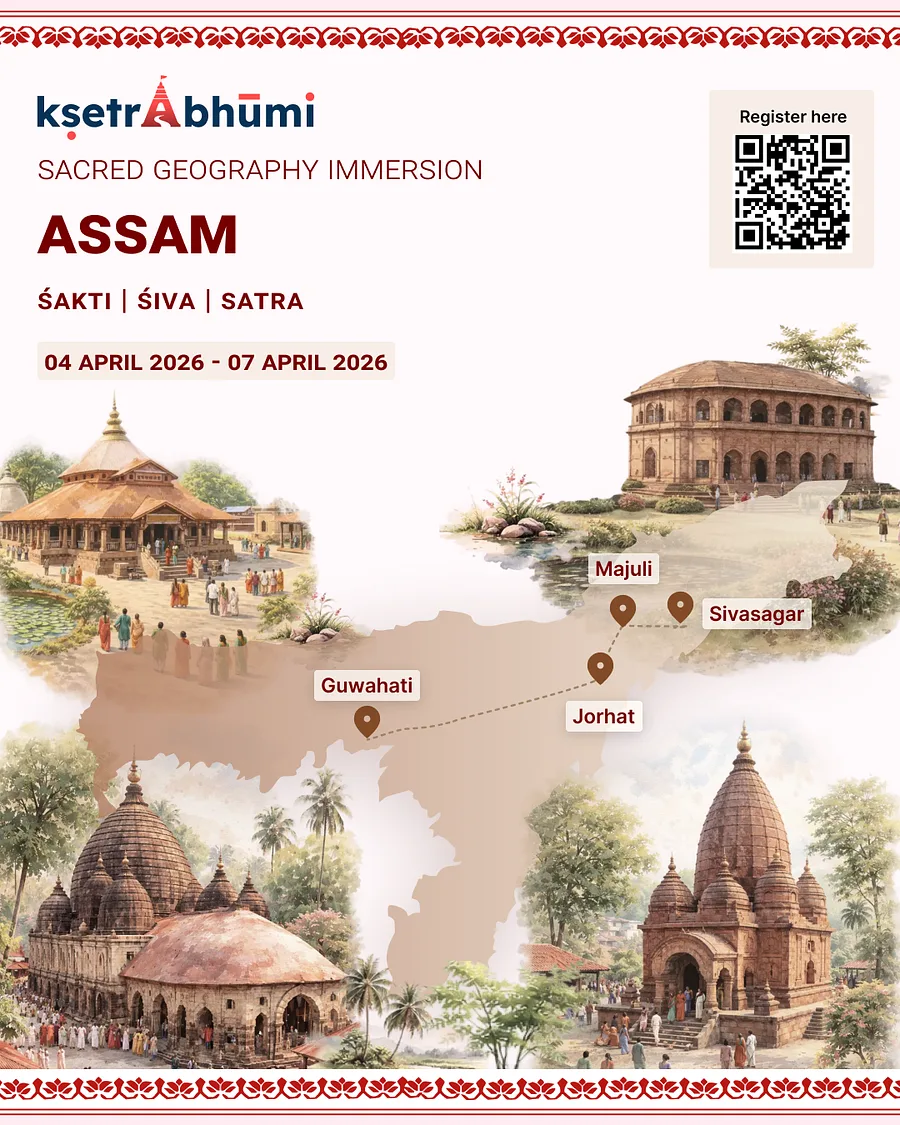
Interested in this chapter?
We do not plan to repeat previously completed chapters in the near future. However, if you have a group of 15-20 interested individuals who'd love to explore this chapter, do write to us. We'd be happy to create a special on-demand Kṣetrabhūmi experience just for your group.
Temples Covered
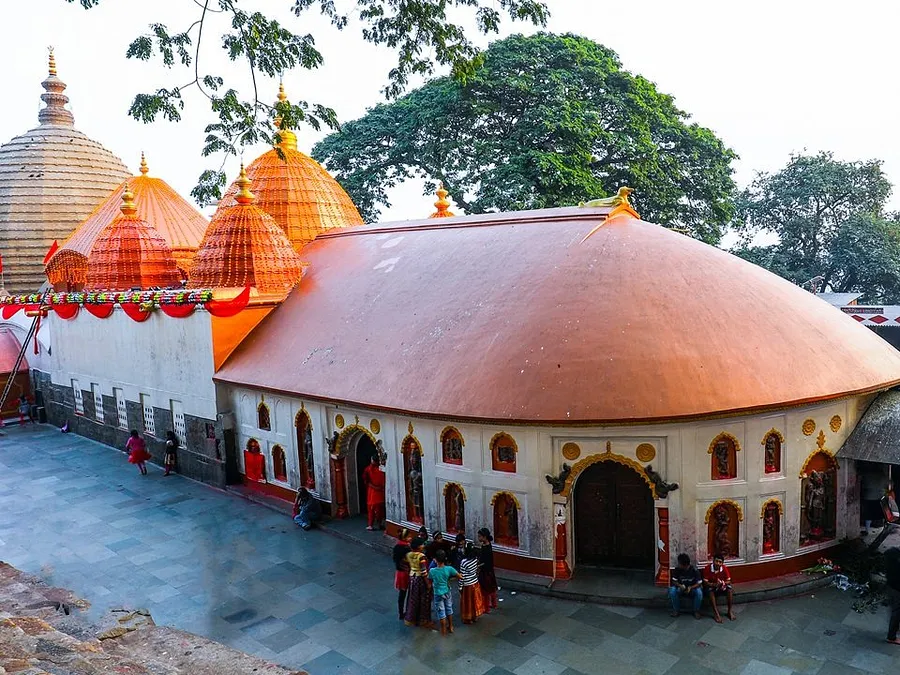
Devī Kāmākhyā Temple
Devī Kāmākhyā temple, located on Nilācal Hill in Guvahāṭi, Assām, is one of the 51 Śakti Pīṭhas of Devī Satī, marking the spot where her yoni fell. Instead of an idol, devotees worship a sacred rock symbolizing her yoni, making it a key center of tāntrika worship. The kṣetra remains in jāgṛt avasthā (awakened state), drawing thousands during festivals like Ambubācī Melā, which celebrates fertility and the sacred power of the site.
.png)
Bhuvaneśvarī Temple
Dedicated to Devī Bhuvaneśvarī, the temple sits on the Nilācal Hill in Guwahāṭi, Assām, just above Kāmākhyā temple. Devī Bhuvaneśvarī is the fourth of the Daśa Mahāvidyās. She embodies space, creation and royal authority. Devī is the ruler of the universe. The temple offers mystical silence and panoramic view of Brahmāputra river that allows one the sacred space to perform dhyāna. The temple, on the banks of River Brahmāputra, blends traditional Ahomiya style with simple, elegant lines, featuring a modest maṇḍapa and stone carvings depicting cosmic symbols. Over centuries, it has remained a quiet center for tāntrika and meditative practices, drawing seekers rather than large crowds.
.png)
Mahāvidyā Circuit
The Mahāvidyā Circuit in Assām is a pilgrimage network of ten temples on Nilācal (Nilachal) Hill, each dedicated to one of the ten Mahāvidyā Devīs: Kālī, Tārā, Tripura Sundarī (Shodashī), Bhuvaneśvarī, Chinnamastā, Bhairavī, Dhūmāvatī, Bagalāmukhī, Mātaṅgī, and Kamalā, surrounding the central Kāmākhyā Śakti Pīṭha. The main Kāmākhyā sanctum itself houses three of these forms (Tripurasundarī, Mātaṅgī, Kamalā), while the other seven have separate temples nearby, making the entire hill, a jāgr̥t bhūmi for pūjā and dhyāna. The circuit offers a unique opportunity to the pilgrims for offering their prayers to all Mahāvidyā devīs at one place. The circuit also deepens the belief that the Nilācal Hill isn't just another hill but an evidence of prakṛti being an indelible part of the Sanātana Dharma.
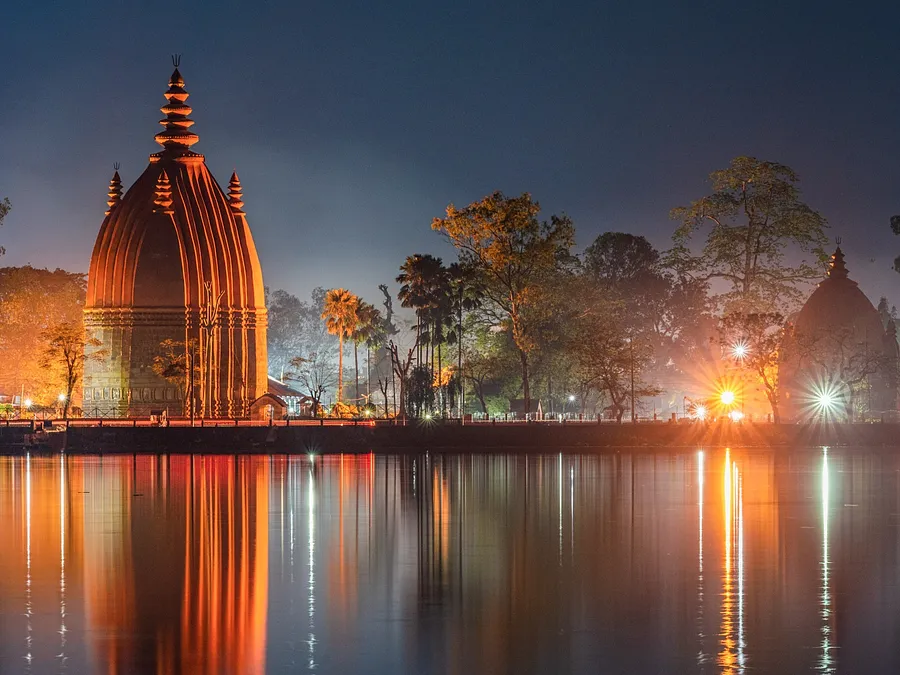
The Ḍols
The Ḍols, the Maidām, and the Satrās are the sites that invoke the pauruṣa (efforts) of the vīras of the kṣetra to preserve and celebrate dharma. The Ḍols were built primarily to integrate the Ahomiya culture with Sanātana Dharma. Ḍols were the key sites of religious gathering and festivals. Śiva Ḍol in Sivasāgar, Assām, is the tallest Śiva temple in northeastern Bhārata, standing about 104 feet high, an embodiment of the Śiva tattva that has, for time immemorial, been worshipped in Assām. Devī Ḍol, also called Devī Ghar, honors Goddess Durgā and sits beside Śivaḍol on the same tank. Viṣṇuḍol, dedicated to Bhagavān Viṣṇu, showcases an octagonal plan with a tiered roof and detailed stone latticework. Its sanctum houses a four‑armed Viṣṇu mūrti, and the outer walls display scenes from the Bhāgavata Purāṇa.
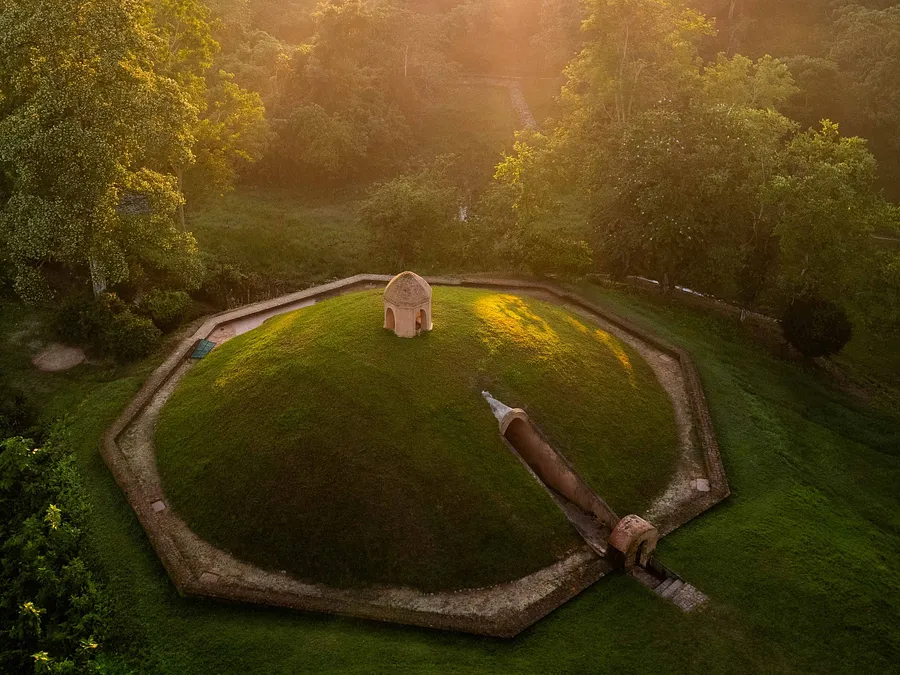
Cārāideo Maidām
Cārāideo Maidām Cārāideo Maidām in Sivasāgar, Assām, is a 95‑hectare site with about 90 royal burial mounds of the Ahom dynasty. Established in 1253 by Sukaphā, they’re octagonal or circular, symbolizing the Ahom cosmic universe. Kings, queens, and nobles rest here, and rituals like Tarpaṇa and Me‑Dām‑Me‑Phi continue today. It is a key window into Assām’s history, culture, and architecture. The mounds are built with earth and brick, often surrounded by a moat and walls, reflecting Tai-Ahom traditions blended with local practices. Over time, some maidāms have been excavated, revealing artifacts like pottery, ornaments, and weapons, offering insights into Ahom burial customs and social hierarchy
Talātal Ghar
Talātal Ghar in Sivasāgar is a 7-storey Ahom palace with 3 underground levels, built as a fort and royal residence. Made of bricks and indigenous cement, it features secret tunnels (now sealed) for emergency escape. The structure blends military strategy with tāntrika symbolism, representing Assām as an eight-sided spiritual land. It is a unique mix of defense, devotion, and royal culture. Historically, Talātal Ghar was the heart of Ahom power, serving as a palace, armory, and fortress. Its underground levels housed soldiers, storage, and escape routes, while upper floors were for royals. The palace witnessed key events of Ahom rule, including battles and courtly life.
Raṅg Ghar
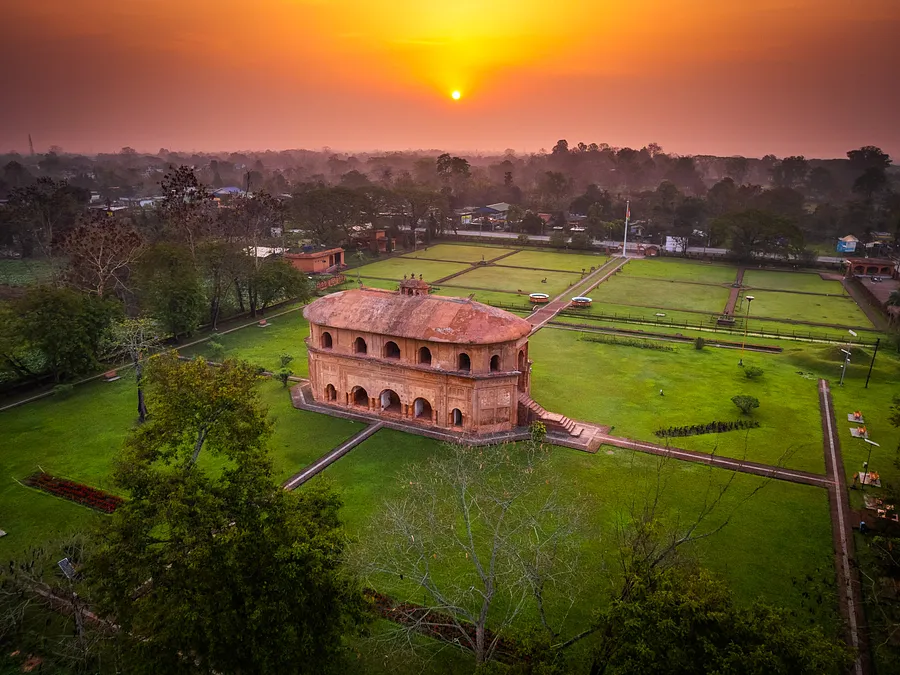
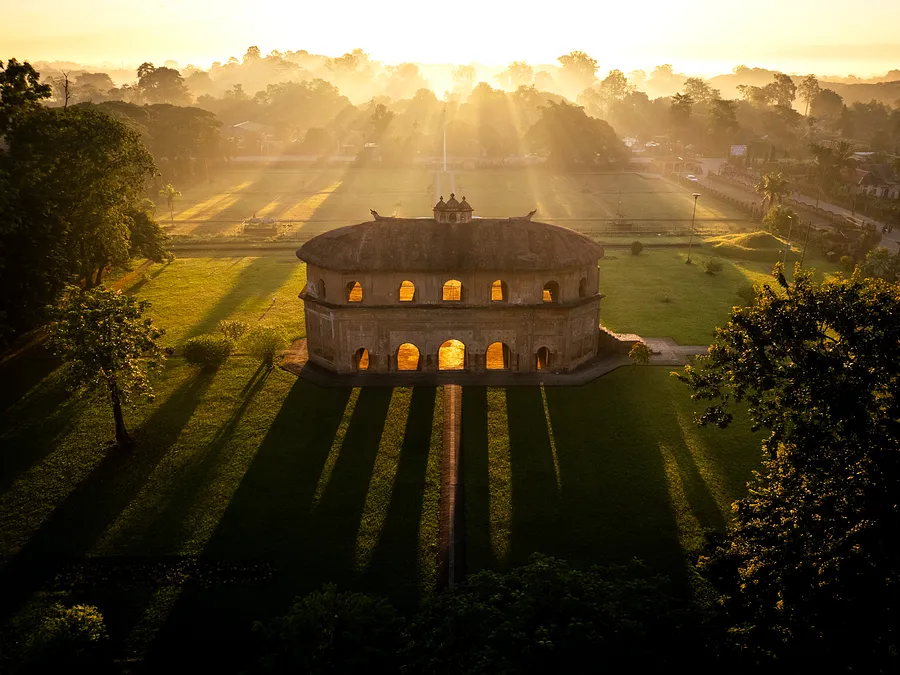
Raṅg Ghar in Sivasāgar, called the “Colosseum of the East,” is a royal pavilion where Ahom kings watched games and Bihu festivities. Its elliptical shape, boat‑shaped roof, and crocodile‑stone entrances blend local and Southeast Asian styles. It symbolizes 600 years of Ahom rule and remains central to modern Raṅgālī Bihu celebrations. Historically, Raṅg Ghar served as the stage for royal entertainments, including buffalo fights, mock battles, and traditional sports, reflecting Ahom courtly culture. The two‑storey brick structure features arched entrances on the ground floor and a viewing gallery above, with intricate carvings of floral and geometric patterns showcasing Ahom craftsmanship. Today, it is a protected monument under ASI, drawing tourists and historians, and still hosts cultural events during Bihu, keeping Assām’s heritage alive.
Sāmaguṛi Satra
Often described as the shelter of the devout vaiṣṇavas, Satras are the living heritage sites echoing of bhakti and culture. Nṛtya and gāna hold a very special place in Satras and the Ekaśaraṇa Dharma, a vaiṣṇava tradition associated with it. Sāmaguṛi Satra in Mājulī is renowned for its exquisite mask-making craft, practiced by bhaktas for centuries. These traditional masks, used in bhāonās and cultural performances, have gained worldwide acclaim for their artistry and detail. The Satra also preserves other crafts like pottery and weaving, and its monks are involved in community development and education. Sāmaguṛi’s masks are showcased in exhibitions globally, highlighting Assam’s cultural richness.