.png)
The Madhya Pradesh High Court's recent judgment on the Bhojaśāla (a.k.a Kamal Maula Mosque) complex has brought the illustrious Paramāra ruler of Malwa, Rājā Bhoja, back into the public imagination. The immediate catalyst, however, was not the court's conclusions but the nearly 2,000-page Archaeological Survey of India (ASI) report submitted. Drawing upon archaeology, epigraphy, architectural analysis and historical literature, the Court concluded that the present structure incorporates an earlier eleventh-century monument dating to the Paramāra period, built during the reign of Rājā Bhoja. The Court accepted the report as a scientifically conducted investigation and treated it as an important piece of evidence in determining the historical character of the site.
For readers familiar with Meenakshi Jain's Raja Bhoja Paramara: Remembering the Scholar King, however, there is remarkably little that comes as a surprise. For the benefit of us all, Jain, arguably today’s foremost historian, painstakingly assembled the inscriptions, colonial archaeological reports, literary references and historical accounts surrounding King Bhoja, with a special focus on the Bhojaśāla, the center of learning he had constructed during his reign. Jain assertively demonstrates that the evidence establishes the Bhojaśāla as a celebrated center of Saṃskṛta learning and a shrine to Goddess Sarasvatī that has existed in the historical record. The High Court judgment therefore does not merely revive interest in Rājā Bhoja; it highlights the continuing relevance of careful historical scholarship grounded in primary sources.
Rājā Bhoja is one of medieval India's most celebrated rulers, yet his memory is scant, and survives largely through folklore. Popular idioms compare other prosperous rulers to "Rājā Bhoj," but historians have long recognised him as one of India's greatest philosopher-kings. Despite this, there exist few accessible and authoritative works that introduce modern readers to the extraordinary range of his achievements. Given the notorious inadequacy of our education system, Jain's crisp volume attempts to fill the lacuna. It presents Bhoja not simply as a conqueror and temple builder but also as a scholar, patron of learning, architect and state-builder whose reign left an enduring imprint on the intellectual and cultural history of India.

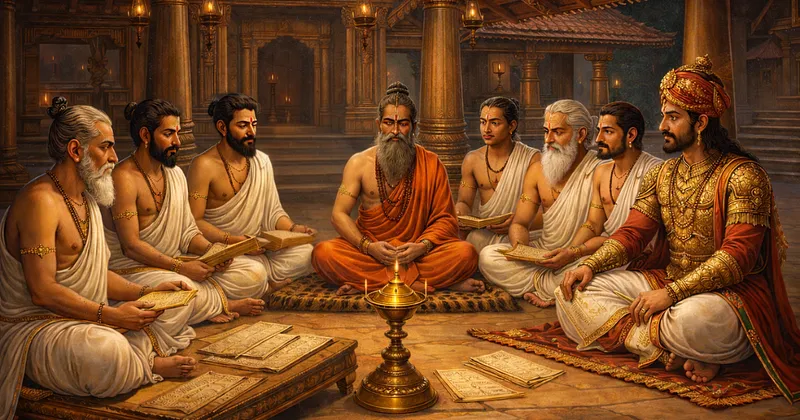
Dhar, Bhoja's capital, is the natural centerpiece of this narrative. While the early Paramāras ruled from Ujjain, Bhoja transformed Dhar into one of the foremost intellectual centers of the subcontinent. Jain notes that Rājā Bhoja is traditionally credited with constructing 104 temples, but none assumed greater significance than Bhojaśālā—the temple of Sarasvatī that simultaneously functioned as an academy of Saṃskṛta learning. It embodied the fusion of religion, education and aesthetics that characterized much of pre-modern Indian civilization.
This characterization of Bhojaśālā lies at the heart of both Jain's account and the recent litigation. Before the High Court were competing petitions by Hindu, Muslim and Jain parties concerning the religious character of the protected monument and the legality of the Archaeological Survey of India's 2003 order regulating worship. Hindu petitioners sought unrestricted worship and recognition of Bhojaśāla as a Sarasvatī temple; Muslim petitioners defended the existing arrangements and the site's status as the Kamal Maula Mosque; Jain intervenors argued that the complex also preserved significant Jain heritage. The Court, in its 242-page judgment, deliberately clarified that it was not adjudicating title or ownership. Instead, the court framed the question as one concerning the historical and religious character of a centrally protected monument and the statutory protection and management by the ASI stemming from such a characterization, under the Ancient Monuments Preservation Act, 1904.
Jain’s book also revisits the ASI’s 1903–04 report, which observed unmistakable signs of an earlier Hindu structure beneath the later mosque. The report recorded that temple pillars, carved architectural members and black marble slabs bearing Saṃskṛta inscriptions had been reused in the construction of the mosque. Particularly fascinating is the story of how archaeologists discovered inscriptions hidden inside the mihrab, where Saṃskṛta inscriptions were repurposed as the flooring when the structure was converted into a mosque. The effort revealed extensive Saṃskṛta and Prakrit inscriptions that had remained concealed for centuries.
Although Rājā Bhoja was published well before the Madhya Pradesh High Court delivered its landmark judgment in May 2026, Jain also incorporates and analyzes the findings of the Archaeological Survey of India's more recent, 2024 survey of the Bhojaśālā, making the volume remarkably current. She recounts how, in March 2024, the High Court directed the ASI to undertake a comprehensive scientific survey of the Bhojaśāla–Kamal Maula Mosque complex. A fifteen-member team led by Additional Director General Dr. Alok Tripathi carried out the investigation over ninety-eight days, employing Ground Penetrating Radar (GPR), detailed architectural documentation, epigraphic study and other non-destructive archaeological techniques. Even after the Supreme Court declined to stay the survey, directing only that no excavation alter the character of the protected monument or that any action be taken on the basis of the report without its permission, the ASI continued its work under judicial supervision. Every stage of the survey was photographed and videographed, lending an additional layer of transparency to what would become one of the most scrutinized archaeological investigations in recent years.
Rather than treating the matter as a conventional property dispute, the Court adopted the evidentiary framework articulated by the Supreme Court in the Ayodhya judgment. Archaeological reports, inscriptions, architecture, patterns of worship and historical documents were all evaluated together on the civil standard of the preponderance of probabilities — in the words of the court, the court-directed survey report (which employed many modern scientific techniques) was treated as reliable and conclusive. It is precisely this type of cumulative approach that both the ASI report relied on by the MP High Court and Jain's book. The arguments do not rest on flimsy evidence such as a single inscription or one “dramatic” discovery. Instead, the history and status of the Bhojaśālā itself are reconstructed, layer by layer, through the accumulation of evidence — showing remarkable parallels with the Ayodhya judgement of the Supreme Court.
The book starts with a chapter on the Agnikula yajña, a fascinating account of the lore of the origin of the Paramāra dynasty. Ordinarily, the Agnikula yajña, is a subject often dismissed either as legend or appropriated as mythology. Jain, however, recognizes its significance in historical memory and situates the Agnikula tradition against the backdrop of the 7th and 8th centuries, when successive Arab invasions began pressing into northwestern India. The famous Navsari inscription of 739 CE—among the earliest Saṃskṛta inscriptions to explicitly record a Muslim invasion—describes the armies of the Tajikas overwhelming several ruling houses before being checked by the Chalukya ruler Avanijanashraya Pulakesin near Navsari. Jain interprets the inscription alongside the contemporary turbulent political landscape. She suggests that the celebrated yajña at Mount Abu, performed under the aegis of Ṛṣi Vasiṣṭha, may preserve the memory of a solemn political and religious compact, where ruling chiefs assembled before the sacred fire to renew their commitment to protecting dharma and resisting foreign incursions. From this symbolic fire emerged the four great Rajput lineages—the Pratiharas, Paramāras, Chaulukyas and Chahamanas— forging a civilizational narrative of military and cultural renewal.
Jain marshals inscriptions, literary traditions and regional histories to show that several ruling houses associated with Mount Abu participated in the defence of western India during this period. The Gurjaras, whom Arab chroniclers themselves regarded as among the fiercest opponents of Islamic expansion, appear in inscriptions as protectors of the Arbuda region. Likewise, Jain explores the intriguing origins of the Paramāras, suggesting that they may have begun as Vasiṣṭha brāhmaṇas of the Mount Abu region who adopted kṣātradharma, which led to their eventual recognition as Kṣatriyas. She cites the tenth-century scholar Halāyudha's description of his Paramāra patron as a Brahmakṣatra—one who combined the learning of a Brāhmaṇa with the valour of a Kṣatriya.
The discoveries at this site did not stop there. Among the recovered inscriptions were two long Prakrit poems known as the Avani Kurmmasatakam, devoted to Śrī Mahāviṣṇu’s Kūrma avatāra. One of these compositions, attributed to Rājā Bhoja himself, explicitly praises him as the ruler who bears the earth more gloriously than the divine tortoise. Other fragments appear to have belonged to much larger poetic compositions celebrating Bhoja's achievements. Such finds reinforce Jain's broader portrait of Bhoja as a ruler whose political authority and literary accomplishments were inseparable.
Equally significant are the famous Sarpabandha (serpentine) grammatical inscriptions carved on limestone pillars within Bhojaśālā. Their extraordinary design—letters arranged within the intertwined bodies of serpents—makes them visually intriguing, but their real importance lies in what they reveal about the site's purpose. The inscriptions contain the Saṃskṛta alphabet, combined with grammatical declensions and verbal terminations, effectively functioning as educational charts for students. Jain reproduces K.K. Lele's early twentieth-century analysis of these inscriptions in considerable detail. Their contents strongly support the long-standing tradition that Bhojaśālā was not merely a temple but also a center of grammatical instruction associated with Sarasvatī, the Goddess of learning. The Court accepted the ASI's conclusion that the existing monument incorporates parts of earlier temples and that archaeological evidence points to a pre-existing center associated with learning during the Paramāra period.

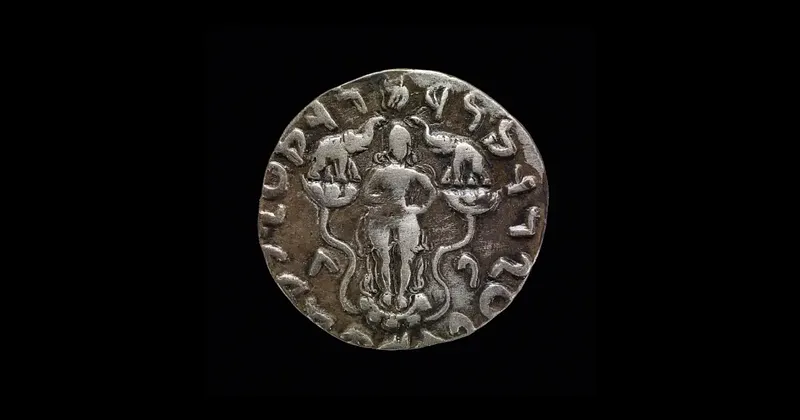
No single object associated with Bhojaśālā illuminates its original character more vividly than the celebrated image of Goddess Sarasvatī, now housed in the British Museum. Jain traces its remarkable journey—from its discovery by Major General William Kincaid in Dhar in 1875 to its identification by eminent scholars such as O.C. Gangoly and K.N. Dikshit as the lost Sarasvatī of Bhojaśāla. Described by the art historian R.P. Chanda as "a typical specimen of Hindu art in the medieval period when it had reached a high standard of perfection," the sculpture is widely believed to have once presided over Bhoja's famed temple of learning. Yet the British Museum itself conveniently possesses no clear record of the sculpture’s provenance, or how the image entered its collection, beyond noting that it was presented by a British officer. Given the mounting archaeological and historical evidence affirming the site's identity, Jain's account arguably lends fresh credence to making a case for the image's restitution and reinstatement. If the Sarasvatī of Bhojaśālā can be identified with far greater historical confidence than before, there is a compelling argument that it ought, one day, to return to the shrine for which it was originally consecrated. Affirming this sentiment, the High Court in its judgement also devoted considerable attention to the Sarasvatī image and the competing claims surrounding its identity, and examined the iconographic, textual and historical evidence available in considerable depth.
Another strength of Jain's work is her ability to situate Bhojaśāla within larger historical patterns: the reuse of temple materials in the construction of a mosque in its place was neither unique to Dhar nor historically unusual. She points to a comparison with the Quwwat-ul-Islam mosque in Delhi, where the ASI itself acknowledged the incorporation of material from twenty-seven earlier Hindu and Jain temples: reminding readers that such bigoted architectural reuse formed part of the broader history of Islamic rule in India.
Jain also succeeds in impressing Rājā Bhoja upon readers as not just an illustrious ruler, but the builder of a considerably grand empire, one who consolidated Paramāra power across central India, a prolific patron of architecture credited with scores of temples, and one of medieval India's greatest scholar-kings. His Sarasvatīkaṇṭhābharaṇa, among the finest works on Saṃskṛta grammar, earned admiration from later luminaries such as Bilhaṇa and Kalhaṇa. Under Bhoja, Dhar was not just a political capital but an intellectual metropolis whose influence extended far beyond Malwa. In her book, Jain reconstructs the intellectual geography of medieval India, weaving networks of learning and patronage that connected regions across the subcontinent. Jain allows the inscriptions and literary and material evidence to do the talking, and never gives in to indulgent imaginative reconstruction. This sort of methodological discipline is particularly valuable in an age when historical writing is increasingly polarized between ideological certainty and speculative storytelling. Jain's prose is clear, economical and refreshingly free from rhetorical excess.
Though near-watertight, the MP High Court judgment may yet be tested before higher judicial forums, and legal conclusions remain open to appellate scrutiny. Meenakshi Jain's Raja Bhoja succeeds precisely because it remains committed to a faithful recounting of the past. The recent judgment has undoubtedly renewed public interest in Bhojaśāla, but the real value of Jain's work lies elsewhere. It demonstrates that history possesses an enduring authority that transcends contemporary controversy. In an era where historical debates often generate more heat than light, Rājā Bhoja stands as an exemplary work of evidence-based scholarship.
Purchase the book here: https://www.amazon.in/RAJA-BHOJA-PARMARA-Remembering-Scholar/dp/8173057311
References:
MP HC Judgment: https://mphc.gov.in/upload/indore/MPHCIND/2026/WA/559/WA_559_2026_FinalOrder_15-05-2026.pdf