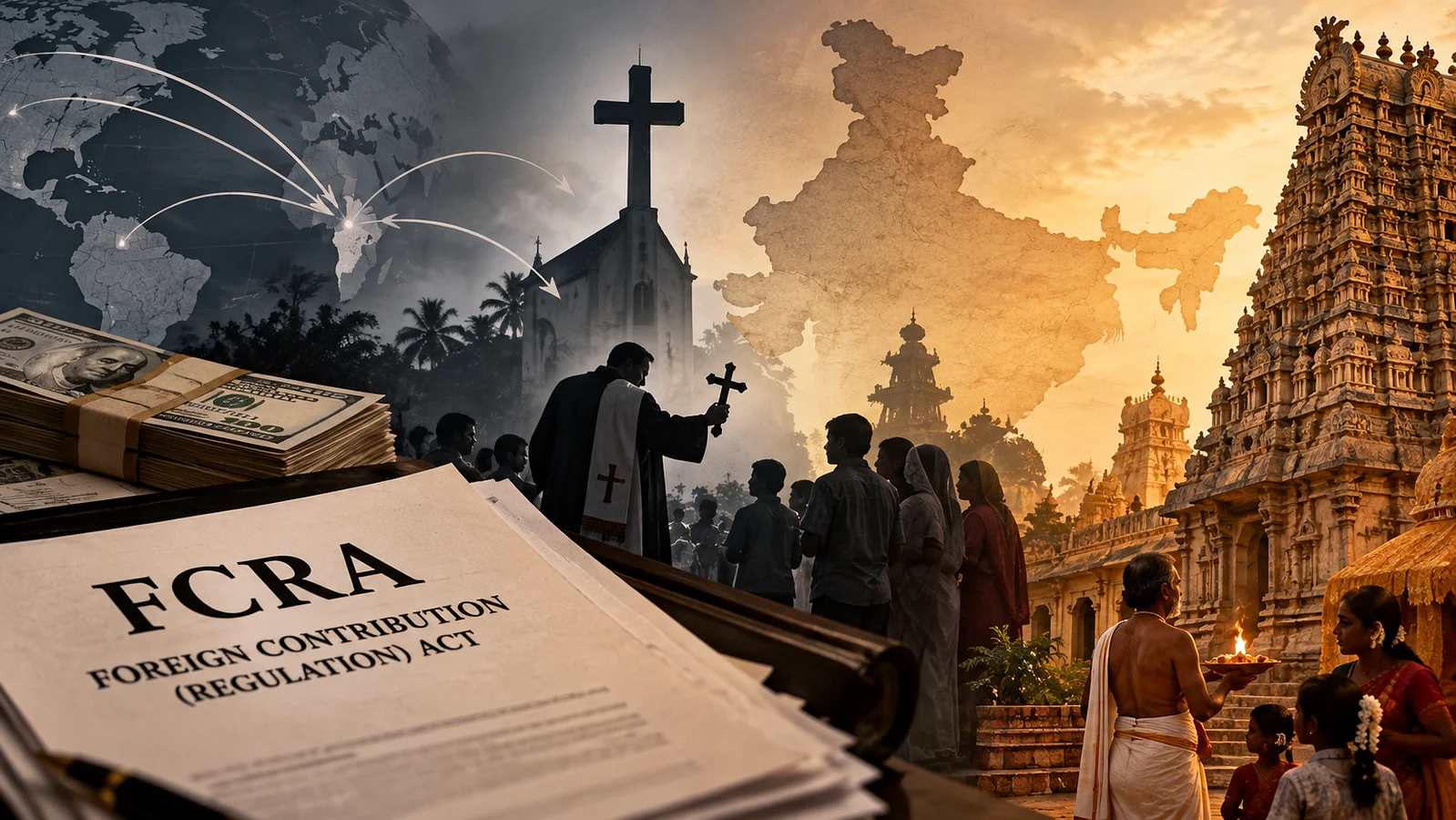
The Foreign Contribution (Regulation) Act (FCRA) is a regulatory statute which concerns the receipt and use of foreign funds in India by individuals and organizations. Administered by the Ministry of Home Affairs, it establishes eligibility requirements, accounting and reporting obligations, and restrictions intended to safeguard India’s sovereignty, security and public order. Its purpose is to regulate foreign contributions, not to prohibit foreign donations or prevent lawful civil society organisations from operating. The Foreign Contribution (Regulation) Amendment Rules, 2026 introduce a more specific framework for foreign-funded organisations by linking FCRA registration to a prescribed list of approved purposes and the particular States or Union Territories in which activities may be undertaken. The Rules explicitly exclude proselytisation from permitted religious activities, while continuing to allow eligible religious education, worship, charitable work and the preservation of religious traditions. The stated objective is to improve transparency, strengthen oversight of foreign funds and prevent their diversion towards activities considered contrary to India’s national interests and sovereignty.
The Madurai bench of the Madras High Court recently adjudicated on a matter concerning the Foreign Contribution (Regulation) Act (FCRA) with important pronouncements. The matter concerned an organisation called the Kanzeon Public Charitable Trust, which moved the Madras HC against the Centre’s refusal to grant an FCRA registration certificate. The HC noted that the certificate is a privilege, not a right, and the reasons enunciated are of note.
The court stated that the appellant Kanzeon Public Charitable Trust, whose registration under the act has been rejected, runs a “Zen Meditation Centre” at Kodaikanal. While “zen” appeared to be an innocuous term, the court learned that the founder and the “moving spirit” behind the organisation is an ordained Christian priest, Rev. Fr. Ama Samy. The court then characterised Christianity as a messianic religion whose mission is to bring people into the fold of Jesus Christ, and contrasted the exclusivism of Abrahamic religions with the inclusive nature of Hindūism. The court then examined the Centre’s website and noted a prominent motif depicting a Buddha figure with a cross hanging above it, which prompted further scrutiny of the organisation’s (undeclared) religious identity. The court examined the Centre’s application under Rule 9 of the Foreign Contribution (Regulation) Rules, 2011, and Form FC-3A, which require applicants to disclose the nature of their organisation and, where applicable, its religious classification. Since the trust professed Zen Buddhist philosophy, the court held that it was a religious organisation and that its application had failed to correctly disclose its status. It therefore upheld the rejection of the application. The judgment also noted that Section 12 of the FCRA does not categorically bar religious organisations from obtaining registration; it bars unregistered organisations from accepting foreign contributions.
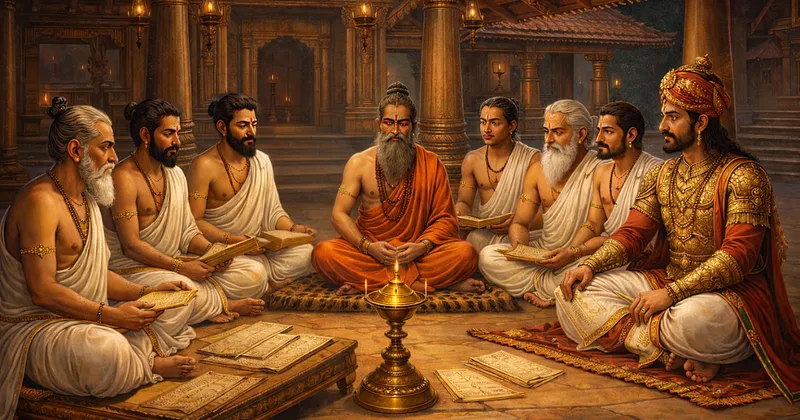
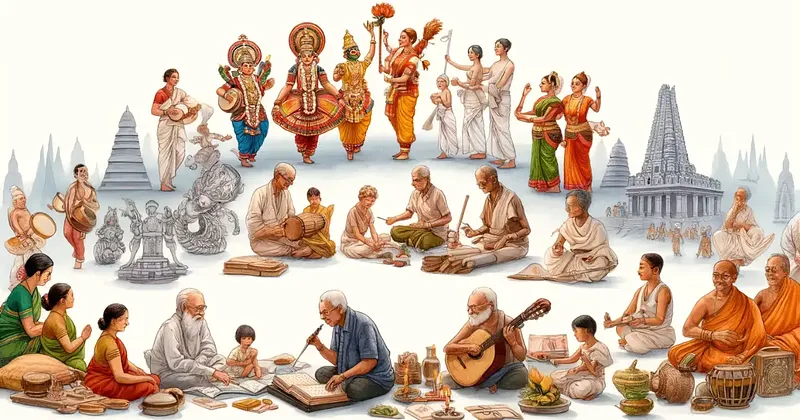
Drawing a distinction between religious and educational or cultural activity, the court remarked, “An organisation primarily engaged in the systematic teaching of Vedanta, the Bhagavad Gita, the Upanishads, Yoga and allied Indian Knowledge Systems through structured classes, residential courses, publications, research and preservation of manuscripts cannot to be classified as religious institutions. Indian Knowledge Systems would fall under the category of education or culture.” Further, highlighting the potentially dangerous prospect of national polity being influenced and society being destabilised by foreign funding, the court stated that: “This status quo would be upset, if one religious group gains ascendency. In Kerala, one recently witnessed friction between the Christians and the Muslims. If foreign funds are freely allowed inside to facilitate conversion activities, the sovereignty of the nation would be imperilled. We specifically highlight the issue of conversion because radical Christian Institutions are notorious for indulging in such activities.”
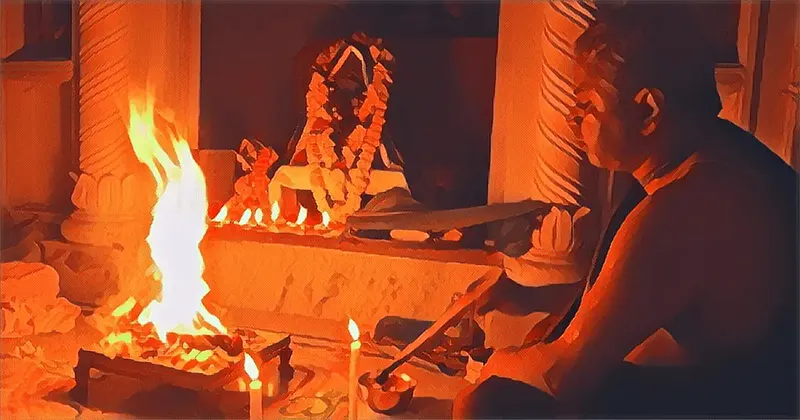
In upholding the rejection of their registration, the Madras HC cited Supreme Court’s judgement State rep.by CBI v. M.Kurian, Chief Functionary of the Cross (2001) 4 SCC 290, in which it was observed that “the entire purpose behind the Act was that the recipients of foreign contribution may not act in a manner inconsistent with the values of the sovereign republic which our founding fathers have given to us. The statutory scheme indicates the legislative intent and the purpose behind the Act and therefore, the provisions of the Act are to be construed accordingly. When the statute envisages a frank disclosure of all the details, any misrepresentation would entail rejection of the application itself. Though the applicant is engaged in religious programs, they wrongly projected themselves as non-religious.” Further, the Justices G. R. Swaminathan and M. D. Sumathi wrote that, “Persons and organisations engaged in upholding the civilisational heritage of India have to be classified as educational or cultural. If the programs of the applicant pertain to worship and rituals, they will fall under the religious category. Religious organisations, whose activities would not affect the nation’s secular fabric and social amity, are entitled to obtain FCRA registration. But organisations engaged in converting people of one religious faith to another shall be denied FCRA registration.”
The judgement underscores the tensions between the state and religious conversion, with the religious organisations founded in abrahamic principles professing the right to proselytise, though the right to convert is not a fundamental religious right under the Indian Constitution. In The Secular State and Religious Conflict: Liberal Neutrality and the Indian Case of Pluralism, S. N. Balagangadhara and Jakob De Roover quote Manikam Ramaswami who writes that: “In a pluralistic society if people have to live in harmony, one group that believes its assumed form of God is superior and tries to convert the thinking of others will not certainly help. One group trying to impose its views on others based on its unconfirmable assumptions will certainly cause social tension and should not be permitted in a secular society. The pseudo seculars who call it religious freedom to convert, if they apply their mind will understand banning conversion, forced or otherwise, is not a Hindūtva agenda; on the other hand not banning conversion is the agenda of the aggressive religions.”
Balagangadhara and De Roover posit that “Hindū traditions and the Semitic religions are phenomena of different kinds. Nevertheless, without providing arguments to the contrary, the secular state assumes that the Semitic religions and the Hindū traditions are instances of the same kind.” Therein arises the conflict, where freedom of religious conversion then becomes a “right”, unilaterally reserved for the proselytizing faith, whose nature and intrinsic drive is to declare themselves as the one true religion or God and spread the word to all of mankind. Thus, the proselytizing drive and the exclusive truth-claims of Islam and Christianity become extremely problematic in a society where “non-interference has the force of self-evidence”.
Balagangadhara and De Roover in their critical deconstruction of this paradox, state that, even if the secular state does not endorse any particular religion, its legal framework presupposes that religion is fundamentally concerned with questions of truth. This exposes a broader limitation of liberal secularism: its claim to neutrality is undermined by the theological assumptions embedded in its approach to religious conversion. They write, “The claim that religion is a matter of truth is not an epistemological thesis about the beliefs present in different religions. Instead, it is a meta-claim advanced by each of the Semitic religions about itself…The liberal state in the West has accepted a Semitic meta-claim as its factual assumption. It is able to play the agnostic with respect to the truth-value of religious claims because it shares the Semitic beliefs about religions.” But such is not the case with the Indian state, where pagan traditions remain a living force, and cannot remain ‘neutral’ —that is, it cannot “play the agnostic and yet legislate about religious freedom” and thus confronts choices which “western democracies never had to face.”
Indian secularism inherited a colonial, Protestant understanding of Hindū traditions, which portrayed them as being superstitious, cruel, corrupt and in need of reform. Nehru and his successors reproduced these colonial interpretations, making the post-independence secular state fundamentally hostile to Hindū traditions rather than religiously neutral. This state-sponsored hostility shaped the Hindū response, and, instead of encouraging critical reflection on how Hindū traditions could address the challenges of modern society, it pushed their representatives towards a defensive and militant posture. At the end, as stated by Rajeev Bhargava in Secularism and its Critics (1998), “secularism” failed to realise the objectives for which it was devised. Balagangadhara and De Roover conclude that, “in spite of its pretension to neutrality, the liberal model of toleration and state neutrality is itself not a secular, impartial model. In reality, it is a Semitic theological entity which has been dressed up in ‘secular’ philosophical garb.” The Indian state, after all, has no real obligation of neutrality towards the various cultural and religious communities in its society. In fact, the opposite is true. India has a definitive civilisational inheritance and it owes a responsibility to preserve its ancient indigenous traditions, philosophical systems, sacred practices, and importantly, its inherent pluralistic religious fabric — a fact stated by the Madras HC, in not so many words.
The secular state often seeks to classify, regulate, and reform Hindū traditions through categories that do not adequately capture their distinctive nature. While seeking to protect Hindū traditions from the impositions of a secular state, resist their reduction to an array of cultural practices, customs, art forms — that is, to regard it as a “way of life” — stripping them of their sacred and religious dimensions. Doing so would be akin to preserving the external forms of a culture while disregarding the sacred, metaphysical core. The argument that Hinduism cannot be reduced to the category of religion — as understood through Abrahamic frameworks — does not mean that it is not religious; it means that its religious nature must be understood on its own terms.
One way furthering this distinction is through separating the categories of sacred knowledge systems and material knowledge systems. The former encompasses metaphysical knowledge systems, concerned with the nature of existence, consciousness, ultimate reality, liberation, ritual, and the self. The latter concerns the material and empirical dimensions of human life, including economic organisation, physical well-being, and the management of worldly affairs. These are not necessarily mutually exclusive: most Hindū traditions engage with both; however, the categorisation allows for the recognition of the sacred foundations of a tradition without reducing every aspect of it to theology, or treating its philosophical/spiritual dimensions as mere culture.
As Balagangadhara and De Roover argue, examining the traditional pluralism of Indian culture as a possible alternative to liberal toleration does not amount to advocating faith-based politics. Nor does it require studying Hindū traditions as a fixed religious doctrine, since such an approach fails to capture their distinctive structure. The challenge, therefore, is to develop a framework that can recognise Hindū traditions as living systems of sacred knowledge without force-fitting them into categories derived from other civilisational contexts, and importantly, without dissolving their spiritual substance into the “secular” category of culture.
Ultimately, protecting Hindū traditions requires more than defending their cultural legitimacy; it requires safeguarding their capacity to transmit sacred knowledge on their own terms. The objective should neither be to turn the state into an instrument of religious authority nor to allow the secular state to define the limits of what Hindū traditions can mean. It should be to foster the intellectual and institutional spaces in which their sacred, philosophical, ritual, and material dimensions can coexist without one being subordinated to another. In effect, the traditional pluralism emerging from Indian culture is a potential alternative to the liberal model of toleration — which is by no means a universal solution, given its limited understanding of the distinctive structures of plural societies beyond the Christian West. However, the debate surrounding religious conversion in the Indian context demonstrates that a liberal state cannot remain entirely neutral in its underlying justifications and objectives, especially given that the abrahamic worldview operates on a fundamentally different premise. Although neutrality may be possible in other areas, its failure on an issue as significant as religious conversion calls for a broader reassessment of the liberal secular state's approach to Indian society.
References:
S.N., Balagangadhara & De Roover, Jakob. (2007). The Secular State and Religious Conflict: Liberal Neutrality and the Indian Case of Pluralism. Journal of Political Philosophy. 15. 67-92. 10.1111/j.1467-9760.2007.00268.x.
Kanzeon Public Charitable Trust v. Union of India CMA(MD) No. 1057 of 2026