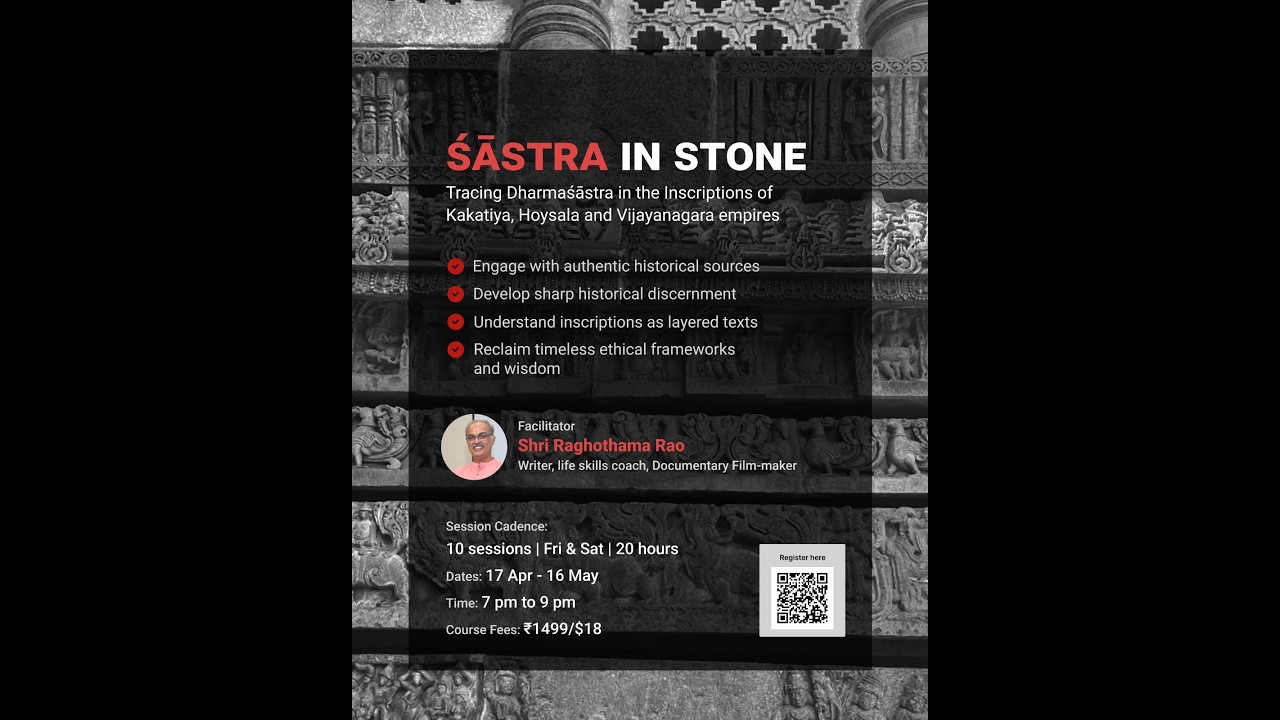
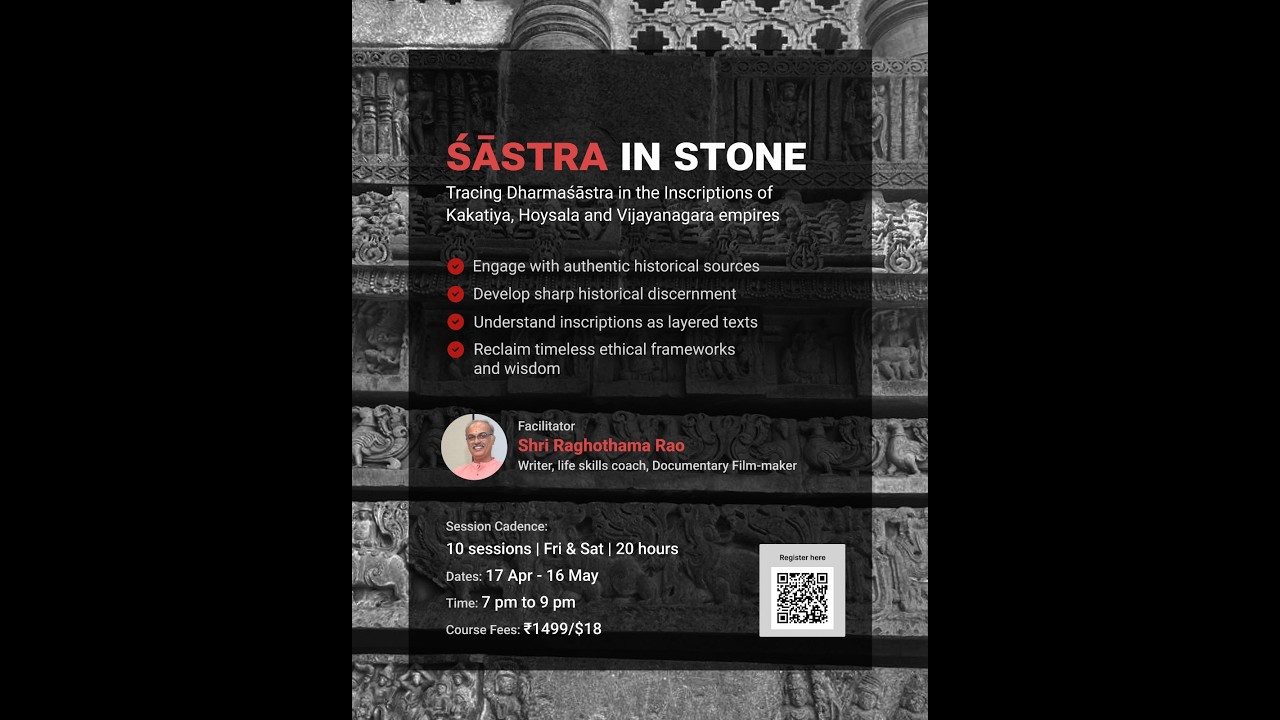
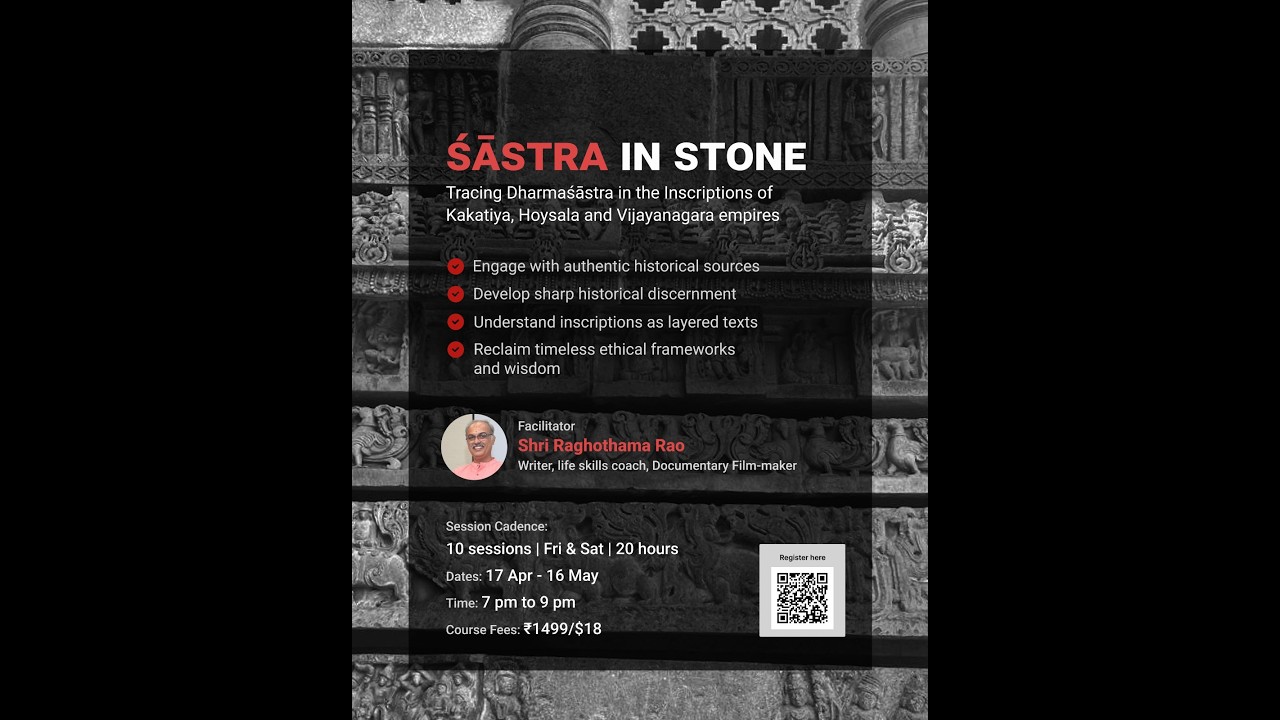
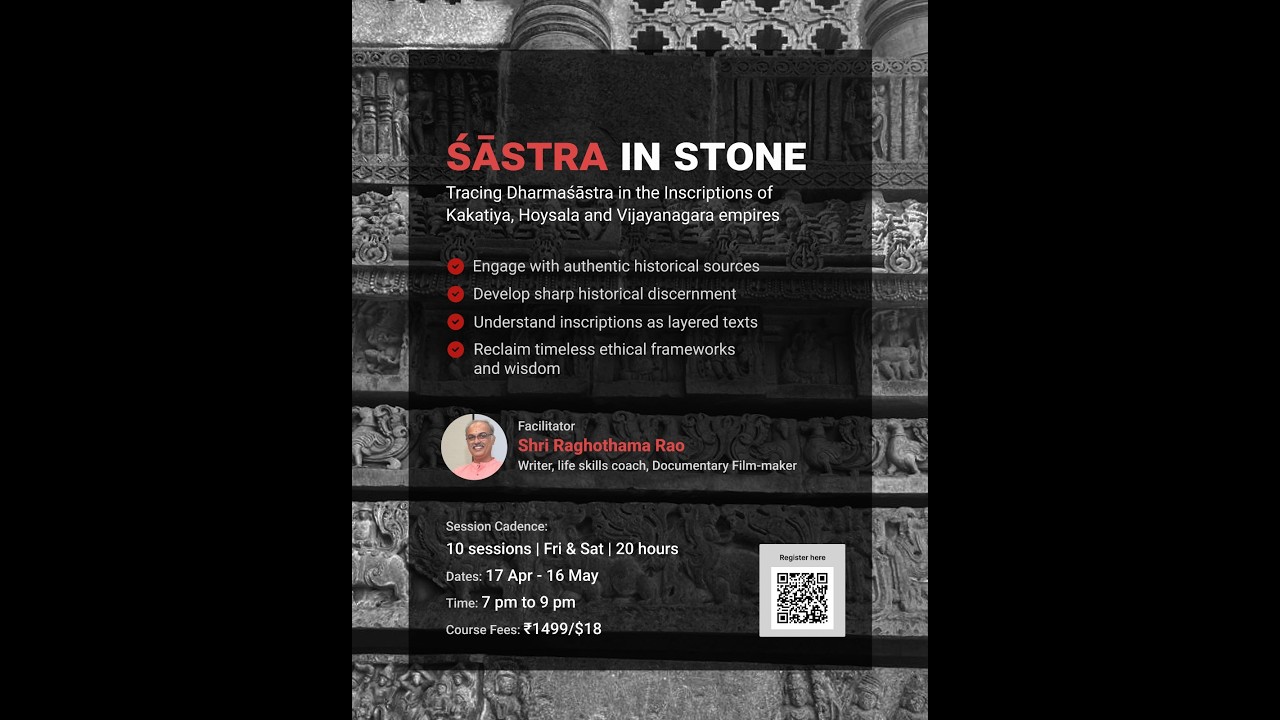
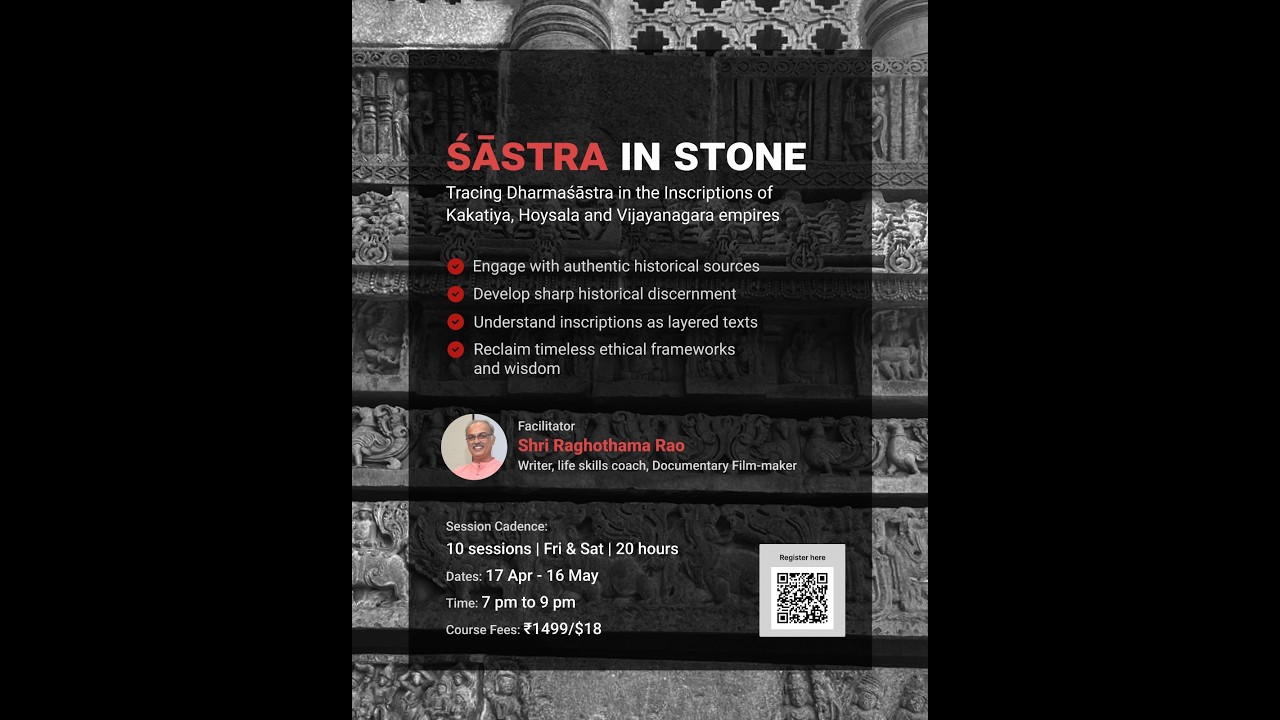
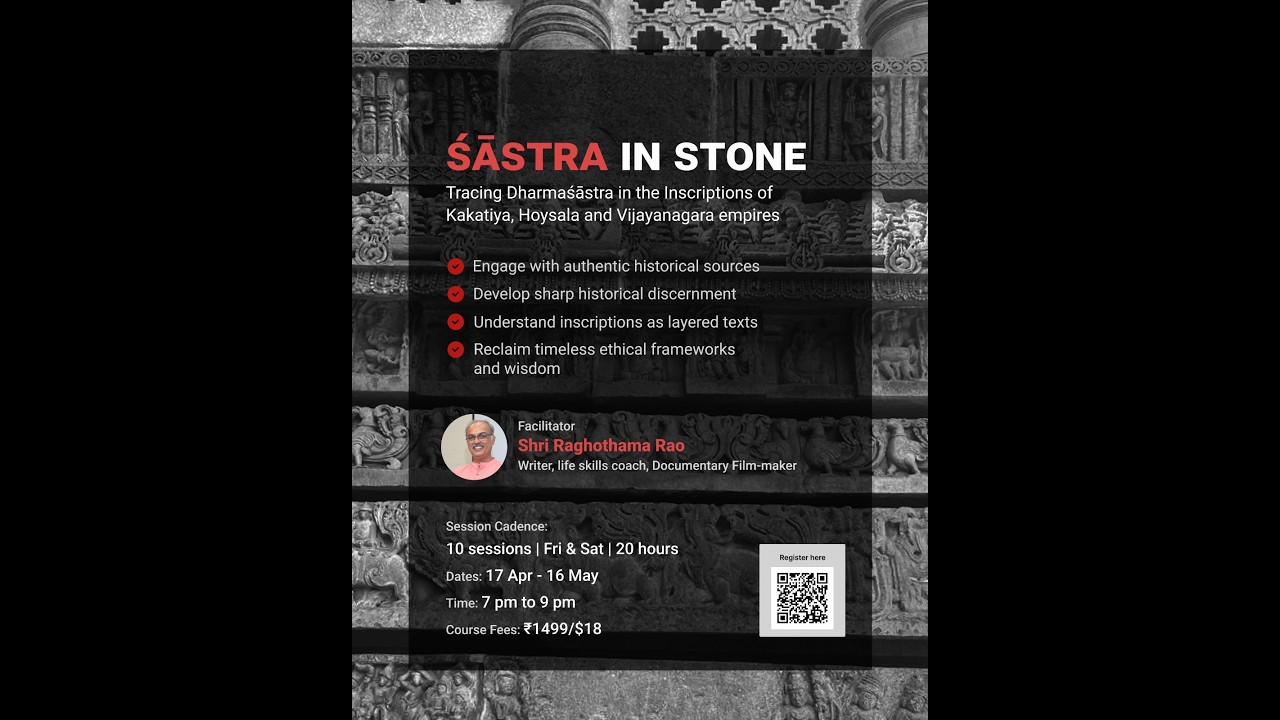
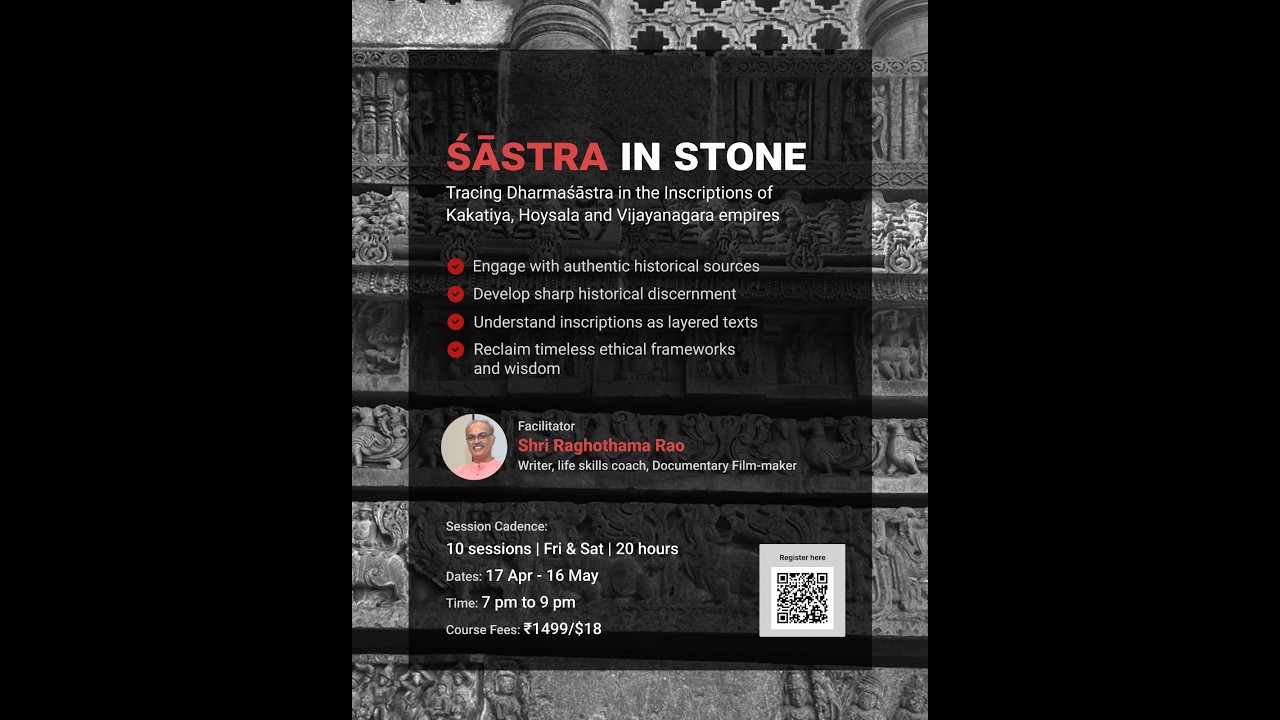
Śāstra in Stone - Tracing Dharmaśāstra in the Inscriptions of Kakatiya, Hoysala and Vijayanagara empires
Overview
This course, through the study of inscriptions issued by the Kakatiyas, Hoysalas, and Vijayanagara emperors, reveals how concepts such as dāna (sacred giving), rājadharma (ethical kingship), varṇa–āśrama dharma, puṇya, justice, and social duty were translated from Saṃskṛta treatises into the language of administration, temple culture, and community life.
Inscriptions were not merely records.
They were public declarations of dharma, etched in stone for society to witness and follow.
This course invites participants to rediscover these inscriptions as living texts - where śāstra meets society.
Intent
Our formal education systems, modern narratives interpreting our ancient texts, often present a false divide between śāstra (theoretical knowledge) and vyavahāra (practical life).
But when we go to the epigraphic record of medieval India, it tells a very different story.
Through inscriptions, we see how dhārmika principles guided governance, dispute resolution, economic systems, and temple institutions.
By studying these inscriptions alongside Dharmaśāstra sources, participants will discover:
• How ethical governance functioned in historical India
• How Dharma shaped law, administration, and public life
• How textual ideas travelled into lived institutions
Most importantly, this course equips learners to engage directly with primary historical sources rather than relying on simplified or distorted retellings
Structure
Śāstra in Stone is a 20 hours foundational course designed to provide a broader but deeply insightful understanding of the relationship between Dharmaśāstra and its real-life applications during medieval periods.
Contents
Module 1
What is an Inscription? How did the concept come into existence?
-
17 Apr - Introduction to Inscriptions
This session introduces the participants to the history of Inscriptions (in South India). It also allows the participants to learn about different types of inscriptions and the purpose(s) they served.
-
18 Apr - Introduction to Inscriptions
This session introduces the participants to the history of Inscriptions (in South India). It also allows the participants to learn about different types of inscriptions and the purpose(s) they served. -
24 Apr - Śāsana & Śāstra
In this session, participants will explore the repository of ancient literature that explains the concept of issuing inscriptions.
-
25 Apr - Śāstra in Stone
This session will enable the participants to explore the world of inscriptions pertaining to the Kakatiya, Hoysala, Vijayanagara and other minor dynastic rule of South India and learn how these inscriptions reflect various dhārmika concepts related to administration, legal & justice system, dispute resolution, crisis management, etc.
-
1 May - Śāstra in Stone (continued)
This session will enable the participants to explore the world of inscriptions pertaining to the Kakatiya, Hoysala, Vijayanagara and other minor dynastic rule of South India and learn how these inscriptions reflect various dhārmika concepts related to administration, legal & justice system, dispute resolution, crisis management, etc. -
2 May - Śāstra in Stone (continued)
This session will enable the participants to explore the world of inscriptions pertaining to the Kakatiya, Hoysala, Vijayanagara and other minor dynastic rule of South India and learn how these inscriptions reflect various dhārmika concepts related to administration, legal & justice system, dispute resolution, crisis management, etc. -
8 May - Śāstra in Stone (continued)
This session will enable the participants to explore the world of inscriptions pertaining to the Kakatiya, Hoysala, Vijayanagara and other minor dynastic rule of South India and learn how these inscriptions reflect various dhārmika concepts related to administration, legal & justice system, dispute resolution, crisis management, etc. -
9 May - Śāstra in Stone (continued)
This session will enable the participants to explore the world of inscriptions pertaining to the Kakatiya, Hoysala, Vijayanagara and other minor dynastic rule of South India and learn how these inscriptions reflect various dhārmika concepts related to administration, legal & justice system, dispute resolution, crisis management, etc.
Module 2
Lessons to be Learnt
-
15 May - Lessons to be Learnt
In this session, participants understand how the supposedly ‘outdated’ inscriptions are relevant to our times.
-
16 May - Interactive Session
Interactive question and answer session with cohort.
Session Recordings
What is an Inscription? How did the concept come into existence?
17 Apr - Introduction to Inscriptions
What is an Inscription? How did the concept come into existence?
18 Apr - Introduction to Inscriptions
What is an Inscription? How did the concept come into existence?
24 Apr - Śāsana & Śāstra
What is an Inscription? How did the concept come into existence?
25 Apr - Śāstra in Stone
What is an Inscription? How did the concept come into existence?
1 May - Śāstra in Stone (continued)
What is an Inscription? How did the concept come into existence?
2 May - Śāstra in Stone (continued)
What is an Inscription? How did the concept come into existence?
8 May - Śāstra in Stone (continued)
What is an Inscription? How did the concept come into existence?
9 May - Śāstra in Stone (continued)
Lessons to be Learnt
15 May - Lessons to be Learnt
Lessons to be Learnt
16 May - Interactive Session
Sign up to view session recordings
These recordings are part of our member-only exclusive access.
Upgrade to get full access to all course recordings and other membership benefits
Key Takeaways
Reclaim Authentic Sources
Engage with inscriptions and understand how they reflect the all-encompassing śāstrīya concepts.
Strengthen Discernment
Distinguish genuine insights from biased or commercialized retellings of our history.
See Inscriptions as Relevant Sources of Knowledge
Understand them as not only historical records but also as textbooks of Śāstra.
Decode Narrative Techniques
Inscriptions, too, are like poetry. They are layered and many a time throw challenges to decipher their contents.
Apply Teachings Practically
Use timeless lessons taught by the inscriptions in ethics, leadership, relationships, and public administration.
Preserve Cultural Continuity
Carry forward the wisdom of our ancestors recorded in the stone for future generations.
Who is this course for?
- Learners and seekers who want an unbiased and deeper understanding of history.
- Young adults (21–35 years) looking for an opportunity or guidance to study history through primary sources.
- Activists navigating misinformation and half-truths about history on social media.
- Curious learners interested in original sources such as inscriptions, texts, and archaeological records.
- Those seeking authentic grounding in India’s past and wishing to gain cultural wisdom with clarity and confidence.
Know your Instructor
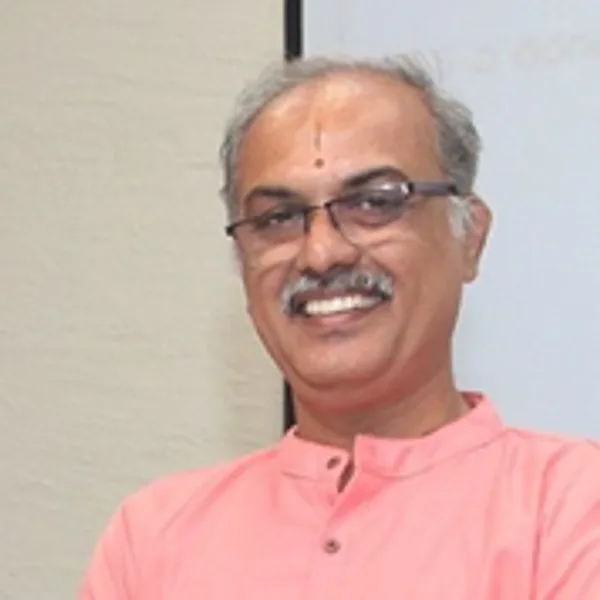
Śrī Raghothama Rao
Raghothama Rao is a Tirupati-based writer, life skills coach, and documentary filmmaker who left a 17-year corporate career in 2012 to devote himself to Indian culture and history. As a resource person for Sri Venkateswara Bhakti Channel (SVBC), he scripted over 300 episodes and played a key role in launching SVBC–3 for Kannada broadcasting. He also translated more than 150 Kannada devotional kīrtanas into Telugu for TTD’s Dasa Sahitya Project, supporting Telugu bhajana groups.
Since 2018, he has produced over 200 videos on the Vijayanagara Empire and recently begun work on the Kākatīya Dynasty. He runs aavakaaya.in, a well-regarded Telugu content portal, and documents Madhva community history on his blog Madhva History. A postgraduate in English Literature, Raghothama ji has been training TTD employees in Purāṇas, Itihāsas, and devotional literature since 2011.
With his work spanning scriptwriting, translation, media, teaching and corporate, he is a respected scholar and storyteller, bringing clarity, accessibility and authenticity to the study of Itihāsa and Purāṇas.
Our Draṣṭā online courses are designed to help you in your learning journey
Become a part of the community and engage, share, discuss and deepen your learnings
Interact with the course instructor through live sessions
Access to session recordings and materials

Become a member and dive into the Indic universe
Brhat subscription gives access to exclusive member-only content rooted in the Dharmic worldview.
Starts at ₹500 per month.