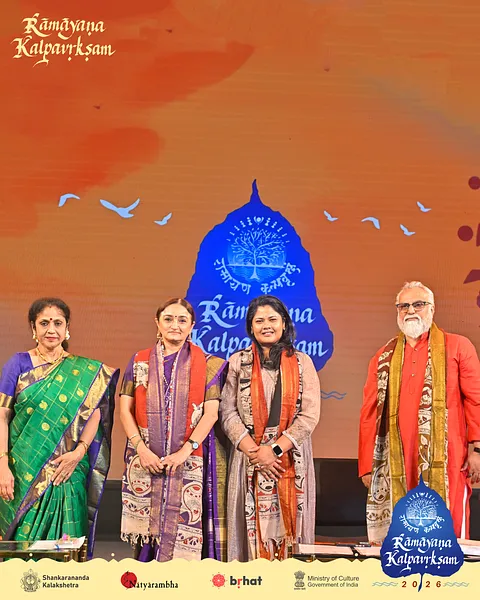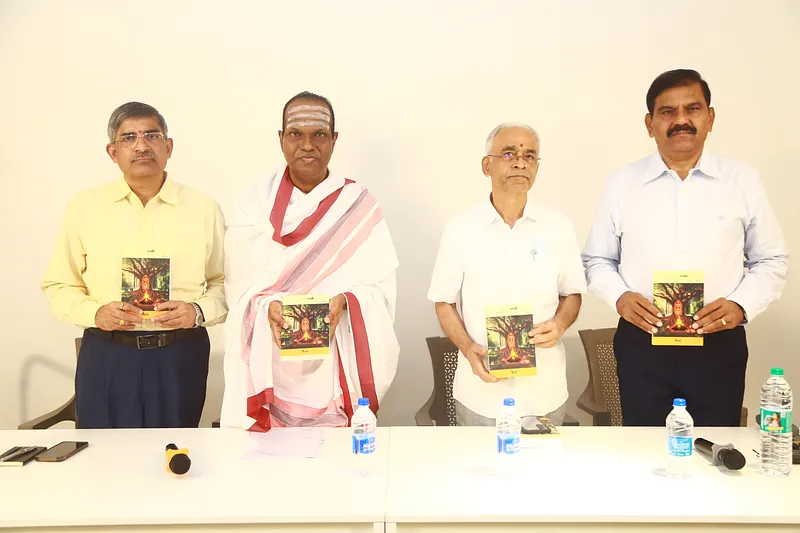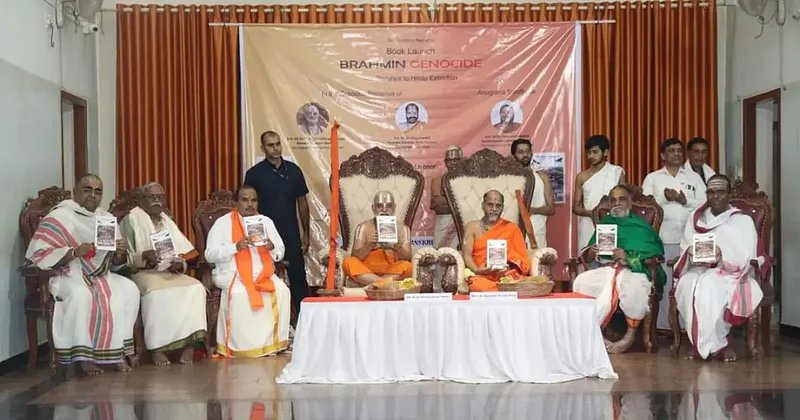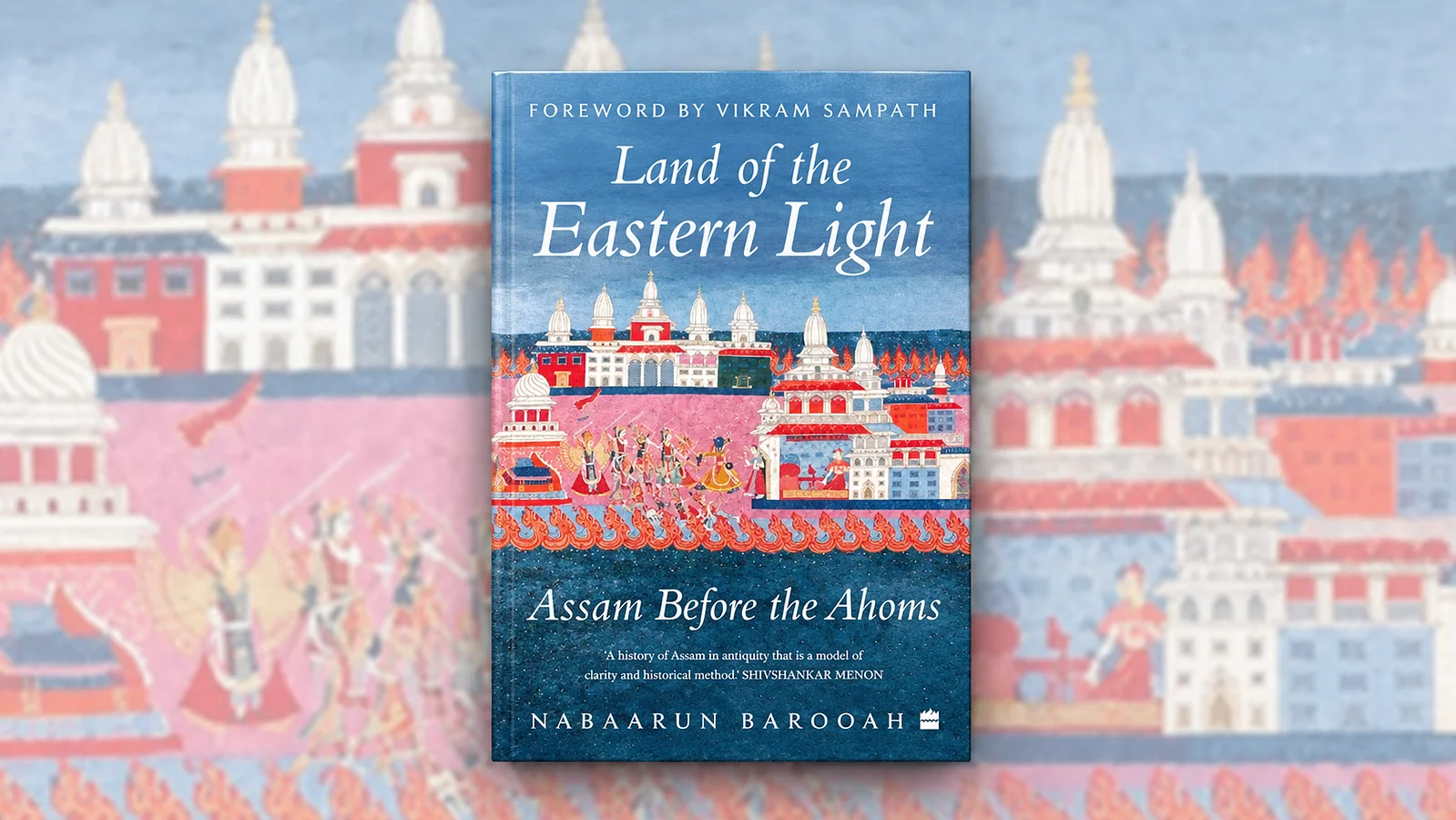
The book launch of Land of the Eastern Light: Assam before the Ahoms, authored by Nabaarun Barooah and published by HarperCollins, was held on 27 September 2026 at the National Museum Auditorium, New Delhi. The book, which explores the history of Assam before the rise of the Ahom dynasty, has been endorsed by former National Security Adviser Shivshankar Menon as “a history of Assam in antiquity that is a model of clarity and historical method.”
The event commenced before a full auditorium with a classical dance rendition of Vande Mātaram, followed by the felicitation of the Director of the National Museum. Moving away from the conventional format of a formal book launch, the programme was structured primarily as a panel discussion hosted by the author himself. In his opening remarks, Nabaarun Barooah spoke about the origins of the book, explaining that the idea was conceived approximately eight years ago following a school visit by Sanjeev Sanyal. Barooah described the work as an exploratory journey through Assam’s past rather than a conventional or “dry” historical account. A central premise of the book, as he emphasised, is that the history of Assam did not begin with the arrival of the Ahoms and that its earlier histories deserve greater attention within the larger narrative of India.

The traditional lighting of the ceremonial lamp was performed in the presence of the three chief guests: Sanjeev Sanyal, economist, urban theorist, member of the Economic Advisory Council to the Prime Minister, and author of The Land of the Seven Rivers; Vikram Sampath, historian, Fellow of the Royal Historical Society, founder of the Foundation for Indian Historical and Cultural Research (FIHCR), and author of the biographical series on Vinayak Damodar Savarkar; and J. Sai Deepak, Senior Advocate at the Supreme Court of India, public intellectual, and author of the India that is Bharat trilogy. The event also attracted several notable figures, including senior journalist and former Secretary General of the Press Club of India Pushpendra Kulshrestha, defence economist and senior fellow at the Institute of Peace & Conflict Studies Abhijit Iyer-Mitra, and international medalist in judo, jujutsu, and mixed martial arts Suchika Tariyal.

A significant theme running through the panel discussion was the need to decentralize the writing of Indian history. Sanjeev Sanyal argued for moving beyond a predominantly Delhi-centric understanding of the Indian past and drew attention to historical episodes from the Northeast that have received comparatively limited attention in mainstream narratives. He referred to Bakhtiyar Khilji’s 1206 CE campaign into Tibet through Kamrupa and the defeat of the Turkish cavalry by the forces of Raja Prithu. He also pointed to the Kanai Barasi rock inscription in North Guwahati in connection with this episode. Sanyal further highlighted the military traditions of Manipur, noting the region’s resistance to British expansion and its ability to withstand British conquest until the 1890s. These examples were presented as part of a broader argument that the histories of regions outside the traditional centres of power need to be examined as integral components of the history of the Indian subcontinent.
Vikram Sampath began his intervention with an invocation to Mā Kāmākhyā and remarked upon the absence of Anand Ranganathan, observing that it was an unusual occasion for the three speakers to appear together on the same stage. His discussion focused particularly on the ways in which indigenous historical figures and political formations have been categorized within conventional historiography. He questioned the proposition that there was no India before independence and drew attention to what he described as an inconsistency in treating the Mughals as a “national” power while characterizing dynasties such as the Ahoms and Cholas as merely “regional.” Referring to Lachit Borphukan, the seventeenth-century Ahom general associated with the Ahom victory over Mughal forces at the Battle of Saraighat in 1671, Sampath emphasized the importance of bringing such figures more centrally into the study of Indian history. He described the experience of indigenous historical figures seeking recognition from the centre through the striking metaphor that they often seem to be “screaming to be heard by the centre.”
J. Sai Deepak focused on the changing representation of the Northeast and the broader question of who has the authority to frame historical narratives. He observed what he described as an increasing pushback against romanticized historical interpretations and emphasized the importance of historiography in shaping cultural memory. He encouraged scholars and communities to write about their histories on their own terms and, importantly, in their own languages. Deepak also acknowledged Vikram Sampath’s role in mentoring Nabaarun Barooah and criticized publishing institutions that, according to him, had previously been unwilling to provide a platform to similar historical perspectives.

The discussion then turned to the question of what it means to “rewrite” Indian history. Responding to a question about the role of FIHCR in restoring what he described as a lost civilizational ethos, Vikram Sampath rejected the idea that revisiting history should automatically be regarded negatively. He argued that historical scholarship is an ongoing process in which successive generations reassess sources and reinterpret the past in light of new evidence and changing understandings. In his view, history should not be treated as a discipline in which existing interpretations are simply reproduced indefinitely.
Sampath then shifted the focus from criticism of existing historiographical traditions to the production of new scholarship. He argued that sections of the non-left or dharmic intellectual space often spend considerable energy identifying perceived distortions in existing historical writing, particularly the work of Marxist historians, but that exposing such disagreements through public controversies or social-media exchanges is insufficient. Referring to Arun Shourie’s Eminent Historians, he suggested that much of this critique had already been articulated and that the more pressing task was to create substantial bodies of alternative research. He repeatedly emphasized the importance of moving beyond “gotcha” moments on social media and producing scholarship that could serve as a lasting intellectual resource.
In this context, Sampath explained the purpose behind the Foundation for Indian Historical and Cultural Research, established in 2023. He described FIHCR as an attempt to create an ecosystem for historical research and to support alternative scholarship from what he characterized as a non-ideological perspective. One of its principal initiatives is the Sir Jadunath Sarkar Fellowship, named after the historian whose methodological emphasis, according to Sampath, was that evidence should speak more loudly than ideology. He noted the growing number of applications to the fellowship, with approximately 350 applicants in the year under discussion, from whom between six and ten scholars are selected following multiple stages of evaluation and interviews.
Sampath emphasized that serious historical research requires financial and institutional support. Fellows receive a grant of ₹15 lakh over the course of a year, together with mentorship, access to archives, peer review, and feedback from other scholars and fellows. The principal expectation is that each fellow should produce a publication-worthy manuscript by the end of the fellowship. Sampath described this as an effort to build a cumulative body of scholarship, suggesting that if a cohort produces several substantial books each year, the result over a decade could be a significant corpus of historical research.
He referred to several scholars associated with the fellowship to illustrate the range of subjects being pursued. Among the first cohort were Dr. Saumya Dey, whose work examines the Indic model of kingship; Chandrachur Ghosh, whose research concerns the formation of Bengali identity; and Professor Lakshmi Arya, whose work considers jurisprudence and the continuing influence of colonial frameworks on judicial interpretation. The second cohort includes scholars such as Dr. Hindol Sengupta, working on the divine feminine, and Srishti Jha, whose research examines the relatively neglected historical figure of Padmaja Naidu. Sampath also discussed the difficulties involved in bringing such research into mainstream publishing and noted what he regarded as the gradual opening of publishing spaces for works that might previously have struggled to find institutional platforms.
Beyond the fellowship, Sampath described FIHCR’s efforts to support multidisciplinary research projects in educational institutions. He referred to a collaboration with Nalanda University on a three-volume history of Buddhism in Bhārata, which involves scholars working with primary materials in Pali, Tibetan, and Saṃskṛta. He emphasized the importance of returning to primary sources rather than relying exclusively on translations, particularly when dealing with texts in languages whose meanings can vary significantly according to context. He also described projects examining the Aryan migration debate through multiple disciplines, including genetics, metallurgy, archaeology, and history, as well as research into regional histories such as those of Rajputana royal families, the Kadambas and the early history of Karnataka, and Devi Ahilyabai Holkar.
A recurring concern in Sampath’s intervention was the relationship between scholarship and public intellectual discourse. He argued that historical claims require durable research rather than temporary visibility through social-media controversies. He also emphasized the importance of making serious scholarship accessible to younger audiences. Referring to FIHCR’s Yuva initiative, he explained that the organization seeks to translate substantial historical research into formats and languages accessible to younger generations, including Gen Z and subsequent generations, without simplifying the scholarship to the point of speaking down to its audience. He also mentioned FIHCR’s history awards, including Sanjeev Sanyal’s recognition for his work on revolutionaries, as part of an effort to make historical research an aspirational field of intellectual activity.
The larger point, as Sampath presented it, was that the creation of an alternative historical narrative requires a long-term institutional effort. He used the image of two sparrows attempting to carry drops of water to a forest fire to describe the limited but meaningful contribution that an institution can make to a much larger intellectual project. He concluded that the response to what he regarded as distortions in historical writing should ultimately be “scholarship, scholarship and more scholarship,” rather than dependence on transient social-media controversies.
The discussion then moved towards colonialism, decoloniality and the cultural identities of communities in the Northeast. Responding to questions about the impact of colonial policies on ethnic identities, J. Sai Deepak drew upon the earlier interventions of Sanyal and Sampath. He referred to the distinction between physical and intellectual conflicts, arguing that while physical battles eventually reach an endpoint, intellectual debates can continue indefinitely. In this context, he emphasized the need for sustained intellectual engagement rather than assuming that a historical controversy can be permanently settled through a single intervention.
Deepak also addressed the question of secularization and its relationship to Indian cultural traditions. He argued that the concept of secularism has to be examined not only as a political principle but also in relation to the historical processes through which Indian traditions were interpreted under colonial modernity. At the same time, he emphasized that responsibility for the preservation and meaningful practice of traditions cannot be placed entirely upon external forces. Referring to contemporary practices surrounding religious festivals, he argued that communities themselves must consider whether they are preserving the spiritual significance of their traditions or reducing them to purely celebratory occasions.
A further aspect of Deepak’s intervention concerned the relationship between decolonial scholarship and other postcolonial societies. He referred to African countries, including Kenya, Nigeria and South Africa, as examples of societies that have pursued decolonial approaches in different ways. He contrasted their historical circumstances with India’s, particularly with regard to the survival of religious traditions. From his perspective, this survival provides Indian scholarship with the possibility of examining history not only through racial or political categories but also through religious and civilizational frameworks.
Deepak also challenged the characterization of such scholarship as merely “alternative.” He suggested that the growing public interest in these historical approaches means that scholars engaged in this work have a greater responsibility to maintain academic rigor. In his view, the increasing accessibility of these narratives to contemporary audiences makes it even more important to move beyond short-lived social-media interventions and produce sustained research. He argued that historical scholarship should eventually engage not only with questions of colonialism and invasion but also with the meanings of Indian religious and cultural practices themselves.

The discussion consequently moved towards the relationship between history and spirituality. Deepak argued that an important future direction for Indian historiography would be to reconsider the strict separation between historical study and spiritual traditions. He suggested that historical scholarship should eventually be capable of discussing metaphysical and spiritual practices as subjects of serious intellectual inquiry rather than treating them as categories outside the boundaries of historical analysis.
The final portion of the discussion returned to the question of the Aryan migration or invasion theory and the representation of Devas and Asuras in Indian textual traditions. Nabaarun Barooah raised the example of Bhaskar Varma, the Brāhmaṇa king of Assam, and asked why Indian texts and historical interpretations are sometimes presented through a binary in which indigenous peoples are associated with Asuras while Aryans are positioned as their opposing force. Before responding, Sanyal acknowledged Suchika Tariyal, who was present in the audience and had recently won a bronze medal at the Asian Games in mixed martial arts.
Sanyal responded by arguing that the Deva–Asura distinction has often been interpreted through later Abrahamic and colonial frameworks. He suggested that the earliest Vedic texts do not necessarily present Devas and Asuras as a simple opposition between good and evil. Instead, he described them as two groups of deities existing in tension with one another, noting that several figures traditionally regarded as Vedic gods, including Varuṇa, Mitra and Rudra, are themselves described as Asuras in Vedic texts. He used the relationship between the two groups as a way of questioning simplified binaries of good and evil.
Sanyal then developed this argument through examples from ancient Indian texts, emphasizing the geographical breadth of traditions associated with Asuras. He noted that Devas and Asuras are described as descendants of Ṛṣi Kāśyapa through Aditi and Diti and connected subsequent stories involving Hiraṇyakaśipu and Prahlāda to the western part of the subcontinent. He then discussed Mahābali and the tradition of Onam in Kerala, presenting it as another example of a cultural tradition centred upon an Asura figure. He finally moved towards the Northeast, referring to Bāṇāsura as an important figure in the region’s mythological traditions. The recording ends during this discussion and therefore does not contain the remainder of Sanyal’s response.
The book launch thus developed into a wide-ranging conversation extending well beyond the immediate subject of Assam before the Ahoms. The speakers addressed the decentralization of Indian historiography, the recovery of regional histories, the relationship between colonialism and cultural identity, the role of primary languages and sources, and the institutional structures necessary for producing sustained historical research. A recurring concern across the discussions was the distinction between momentary public controversy and scholarship capable of enduring beyond the immediate circumstances in which it is produced.

At the centre of the event remained Barooah’s Land of the Eastern Light: Assam before the Ahoms, which provided the occasion for bringing these questions together. By foregrounding Assam’s pre-Ahom past, the book and the discussion surrounding its launch drew attention to the need to examine the histories of regions that have often remained peripheral to dominant narratives of India. The event ultimately emphasized historical research as an ongoing process, one that depends upon engagement with primary sources, regional languages, multidisciplinary methods, institutional support and sustained scholarly publication.
The event was a grand success, with the auditorium remaining house-full despite the rainy Delhi evening, reflecting the strong interest generated by the book and the speakers. The evening concluded on an equally engaging note, as attendees had the opportunity to meet their favourite authors, get their books autographed, take photographs with them, and interact with them personally over informal conversations.

(All photographs from the event attributed to author.)
.png)