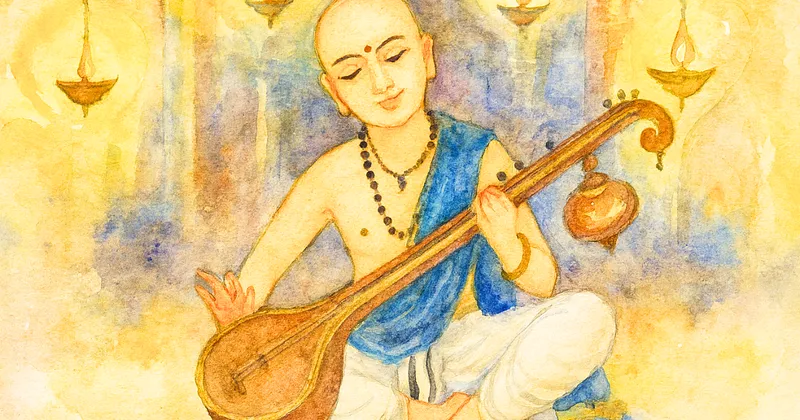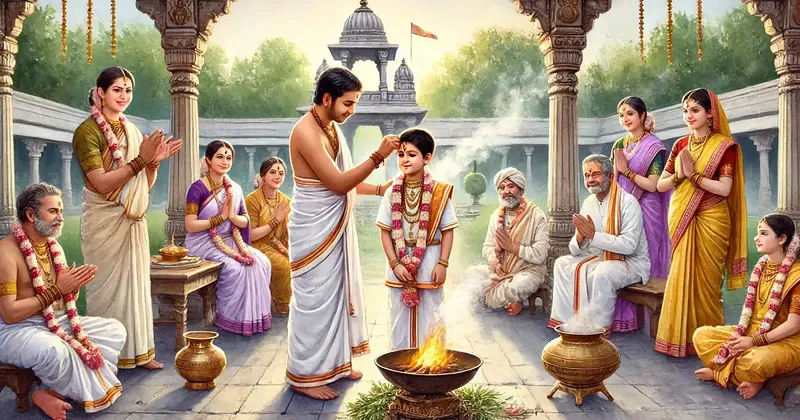
Ask where Indic pedagogy comes from, and the honest answer is: not from a treatise, but from a civilisation old enough to have needed and built an entire ontology of how a mind comes to know anything. Its origins are not pinned to a single text or century. They sit in the Upaniṣadic dialogues between teacher and pupil, in the grammatical and logical schools that insisted an argument be tested through pramāṇas (the recognised means of valid knowing — perception, inference, testimony, and more besides), in the Yogic mapping of the elements, the senses and the mind onto one another, and in the long, unbroken habit of treating a lesson as something that must ripen inside a particular person rather than simply be deposited in them. If one wants a single thread running through all of this, it is dharma: not "duty" in the flattened sense the word often gets in translation, but aucitya, fittingness itself. Dharma is not a rule laid over knowledge from outside; it is what fits the person, the moment, the place and the purpose, and nothing unfitting can be called dharmic. Indic pedagogy did not begin as a theory of schooling. It began as a deep meditation on how a human being properly...
What is Indic Pedagogy?
What ancient pedagogical methods & wisdom teach us about the true pursuit of clarity.

Sign up to read this article
This article is part of our member only exclusive access.
Upgrade to get full access to this article by Anand Krishnaswamy and other membership benefits
About the Author

Anand Krishnaswamy
Over 25 years of being a computer scientist, teacher, photographer, writer, amateur chef and many other excursions, Anand continues to remain an incorrigibly curious learner who is constantly fascinated by the brilliance of the worlds. He aspires to infect every young mind with the delight in not knowing and in watching all that happens as one begins to know.
See all writings at Dhīti